Slow and uneven, Haiti rebuilds 10 years after devastating quake

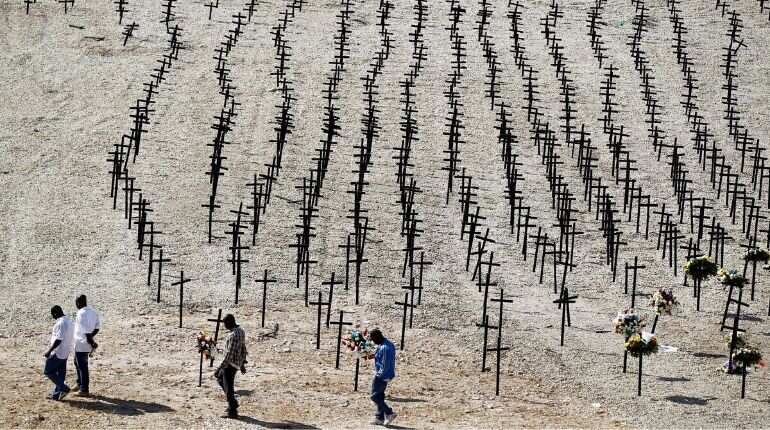
Titanyen on the outskirts of Port-au-Prince.
Tenyearsand billions of dollars of aid later,Haitiis still rebuilding itself from one of the deadliest earthquakes in history and the devastation it caused.
Recovery has beenslowanduneven.
The 7.0 magnitudequakeon January12, 2010, killed tens of thousands of people and left much more homeless, leveling many of the most recognizable buildings in Port-au-Prince.
"Haitihas neither a mother nor a father,"Haitian Jean Brune Wilga said near the remains of the National Palace, the president's former residence. "Because of 10yearsafterthe earthquake, the palace should not still be in ruins."
It and other iconic buildings, including the Notre Dame l'Assomption cathedral, have not been rebuilt. Tens of thousands of people still live in provisional housing.
Estimates of the number of dead vary widely, from below100,000 to as high as 316,000, the official government figure.
Worshippers attend what Father Guy Chrispin described as a "temporary cathedral", a steel-framed edifice that seats 1,500 people in open-air built by the ruins of the original church.

"We say temporary because we're planning to rebuild the other one, but that requires a lot of money," Chrispin said.Afterthequake, more than 12,000 aid groups launched one of the largest ever humanitarian and reconstruction operations.
Since then, their efforts have come under intense criticism. UNpeacekeepers also accidentally started a cholera epidemic that killed 9,300 people and sickened another 800,000. Other aid workers stand accused of abusing women and children.
In a country where nearly 60 per cent of the population survives on less than $2.40 a day, reconstruction of the Hospital of the State University ofHaiti, the capital's main public hospital, is one of the more advanced projects.
Building materials lay stacked outside the building next to the stretched but still functioning General Hospital.
Jean Rodney, whose son was being treated in the facility, said he appreciated efforts by medical staff working with such limited resources. Like mostHaitians, he had high hopes for the new medical center.
"We all need it - it's been too long for us," Rodney said. "It should have been finished a long time ago. But we know that this is because of the country's political problems."
Haitian President Jovenel Moise has called on international support to tackle an ongoing humanitarian crisis. More than one-in-threeHaitians, nearly 3.7 million people, need urgent assistance to meet their daily food requirements.