Scientists track 'Greater London-sized' iceberg fearing it may affect shipping, marine wildlife

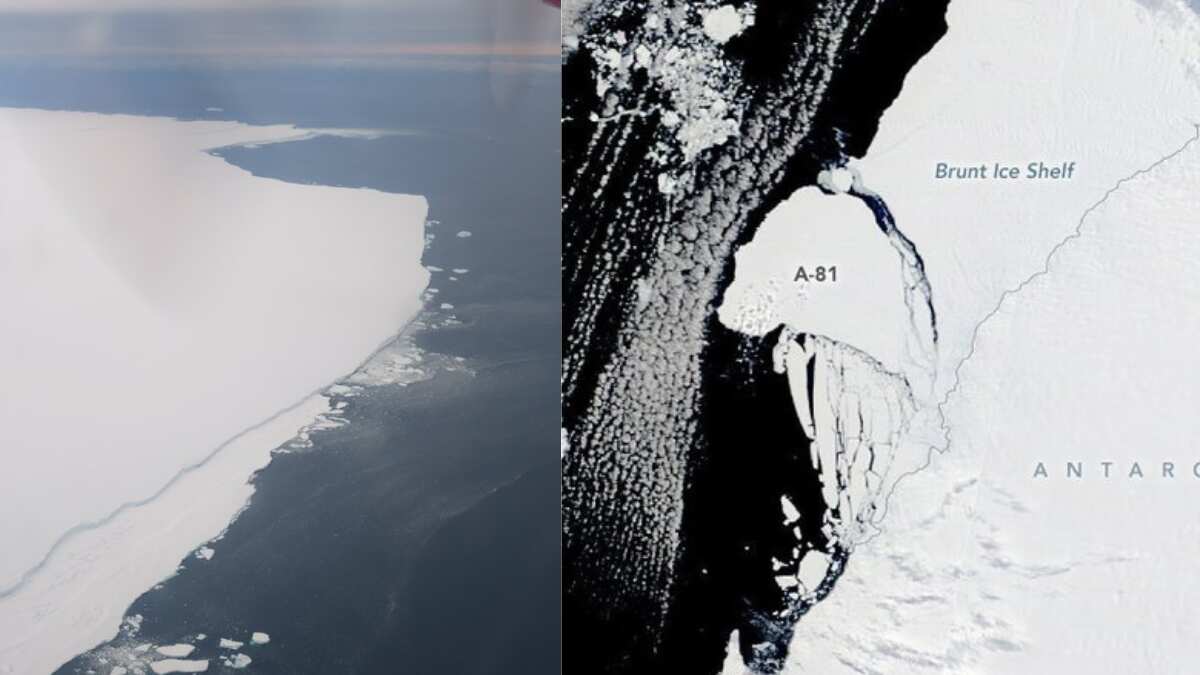
Greater London-sized iceberg 'A81'
Two of the biggest icebergs are being tracked by British scientists as the frozen blocks continue drifting towards areas where there are chances of it affecting fishing, wildlife and shipping.
These icebergs, which recently, broke off from Antarctica, may take decades to melt and wither away. One of the icebergs, named 'A81', was photographed by a group of researchers when they were flying off the Halley base in the UK. The iceberg 'A81' is said to be as large as Greater London.
Another group of researchers sailed around A76a, which is bigger than the size of Cornwall. This giant frozen block is not just similar in size to the English county, which is spread over an area of over 3,000 sq km, but also in shape as the iceberg is long and thin.
Prof Geraint Tarling, who was present at the Royal Research Ship Discovery, took the opportunity to look into the iceberg as it floated out of the Weddell Sea, Antarctica into the South Atlantic.
"It was directly in our path as we sailed home so we took 24 hours out to go around it," said the biological oceanographer, while speaking to BBC News.
"We got in quite close in some places, and had a really good view of it. We collected water from around the berg using special non-contaminated pipes under the ship, so we've got lots of samples to study,” he added.
The British Antarctic Survey scientist stated that tabular or huge flat-topped icebergs have a major influence on the environment - both productive and disruptive.
The icebergs, while melting down, will produce huge volumes of fresh water into the sea, which can make it difficult for few organisms to function.
WATCH | Antarctica's 'doomsday glaciers' is in trouble
The melt will also release the mineral dust which was incorporated into the ice when it was connected to the glacier scraping along Antarctica's rock bed. The dust contains nutrients which will spur life in the open ocean.
"If it does become grounded, our major concern is break-up and the impact of (smaller) icebergs on vessel movements in the area," Dr Mark Belchier, the director of fisheries and environment with the government for South Georgia and the South Sandwich Islands, explained.
"Although the tourist season is coming to an end, our fisheries operate during the winter months so it may impact on their operations. It does have the potential to cause localised issues for some of our wildlife, although that's likely to be less of an issue if it breaks up over winter when most animals can forage over greater distances and don't have to keep returning to land to feed young - or have moved away from the island completely,” he added.
You cannow write for wionews.comand be a part of the community. Share your stories and opinions with ushere.
WATCH WION LIVE HERE