'They never left': Pete Hegseth names 3 Air Force captains who survived Kuwaiti friendly fire

&imwidth=600&imheight=450&format=webp&quality=medium "'They never left': Pete Hegseth names 3 Air Force captains who survived Kuwaiti friendly fire")
'They never left': Pete Hegseth names 3 Air Force captains who survived Kuwaiti friendly fire Photograph: (Credit: AFP)
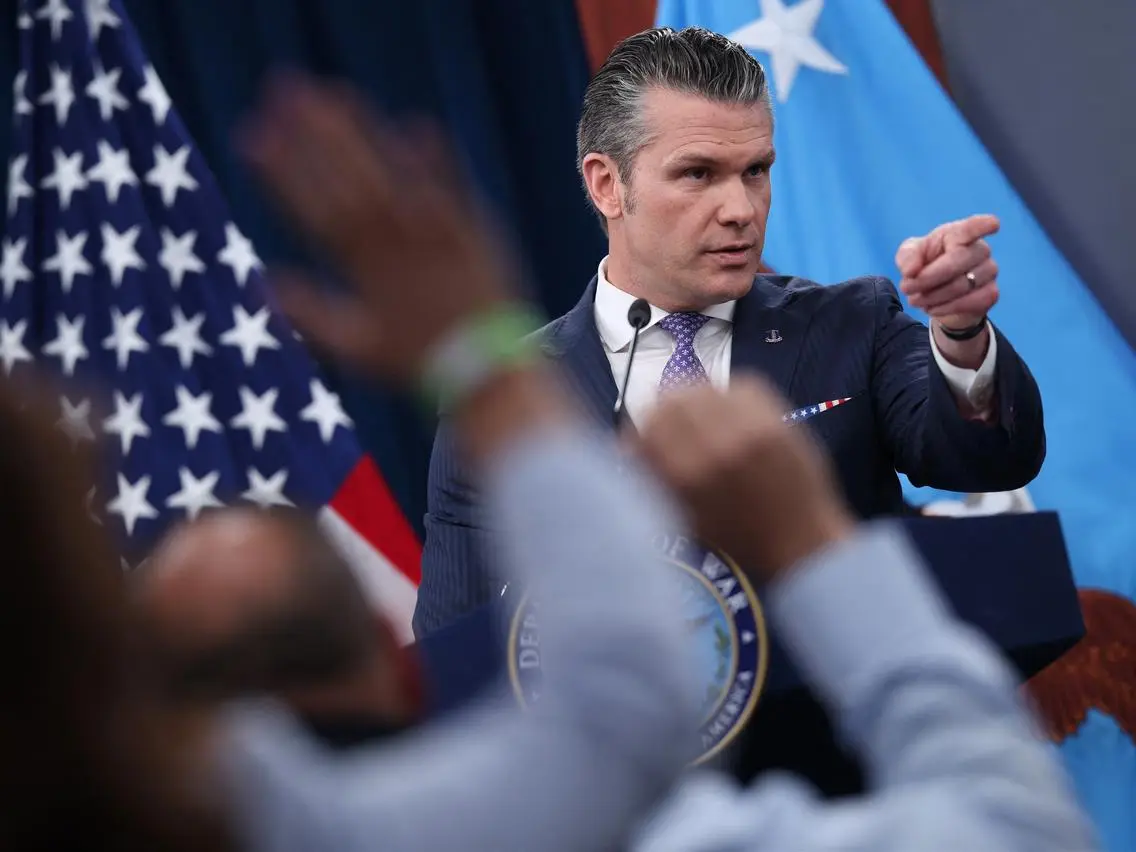
Pete Hegseth officially identified the three Air Force captains involved in the March 2, Kuwaiti friendly fire incident during a landmark Pentagon briefing.
US Secretary of War Pete Hegseth on Tuesday (Mar 31) detailed a frontline visit to CENTCOM’s area of responsibility. Citing operational security, Hegseth withheld specific locations but described a military force defined by a singular, aggressive resolve: “finish the mission.” Hegseth’s account centered on the sheer urgency of Operation Epic Fury. Unlike the perceived "endless" nature of past conflicts in Iraq and Afghanistan, he reported that today’s service members see a definitive finish line. "I witnessed urgency to achieve mission success," Hegseth stated. "Not looking at the next rotation, only moving as fast as possible to win."
Hegseth highlighted a powerful narrative of resilience, revealing that three Air Force captains, shot down in a March 2 friendly fire incident by Kuwaiti defenses refused to rotate home. Instead, they remained in-theater and personally led retaliatory strikes over Tehran just 24 hours prior to the briefing.
Throughout his half-day tour, Hegseth spoke with pilots, intelligence analysts, and air defenders. He noted that despite witnessing two missile interceptions during his visit, the troops' requests were strictly tactical. "Nobody said 'Send me home,'" Hegseth remarked. "What they said was: 'Get us more bombs, bigger bombs, more targets. Let us finish this.'"
This sentiment was echoed by a crew chief who told Hegseth, "This fight is long overdue... we cannot pass the buck." The airman requested the Secretary thank the President for the opportunity to end the threat for the next generation. Hegseth’s briefing serves as a strategic signal to both the American public and Tehran: the U.S. military is not merely managing a conflict but is actively seeking a rapid, decisive conclusion to the war in West Asia.