Opinion: China excels in soft power diplomacy; India doesn't

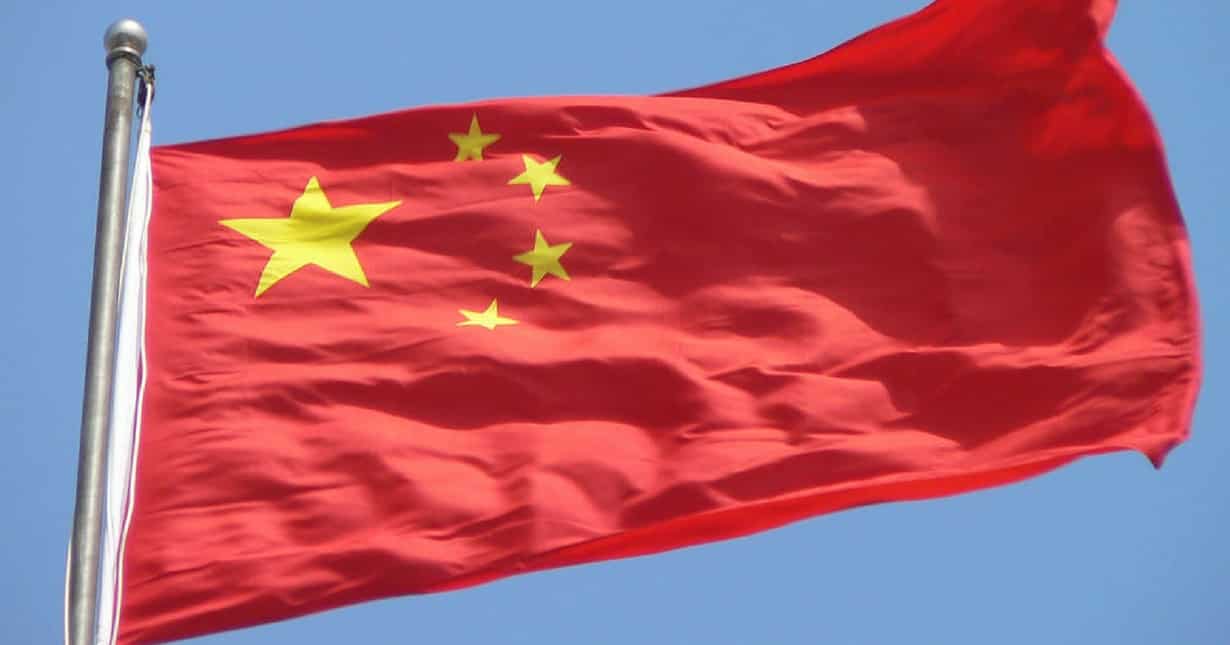
Creation of such elite scholarship/fellowship programs could be utilised by New Delhi as an instrument of diplomacy; the way Britain and America have done in the 20th century and China has started doing
Indian diplomacy is often seen as a balance between its hard power and soft power, and this balance drives New Delhi’s ‘great power’ ambitions. The traditional view of a ‘great power’ is often associated with hard power and includes economic and military clout that countries leverage in order to influence the international order. The concept of ‘soft power’, pioneered by Harvard Professor Joseph Nye, is associated with the power to attract and co-opt as a means of influence.
India has plenty to leverage when it comes to soft power - from yoga and Ayurveda to democratic institutions and its rich history and culture – but there is definitely something it can learn from China.
China’s ‘soft power’ projections are more often than not, driven by centralised government schemes and conscious efforts of promotion of its culture and society to the world – be it rapidly spreading Confucius Institutes or extravagant displays of its ancient culture, likes of which the world witnessed during 2008 summer Olympics in Beijing. Unlike China, India’s ‘attractiveness’ to the world has grown organically, with little or no strategic government initiatives.
To understand China’s soft power experiment one should look at its enhanced focus on higher education reforms and projections.
However, we have witnessed some of New Delhi’s conscious efforts with yoga at heart of it; but it’s only on a limited scale. On the contrary, to understand China’s soft power experiment one should look at its enhanced focus on higher education reforms and projections. No small parts of China’s ‘soft power’ strategies are its elite scholarship programs, such as Schwarzman Scholars at Tsinghua University and Yenching Academy at Peking University. Modeled after Oxford’s prestigious Rhodes scholarships, these scholarships are designed to educate and influence future leaders of the world.
These scholarships are attracting the best and brightest graduates from across the world, many of whom have graduated from Harvard, Oxford and Cambridge and other top-ranked universities. With the full support of Chinese government and policymakers, these fully funded scholarships are backed by huge endowments and donations. For instance, American billionaire and Chairman of private equity firm Blackstone Group, Stephen Schwarzman have donated 100 million USD.
The trend is indicative of the fact that ‘higher education’ and ‘quality education’ no longer remain the monopoly of the global north and there is scope for universities and institutes from developing world to compete for the best and brightest minds.
The attraction towards these scholarships is representative of China’s constantly growing global influence and shifting international order. The specially designed curriculum of these programs is an effective ‘soft power’ tool deployed by Beijing, as they allow ‘future leaders’ to explore China’s ancient culture and traditions, its politics and its role and aspirations in the 21st century.
The trend is indicative of the fact that ‘higher education’ and ‘quality education’ no longer remain the monopoly of the global north and there is scope for universities and institutes from developing world to compete for the best and brightest minds. But it’s a long road ahead for India until we focus on our quality of research. India’s highest-ranked institution Indian Institute of Sciences (IISc) is not even in the top 250, as per world university rankings by Times Higher Education (THE), while China’s Peking and Tsinghua were ranked 27th and 30th respectively and had seven representations in Top 200 of 2018 rankings. Quality of research and teaching are the key areas where Indian institutions continue lacking.
Creation of such elite scholarship/fellowship programs could also be utilised by New Delhi as an instrument of diplomacy; the way Britain and America have done in the 20th century and China has started doing. In the past, Indian corporates and individuals have endowed such funds and scholarships allowing Indians to study abroad – and now is the time when India should attract ‘future leaders’ and let them explore India’s rich culture and heritage and more importantly understand India’s role in global affairs. Such an investment could prove to be highly successful in attracting people to the world’s largest democracy.
(Disclaimer: The author writes here in a personal capacity).