
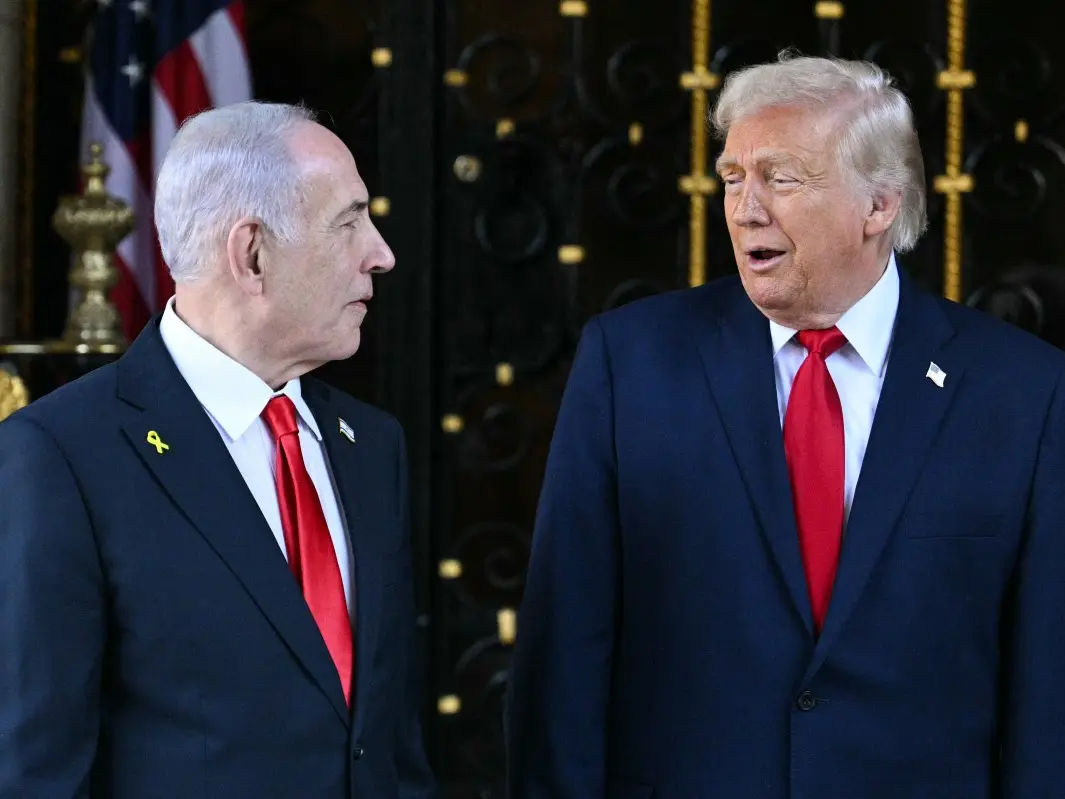
&imwidth=800&imheight=600&format=webp&quality=medium "Netanyahu-Trump talks fuel fears of renewed Iran strikes amid reports of Op Sledgehammer: Will the war start again?")
Israeli Prime Minister Benjamin Netanyahu held a conversation with US President Donald Trump and reportedly discussed about the war with Iran as well as security conditions on Sunday (May 17). The conversation between the two leaders comes amid reports that the US and Israel are preparing to restart the war with Iran as the ceasefire did not result into long-term peace deal and opening of Strait of Hormuz. According to Hebrew media reports, the two leaders also discussed Trump’s recent trip to China. The talks between Trump and Netanyahu is being seen as an important one as the two leaders launched joint strikes on Iran on Feb 28 that has resulted into a worldwide energy crisis. Though, the Trump administration has announced the end of Operation Epic Fury, a report suggested that that US officials are planning to launch fresh strikes on Iran under a new name “Operation Sledgehammer.”
Netanyahu's cabinet meeting a hint?
Soon after the call, Netanyahu convened a meeting with top aides and ministers for a security discussion in his office in Jerusalem. The Times of Israel reported that such discussions usually include Foreign Minister Gideon Sa’ar, Defense Minister Israel Katz, Finance Minister Bezalel Smotrich, National Security Minister Itamar Ben Gvir, and Shas chairman Aryeh Deri. Prior to the call with Trump, Netanyahu in his weekly cabinet meeting said, “Our eyes are open regarding Iran.” Referring to the US president, he added, “I will certainly hear impressions from his trip to China, perhaps other things as well. Certainly, there are many possibilities, and we are prepared for every scenario.”

What is Trump doing?
Soon after the call, Trump hopped on to his Truth Social to warn Iran. The report suggestion renewed attacks claimed that it could begin as soon as this week. Another Axios reported, citing two US officials said that Trump will hold a Situation Room meeting on Tuesday (May 19) with his top national security advisers. In a Truth Social post, Trump said that the clock was ticking. “Better act fast on the peace proposal or else nothing will be left of it,” he warned. Earlier on Saturday, Trump has shared an AI-generated graphic of him and a US Navy admiral in front of stormy waters with several ships. The image shows one flying the flag of the Islamic Republic of Iran and the text on the image reads as: "It was calm before the storm." Trump also warned Iran once again saying that it will face “very bad time” if a peace agreement is not reached. However, the US president is also hopeful of a deal with the Islamic Republic. “We want to make a deal. They are not where we want them to be. They will have to get there or they will be hit badly, and they don’t want that,” Trump said in several interviews.
What we know about Iran-US peace deal?
After rejecting each other's proposals, US is planning to renew the attacks while Iran said it is ready to fight. However, Iranian Foreign Minister Abbas Araghchi during his India visit for BRICS meeting sent a message to America stating that there is no end to military might and only dialogue can bring peace. On Sunday (May 17), Iranian state media outlets also reported that the US have set core conditions for resuming negotiations. According to Iran’s Fars News Agency, the US wants Iran to surrender its 400 kg of enriched uranium, keep only one nuclear facility operational and accept that no compensation will be paid for war damages caused during the conflict. Iran has rejected the terms and laid out its own conditions for talks, including sanctions relief, release of frozen assets, compensation for damages and recognition of its authority over the Strait of Hormuz.

