Nationalists surge in EU Parliament, but pro-EU parties remain dominant

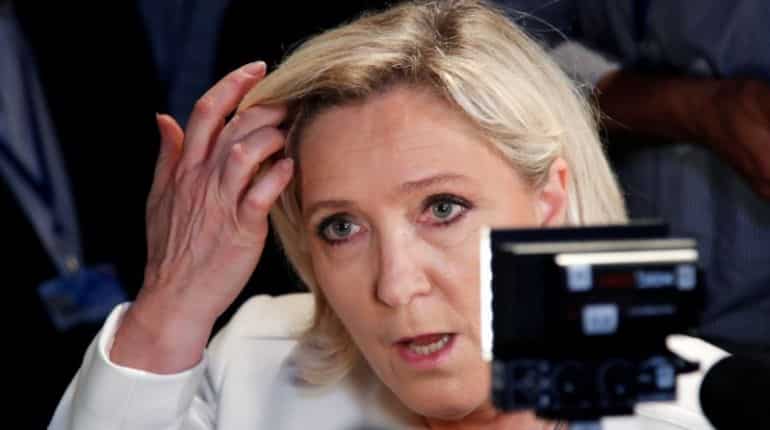
Marine Le Pen
Pro-Europeanpartieskept a firm grip on theEUparliamenton Monday as liberal and greenpartiesmatched asurgebyeuroscepticparties, who won control of a quarter of seats inEuropean elections for the first time.
The far-right andnationalistsin Italy, Britain, France and Poland came out on top in their national votes on Sunday, shaking up politics at home but failing to dramatically alter the balance ofpro-European power inEUassembly.
Facing a more hostile Russia, China's growing economic might and an unpredictable US President Donald Trump, manyEuropeans appeared to heed a message that theEUneeded to stick together toprotect workers' rights, free speech and democracy.
"We are going to build a socialEurope, aEurope thatprotects," Spain's Prime Minister Pedro Sanchez, whose revival among Spanish voters offset a fall in centre-left support in Germany, told a news conference late on Sunday night.
Investor sentiment was bolstered by the smaller than expected gains by populistparties. However, the drop in support for the main centre-right and centre-left blocs could complicate policymaking and require broader cross-party agreements and discipline, market analysts said.
Provisional results published at 08:18 GMT on Monday showed the Socialists, Greens, liberals and conservatives with 507 of the 751 seats in theEUParliament, which helps pass laws for more than 500 millionEuropeans.
The search for a majority, as well as securing the topEUjobs, will now dominate aspro-EUgroups seek to shield theEUfrom anti-establishment forces, who want to break up the world's largest trading bloc but who are split over its future.
French President Emmanuel Macron's centrist Renaissance platform added to gains for liberals at theEUlevel while support for the Greenssurged, giving four groups thepro-middle ground and holding on to two-thirds of seats.
Macron and Sanchez were to meet later on Monday, the first in a series of meetings betweenEUleaders before they gather for a summit on Tuesday evening in Brussels to discuss the outcome of theparliamentvote.
BREXIT, FAR-RIGHTPROTEST
A stronger voice for the liberals and Greens could see the nextEUexecutive seek a tougher line on regulating polluting industries, taxing multinational companies or demanding trading partners help contain climate change.
They could also pressEUmember states, notably in the east, not to damage civil rights.
Cries of "Europe is back" among voters waving blue and goldEUflags outsideEuropeanParliamentin Brussels on Sunday night also showed the ebullient mood amongEuropeans delighted with a sharply higher turnout across the bloc.
Turnout in the world's second-biggest election rose to 51% from 43% in 2014, its highest in 20 years and the first reverse of falling participation since the first directEUvote in 1979.
Disenchantment with theEuropeanproject, which has struggled through economic and migration crises over the past five years, has made the bloc seem distant to voters and anger with the traditionalpartieswas palpable across the bloc.
Riding a wave of anger at the British government's failure to take the United Kingdom out of theEuropean Union, Nigel Farage's Brexit Party won a resounding victory.
The result showed Britain even more polarised over its Brexit divorce, nearly three years since a 2016 referendum in which it voted 52% to 48% to leave.
While Britain's departure from the bloc will require itsEUlawmakers to give up their seats, Farage's party and its allies won 29 seats, the same number as Chancellor Angela Merkel's centre-rightEuropean People's Party in Germany.
In Italy, the far-right League became Italy's largest party, giving greater authority to its leader Matteo Salvini who is pushing for swingeing tax cuts in defiance ofEUbudget rules.
Poland'seurosceptic ruling Law and Justice party (PiS) also came out ahead. In France, Marine Le Pen's anti-immigration, anti-Brussels National Rally edged Macron'spro-European centrist movement. Far-right separatists also saw supportsurgein Belgium.
FIGHT FOREUPOSTS
Provisional results for theEUParliamentput the EPP on 182 seats, ahead of the S&D on 147, with the liberals on 109, up 41 seats, and Greens on 69, up 17. On the far-right, two groups in theparliamenthad well over 100 seats, a 40% jump from 2014.
Three existingeurosceptic groups, including those of Le Pen and Salvini's League, will make up about 25% of the chamber, up from around 20 per cent in the currentparliament.
With four, rather than two, centrist alliances in the assembly, it is less clear who will be the next head of the Commission," Guntram Wolff, the director of think-tank Bruegel, told Reuters. "First theparliamentneeds a coalition agreement on substance and personalities," he said.
That agreement should include more humane immigration policies and tackling climate change, said Maria Nyman, secretary general of charity CaritasEuropa.
Leaders for the fourpro-EUcentrepartieswere set to hold their first talks on Monday and there will be weeks and possibly months of hard bargaining over who will runEU institutions.
Parliamentsays one of its members should succeed Jean-Claude Juncker as president of the executiveEuropean Commission but many national leaders, who will meet for dinner in Brussels on Tuesday, have said they will not be bound by that demand.