London is world's most exposed city to air pollution from aviation: Study

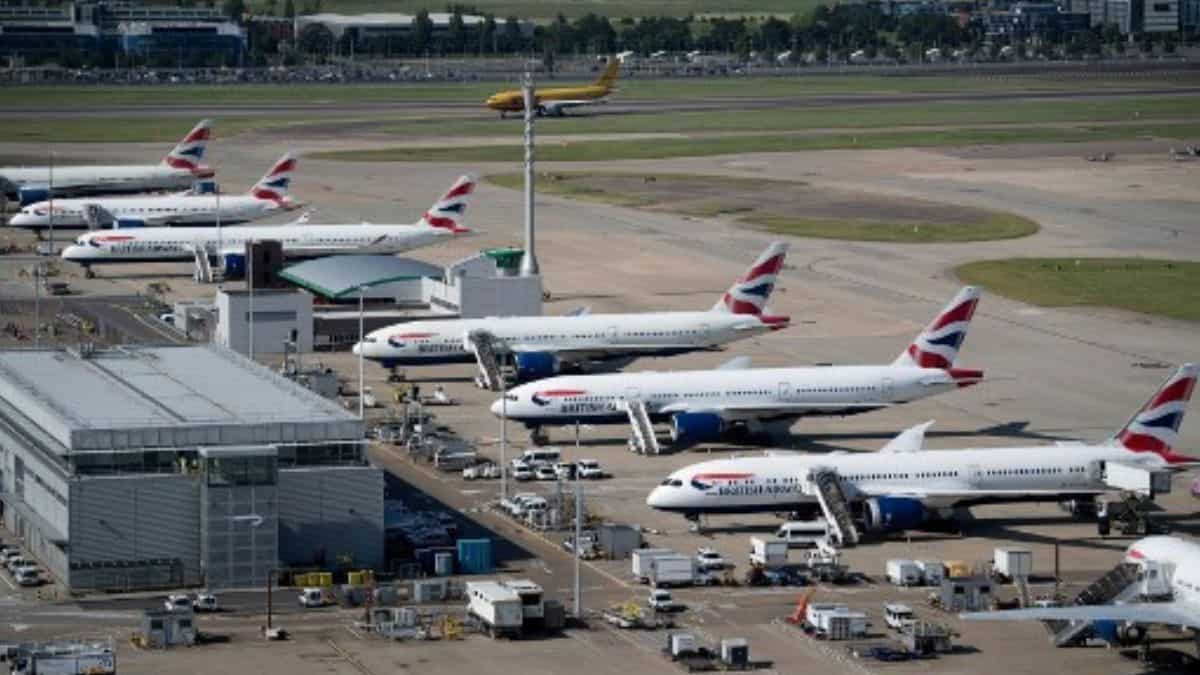
Heathrow airport.
London, with its six airports is world's most exposed city to air pollution from aviation, exposing its residents to the equivalent emissions of 3.23 million cars annually, according to a recent study.
Dubaiand Tokyo are the top of the table, subjecting inhabitants to emissions comparable to 2.78 million cars' worth of pollutants from air traffic.
Thenew research initiative tracking air pollution and greenhouse gas emissions from cargo and passenger flights globally, designate these three cities as the most severely impacted by aviation-related air pollution.
Watch:London is most exposed city to air pollution from aviation
The study notes that the top 20 airports collectively produce carbon emissions equivalent to 58 coal-fired power stations.
Jo Dardenne, the aviation director at Transport & Environment, a think tank involved in the research, highlights the concerning rise in pollution around airports each year, affecting millions and leading to health conditions.
Dardenne emphasises the urgency of addressing the sector's exponential growth, especially in light of slow adoption of clean technologies.
The 2024 Airport Tracker, a collaboration between the global affairs think tank ODI and Transport & Environment, updates research from 2021, now including the carbon footprint of air freight alongside passenger flights. It covers emissions of nitrogen oxides (NOx) and fine particulate matter (PM2.5) from 1,300 airports.
Dubai airport emerges as the most polluting globally, responsible for 20.1 million tonnes of CO2 emissions in a year, equivalent to the emissions of five coal power plants.
Heathrow airport in London ranks second for climate impact, emitting 19.1 million tonnes of CO2 annually, along with notable NOx emissions. However, its PM2.5 pollution ranks it lower on the list.
Critics argue that airports lack sufficient safeguards against pollution, with concerns about aircraft noise levels and the absence of EU standards on ultrafine particles. Activists call for immediate measures such as night flight bans and improvements in jet fuel standards.
Sam Pickard from ODI emphasises the long-term impact of airport infrastructure choices on climate and air quality, urging increased awareness and restrictions on expansion in various parts of the world.
(With inputs from agencies)