

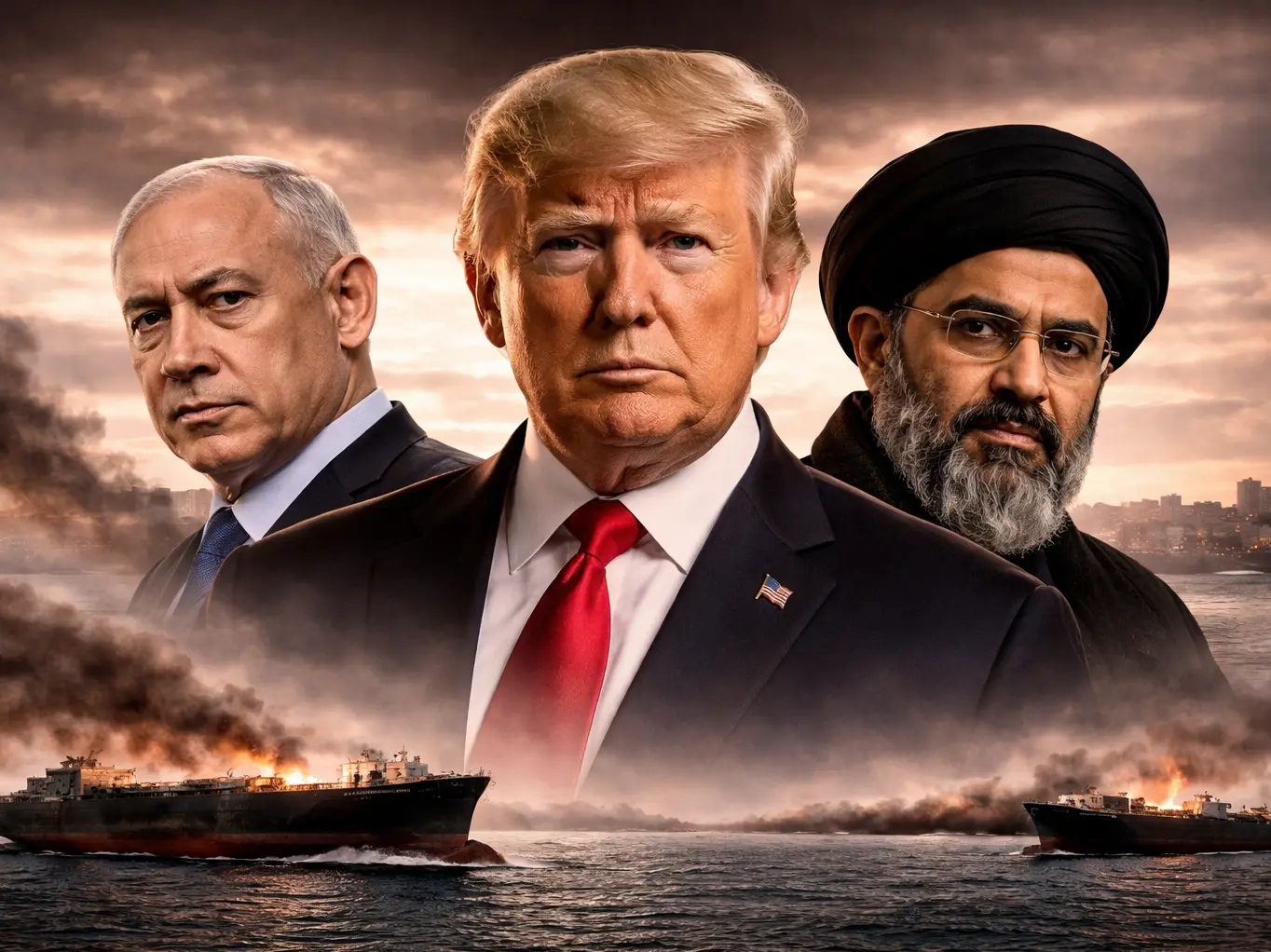
&imwidth=800&imheight=600&format=webp&quality=medium "US-Israel-Iran war highlights: 142 people injured in Israel in last 24 hours: Health Ministry")
The conflict in West Asia entered its Day 29 on March 28. Hostilities began on February 28 when the US and Israeli military launched strikes on Iran, killing Iran’s supreme leader Ali Khamenei and several other top Iranian officials. The operation was named ‘Epic Fury’ by the US and ‘Lion’s Roar’ by Israel. The attacks came amid heightened tensions between Washington and Tehran and ongoing talks over Iran’s nuclear program.
In retaliation, Iran launched attacks on Israel and US military bases in the Gulf region. Iran has also shut down the strategic Strait of Hormuz, targeting vessels that are attempting to cross it. Tehran has stressed that the waterway remains close for the US, Israel, and nations aiding them, but open to friendly nations, including India, Russia, China, Iraq, and Pakistan. The Strait of Hormuz is the only maritime outlet for ports located in the Persian Gulf. Its blockage has significantly affected global energy supply, triggering a sharp rise in oil prices.
While US President Donald Trump has proposed a peace plan to end the war with Iran, which has been going on for nearly a month now. He has reiterated that talks are ongoing despite Tehran rejecting the claims of any negotiations taking place. In his 15-point peace plan, Trump has demanded that Iran end all uranium enrichment and close Natanz, Isfahan and Fordow nuclear facilities. However, Tehran has rejected the proposal and laid out its own terms, demanding guarantees.
In a latest development, the Israeli military on Friday (Mar 27) confirmed striking a uranium processing site in Yazd, central Iran. Iranian media reported earlier that the Ardakan yellowcake production plant was hit in strikes. Following the strike, Iran launched a wave of missile strikes on Prince Sultan Air Base in Saudi Arabia, wounding at least 10 American service members and damaging several critical US refuelling aircraft.
Meanwhile, Trump on Friday (Mar 27) suggested that Washington may not honour its NATO security commitments if allies continue to refuse military support in West Asia, expressing disappointment over Europe’s reluctance to help secure the Strait of Hormuz.
Following Khamenei’s death, Iran has named his son, Mojtaba Khamenei, as the Islamic Republic's new supreme leader. While the new leader has made several written statements, he has not made any public appearances. Since then, rumours have circulated about his health, with claims that he was injured in the strikes that killed his father.
Follow WION for all the updates, analysis and developments on the US-Israel-Iran war
Israel’s Health Ministry reported on Saturday that a total of 142 people were brought to hospitals in the last 24 hours, bringing Israel’s total wartime injuries to 5,689.
Of those injured, 132 remain hospitalised, 15 of whom are in serious condition and one of whom is in critical condition, according to the ministry.
Three Lebanese journalists have been killed in a targeted Israeli strike on their media car in southern Lebanon on Saturday, said local media reports.
Ali Shoeib, reporter for Al Manar TV, a network operated by militant group Hezbollah, and Al Mayadin reporters Fatima and Mohamed Fetoni were killed in an airstrike in the town of Jezzine.
Lebanese President Joseph Aoun condemned the attack as a "blatant crime" that violates international law under which journalists should be protected during war.
Lebanon says more than 50 health workers killed in Israel-Hezbollah war
Qatar and Ukraine signed a defence agreement on Saturday including cooperation on countering threats from missiles and drones, the Gulf state's defence ministry said while Iran pressed an aerial campaign against its neighbours.
Danish shipping giant Maersk said operations had been temporarily halted at Oman's port of Salalah after a drone attack on Saturday injured one worker and damaged a crane.
Ukraine’s foreign ministry dismissed a statement by Iran’s Islamic Revolutionary Guards Corps that a Ukrainian air defence depot had been destroyed in Dubai.
The Israeli military claimed on Saturday (March 28) that it had identified missiles launched from Iran toward Israeli territory and was working to intercept them.
Missiles destroyed a Ukrainian air defence depot in Dubai, the Islamic Revolutionary Guards Corps said on Saturday, according to Fars News Agency.
Pakistan Prime Minister Shehbaz Sharif on Saturday held a phone conversation with Iranian President Masoud Pezeshkian, during which they discussed the ongoing tensions in West Asia and condemned the continued Israeli strikes on Tehran. "During their detailed conversation that lasted over one hour, the two leaders held extensive discussions regarding the ongoing hostilities in the region and peace efforts," a statement by the Prime Minister's Office said.
The UAE had actively supported the initiation and continuation of the war against Iran, and the leadership of Tehran has now decided to end its weeks-long restraint towards the country, Iran’s Press TV confirmed, citing a source.
"We have said many times that Iran doesn't carry out preemptive attacks, but we will retaliate strongly if our infrastructure or economic centres are targeted. To the countries of the region: If you want development and security, don't let our enemies run the war from your lands," said Pezeshkian on X.
The Abu Dhabi Media Office has confirmed a third fire at the Khalifa Economic Zone, close to Khalifa Port in Abu Dhabi. Earlier, a pre-dawn attack near the site led to falling debris that injured several people and caused damage to nearby facilities.
“Authorities further confirmed an additional injury as a result of the incident, to a Pakistani national, bringing the total number of injured individuals to six, with injuries ranging from minor to moderate,” the statement said, adding that “Authorities have controlled all three fires and the cooling process is underway.”
Multiple people were killed and others injured in Israeli strikes across southern Lebanon, according to Lebanon’s National News Agency. Attacks in Deir Zahrani and al-Hanniyeh resulted in casualties, with the injured, reported to be Syrian nationals, transported to hospitals in Tyre for treatment.
The radar system at Kuwait's international airport was heavily damaged in a drone attack on Saturday, Kuwaiti authorities said.
Houthis say attack on Israel comes after continued targeting of infrastructure in Iran, Iraq and Palestinian territories.
Drones have struck Oman's Salalah port causing limited damage
The vessels, both very large gas carriers, are carrying 47,000 MT of liquefied petroleum gas (LPG).
Drones targeted Oman’s Salalah port, the state news agency reported, in the latest escalation across the region.
Authorities said one worker was injured in the attack, while a crane at the port sustained limited damage.
The incident comes amid continued drone and missile strikes linked to the ongoing conflict involving Iran, the United States and Israel.
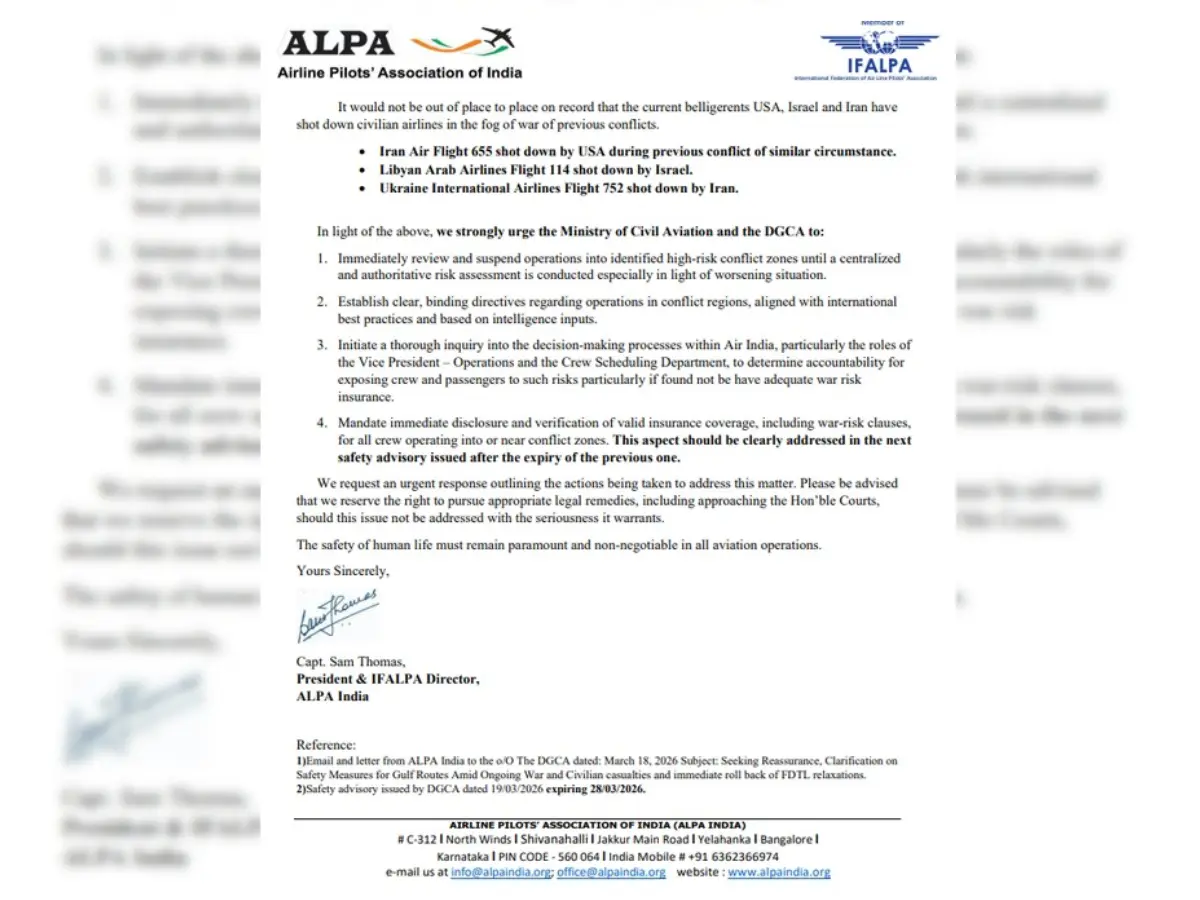
The Airline Pilots’ Association of India (ALPA India) has raised serious safety concerns over continued flight operations into conflict-affected regions, warning of risks to passengers and crew.
In a letter to the DGCA and Civil Aviation Ministry, the body said flying near active war zones poses an “unacceptable risk,” and questioned whether such operations align with safety priorities.
ALPA also highlighted the lack of clarity on war risk insurance coverage for crew and aircraft, noting that no formal assurances have been provided despite repeated concerns.
The association urged authorities to ensure centralised risk assessments and stronger oversight, warning that leaving such decisions to airlines could lead to inconsistent safety standards and potentially catastrophic consequences.
Iran has witnessed huge cryptocurrency flows since the start of the Middle East conflict.
Experts say they are being used to circumvent sanctions placed on Iran's Revolutionary Guards, and as a financial haven by civilians hit by soaring inflation.
Spain's economy could face a "significant slowdown" due to the Middle East war, the Bank of Spain said, warning of potential "episodes of financial market instability".
Separately, Spain's annual inflation jumped to 3.3 percent in March from 2.3 percent the previous month, driven by higher costs for petrol and heating oil, preliminary data showed Friday.
Kuwait's main commercial port was damaged in a drone attack, authorities said, as Iran pressed its campaign against Gulf targets in retaliation for US-Israeli strikes.
The Shuwaikh port was targeted at dawn "by enemy drones, preliminary reports revealed material damage but no human casualties", the Kuwait port authority said on X.
Iran's Revolutionary Guards said Friday that they had turned back three ships trying to transit the Strait of Hormuz, saying the route was closed to vessels travelling to and from ports linked to countries aiding the US-Israeli attacks.
Energy market intelligence firm Kpler said it had identified two container ships belonging to the Chinese firm COSCO that had attempted to leave the Gulf by crossing the narrow waterway, but had turned around.
The Think Tank Institute for the Study of War analysis says Iran could fire large missile salvos at Israel to impose psychological effects on Israeli civilians by consistently forcing them to take shelter and keeping the country under constant alert.
The report said that Iran's use of cluster munitions in its attacks on Israel reflected its inability to threaten the latter's military targets, and hence resorted to inflict psychological effects.
"Iran may be attempting to maximize the effects of its limited capacity to launch large missile salvos at Israel by launching small missile salvos throughout the day to impose psychological effects on Israeli civilians by consistently forcing them to take shelter and keeping the country under constant alert. Iran is spreading out its launches throughout the day, often pausing for several hours between launches. Spreading out ballistic missile launches over a long period of time presumably increases the number of times per day that Israeli civilians must seek shelter," the analysis said.
"Such a strategy is suboptimal and likely reflects the US-Israeli combined force's degradation of Iran's ability to launch large-scale missile attacks. The combined force's degradation of Iran's missile capabilities has prevented Iran from consistently launching large-scale missile attacks against Israel during the current conflict, however. Iran has increasingly used cluster munitions in its attacks on Israel during the war, which likely reflects Iran's inability to meaningfully threaten discrete military targets in Israel and efforts to inflict psychological effects on Israeli civilians," it added.
Bharatiya Janata Party (BJP) MP Manoj Tiwari on Saturday stated that India's access to the Strait of Hormuz represents a diplomatic victory for the country, adding that India is one of only five nations currently permitted movement through the strategic waterway.
Tiwari attributed this achievement to India's peaceful foreign policy and further stated that the government is taking measures to stabilise fuel prices.
Speaking to reporters, he said, "All the routes through the Strait of Hormuz are open for India. This is a major victory for us. Currently, movement is allowed for only five countries, and India is one of them. This is a diplomatic victory for India; it is the result of the relations we maintain as promoters of peace. Apart from this, arrangements are being made to ensure that the prices of diesel and petrol do not increase."
The shadow war in the Gulf has turned into a direct, lethal confrontation. On Friday (Mar 27), a wave of Iranian ballistic missiles struck Prince Sultan Air Base in Saudi Arabia, wounding ten American service members and damaging several critical US refuelling aircraft. Two American service members were very seriously hurt, while the other eight sustained serious injuries in the attack. Unmanned aerial vehicles, or drones, were involved in the attack too, according to US and Saudi officials familiar with the strike. Open-source imagery and data circulating online have since confirmed the hit, reports the Wall Street Journal. The Pentagon, however, has yet to comment on the attack on the American air base.
UAE authorities say fires broke out at an industrial zone following a missile and drone attack from Iran, leaving five people with injuries.
The United Arab Emirates’ defense ministry says air defenses were responding to incoming cruise missiles and drones fired by Iran, as Tehran pressed strikes in the Gulf a month into the regional war.
The Abu Dhabi government media office says in a statement posted online that authorities were dealing with two fires in the area of the emirate’s Khalifa Economic Zones.
The statement says the fires had broken out due to falling debris from a “successful interception” of a ballistic missile.
A separate statement says “the incident has resulted in injuries ranging from moderate to minor sustained by five individuals of an Indian nationality.”
Thailand has reached an agreement with Iran to allow Thai oil vessels safe passage through the Strait of Hormuz, the Southeast Asian nation's Prime Minister said on Saturday. "An agreement has been reached to allow Thai oil tankers to transit safely through the Strait of Hormuz," Thai Prime Minister Anutin Charnvirakul said at a press conference, adding the development would alleviate concerns over fuel imports.
Israel’s military said Yemen had launched a missile toward Israel early Saturday morning, the first time it had faced fire from that country. Iran and Hezbollah continued to fire on Israel overnight Friday into Saturday. Sirens went off around Beer Sheba and the area near Israel’s main nuclear research center for the third time overnight Friday into Saturday.
Israel's military said it launched strikes on Iranian "regime targets" early Saturday, as an AFP journalist in the capital Tehran reported hearing around 10 intense blasts and seeing a plume of black smoke.
A brief military statement said Israeli forces were "currently striking Iranian terror regime targets across Tehran", without elaborating.
Saudi Arabia said Saturday it had intercepted a missile targeting the Riyadh region, as Iran hits the kingdom and its Gulf neighbours with strikes.
"A ballistic missile fired in the direction of the Riyadh region was intercepted and destroyed," the defence ministry wrote on X.
A series of explosions shook Tehran in the early hours of Saturday, an AFP journalist said, reporting around 10 intense blasts in the Iranian capital.
A plume of black smoke could be seen rising over the city after the blasts, the journalist said, one month into the war triggered by US-Israeli strikes on Iran.
Yemen's Houthi movement warned Friday it would join the the Middle East war if US-Israeli attacks continue to hit its ally Iran or if more countries join the conflict.
The Houthi have in the past attacked shipping in the Red Sea in response to regional conflicts, but have so far not intervened in the latest month-old war.
"We affirm that our fingers are on the trigger for direct military intervention," the group said in a statement, warning that it would act if another nations joined the US-Israeli fight or if the Red Sea was used for "hostile operations".
The United Nations atomic watchdog repeated its call on Friday for "restraint" in the Middle East war after Israel struck two Iranian nuclear facilities, including a uranium processing plant.
"IAEA Director General Rafael Grossi reiterates (his) call for military restraint to avoid any risk of a nuclear accident," the International Atomic Energy Agency said on X, reporting "no increase in off-site radiation levels" at the Shahid Rezayee Nejad Yellow Cake Production Facility.

