

&imwidth=800&imheight=600&format=webp&quality=medium "US-Israel-Iran war Highlights: Uncertainty clouds Iran-US talks as Tehran sets terms")
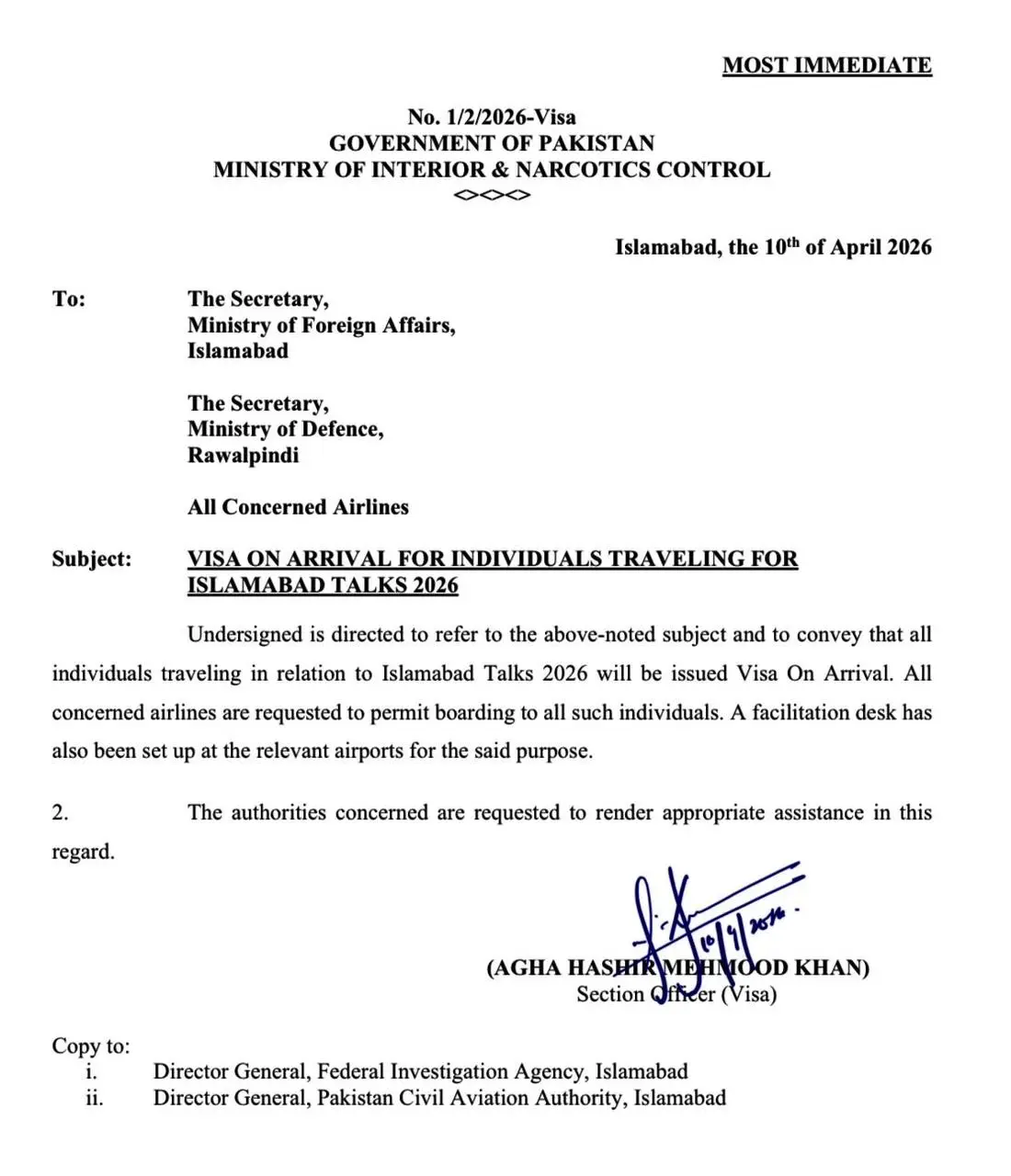
As the war enters its 42nd day today, April 10, 2026, the region is caught in a high-stakes diplomatic deadlock. While a fragile ceasefire between the US and Iran is technically in place, the conflict has pivoted into a brutal "Operation Eternal Darkness" in Lebanon, threatening to collapse the Islamabad peace talks before they even begin. As per reports, high-level delegations from Washington and Tehran have arrived in Pakistan for the much-anticipated Islamabad Talks. However, Iran has denied reports that a negotiating team has reached Islamabad for talks. Calling the claims "false," Iran’s state-affiliated Fars News Agency reported that Tehran has no plans to engage in negotiations with Washington in Pakistan at this stage.
"Until a ceasefire is established in Lebanon, Iran has no plan to participate in peace negotiations in Islamabad with the American side," it quoted.
Key things to know
The Islamabad Summit: A US team led by Vice President JD Vance is scheduled to begin negotiations today (Friday, Apr 10). The talks are based on a 10-point Iranian proposal and a 15-point US counteroffer.
Operation Eternal Darkness: Israel has intensified strikes across Lebanon, killing over 300 people in a single day, including hits on Beirut’s central districts and vital infrastructure. Prime Minister Netanyahu maintains these operations are outside the US-Iran ceasefire scope.
The "Silent" Leader: Iran's Supreme Leader Mojtaba Khamenei issued a written message via state TV on Thursday, stating Iran "does not seek war" but will protect the "resistance front" (Hezbollah). He remains unseen in public, fueling rumours about his health following the February 28 strikes.
Follow WION for all the updates, analysis, and developments on the US-Israel-Iran war
The Israeli military said Friday that it had "dismantled" more than 4,300 Hezbollah sites in Lebanon since fighting with the militant group began last month.
Uncertainty surrounds the prospects of talks between Iran and the United States to find a complete solution to end the conflict in West Asia after Tehran reiterated that key preconditions must be met before negotiations can begin.
Speaker of Iran's Parliament, MB Ghalibaf, in a post on X, said that two measures agreed upon between the parties remain unfulfilled, stressing that progress on these issues is essential before any dialogue can take place.
Hardeep Puri, India's Union Minister for Petroleum and Natural Gas, met the CEO of QatarEnergy, H.E. Mr Saad Sherida Al-Kaabi, in Doha during his two-day visit.
“Discussed all aspects of the strategic relations between the two countries, including high-level engagements, trade, investment, energy, culture and people-to-people relations; and expressed hope for early return of peace and stability in the region. Look forward to further strengthening our bilateral relations,” wrote Puri in a post on X. Puri claimed that Qatar was still a reliable energy partner of India. Both leaders emphasised the urgent need to restore peace and stability in the region through dialogue and diplomacy.
The gas prices in the US have fallen to $4.15 a gallon on Friday, from $4.17 a gallon on Thursday, marking the first time a decrease of more than a penny since the beginning of the US-Israel war in Iran on February 28. Though it remains far ahead of the $3 a gallon of the pre-war price.
Iran's Islamic Revolutionary Guard Force has denied any violation of the ceasefire. The statement released on Friday claims that if any attacks have been carried out in countries along the southern shores of the Persian Gulf, "they are undoubtedly the work of the Zionist enemy (Israel) or the United States."
According to the United Nations, the indiscriminate bombing of Lebanon by Israel has uprooted more than a million people, and among them roughly 390000 are children. Since March 2, a staggering 690 children have been killed or injured in Lebanon. The recent bombardment on Tuesday, after the negotiated ceasefire, between the US and Iran has killed 33 children and injured 153 within minutes.
World Food Programme warns Lebanon is rapidly heading towards a food security crisis as the war on Iran disrupts supply chains
Jewish-owned Israeli restaurant vandalized in Munich; police suspect antisemitic motive
French energy giant TotalEnergies said Friday it had shut down a major refinery on the eastern Gulf coast of Saudi Arabia after it was damaged during the Middle East war, reported AFP.
UK Defence Minister John Healey says hundreds of interceptor missiles will be sent to the Middle East within weeks.
A top medical official in Iran has put the death toll in the war with Israel and the United States at over 3,000 people, reported Associated Press.
All bank branches across Iran will resume operations starting Saturday April 11, according to Iranian state media.
Ahead of peace talks in Islamabad, Spain has called on Iran to negotiate with the United States in ‘good faith’.
Hezbollah announced early Friday it had targeted several key Israeli military positions, as reported by Tasnim news. The attack included detention centres, artillery bases, and troop gatherings, with a barrage of missiles and armed drones, marking 72 operations in 24 hours against Zionist military sites.
Since February 28, 7,527 people have been admitted in hospital for war-related injuries, according to Israel's Health Ministry.
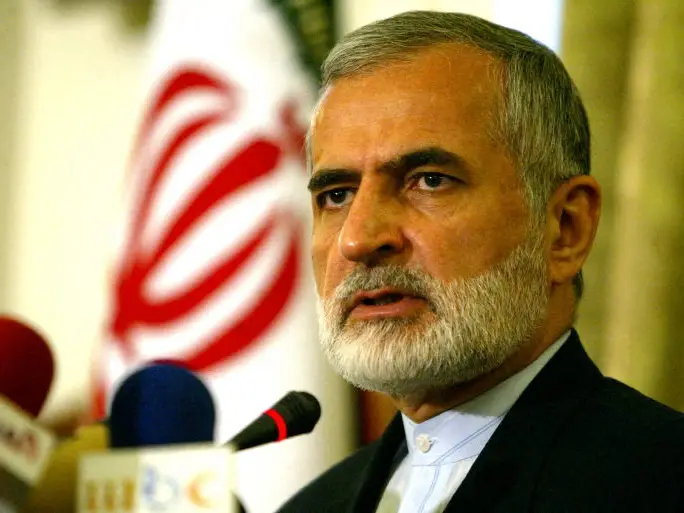
According to the news agency Mehr, Seyed Kamal Kharrazi succumbed to his injuries on Thursday night after US-Israeli strikes hit him several days ago. He was the head of the Strategic Council on Foreign Relations of the Islamic Republic of Iran.
The assassination attempt also claimed the life of his wife on the day of the initial strike.
As Iranian and US envoys prepare to hold talks in Islamabad to end the Middle East war, official sources and experts say Beijing helped pave the way for the negotiations and will be a crucial component in securing a permanent truce.
Pakistan has received praise – and some surprise - on the global stage for its last-ditch clinching of a temporary ceasefire between the warring sides.
Pakistan: Islamabad declared a two-day public holiday ahead of expected U.S.–Iran talks, as authorities implemented strict security measures to decrease human activity in the city.
Stocks rose Friday as investors remained optimistic about the US-Iran ceasefire ahead of planned weekend talks. Equity markets in Tokyo and Seoul led gains across Asia as investors tracked gains on Wall Street.
But oil prices extended Thursday's gains -- Brent added 0.6 per cent and West Texas Intermediate 0.8 per cent -- as the key Strait of Hormuz remained largely closed. Both main contracts remain around $100 a barrel.
Worries that Israel's continued attacks on Lebanon could shatter the peace process added to crude-buying sentiment.
Japan plans to release a further 20 days' worth of oil reserves as early as next month, Prime Minister Sanae Takaichi confirmed Friday.
"To ensure the stable supply of crude oil, we will release starting in early May the equivalent of roughly 20 days' worth (of oil) from the national reserves," she said at a meeting held in response to the conflict in the Middle East.
Air raid alerts rang out across Israel early Friday, including in the commercial hub of Tel Aviv and in the southern coastal city of Ashdod, following rocket fire from Lebanon.
British Prime Minister Keir Starmer and US President Donald Trump on Thursday agreed the "need for a practical plan" to get shipping moving again through the Strait of Hormuz following the US-Iran ceasefire, the UK leader's office said.
The two leaders "agreed that now there is a ceasefire in place and agreement to open the Strait, we are at the next stage of finding a resolution," the prime minister's office said.
"The leaders discussed the need for a practical plan to get shipping moving again as quickly as possible," and agreed to speak again, Downing Street said.
Starmer arrived in Qatar on Thursday on the latest leg of a trip to discuss the war and the ceasefire with Gulf leaders.
Saudi Arabia said on Thursday that the attacks carried out in recent weeks by Iran against the kingdom's energy infrastructure killed one person and impacted its oil production capacity.
The attacks have targeted "infrastructure for oil and gas production, transport and refining, as well as petrochemical plants and power facilities in Riyadh, the Eastern Province and the industrial city of Yanbu," an energy ministry official told the SPA news agency.
The official said the attacks killed one person -- a Saudi national -- and injured seven others, and "disrupted several production operations at key facilities".
This brings to three the number of people killed in the kingdom since the start of the war, which was triggered by Israeli-US strikes on Iran on February 28.
US President Donald Trump on Thursday accused Iran of doing a "very poor job" of allowing oil through the Strait of Hormuz and of breaching the terms of their two-week ceasefire agreement.
In a barrage of social media posts that sparked fresh fears for the shaky truce, Trump also warned Iran against imposing a toll for ships passing through the crucial waterway. "Iran is doing a very poor job, dishonorable some would say, of allowing Oil to go through the Strait of Hormuz," Trump said on his Truth Social platform.
"That is not the agreement we have!"
Israel and Lebanon will hold talks in Washington next week, a State Department official said Thursday, amid mounting international concerns that Israel's bombing campaign could shatter an already fragile US-Iran ceasefire.
"We can confirm that the Department will host a meeting next week to discuss ongoing ceasefire negotiations with Israel and Lebanon," the US official said. Neither Israel nor Lebanon have publicly confirmed the US talks for next week.
The International Monetary Fund will lower global growth forecasts due to the Middle East war, its chief said Thursday, warning of the conflict's "scarring effects" despite a fragile ceasefire.
"Even in a best case, there will be no neat and clean return to the status quo ante," IMF managing director Kristalina Georgieva said.
The IMF also anticipates having to provide up to $50 billion in immediate financial assistance to countries affected by the war, with food insecurity set to affect at least 45 million people.
"Given the spillovers from the war, we expect near-term demand for IMF balance-of-payments support to rise by somewhere between $20 billion and $50 billion, with the lower bound prevailing if ceasefire holds," Georgieva said.
Iran has officially denied reports that a negotiating team has arrived in Islamabad for talks with the United States, labelling the claims "false." State-affiliated outlets Fars News and Tasnim News issued firm rejections following a report from The Wall Street Journal suggesting a delegation had entered Pakistan to meet US officials.
Tehran’s stance remains tied to the escalating conflict in Lebanon. "Until a ceasefire is established in Lebanon, Iran has no plan to participate in peace negotiations," Fars News reported. Tasnim News further clarified that negotiations are currently suspended, citing the US’s failure to secure a ceasefire and Israel’s continued military operations.

