

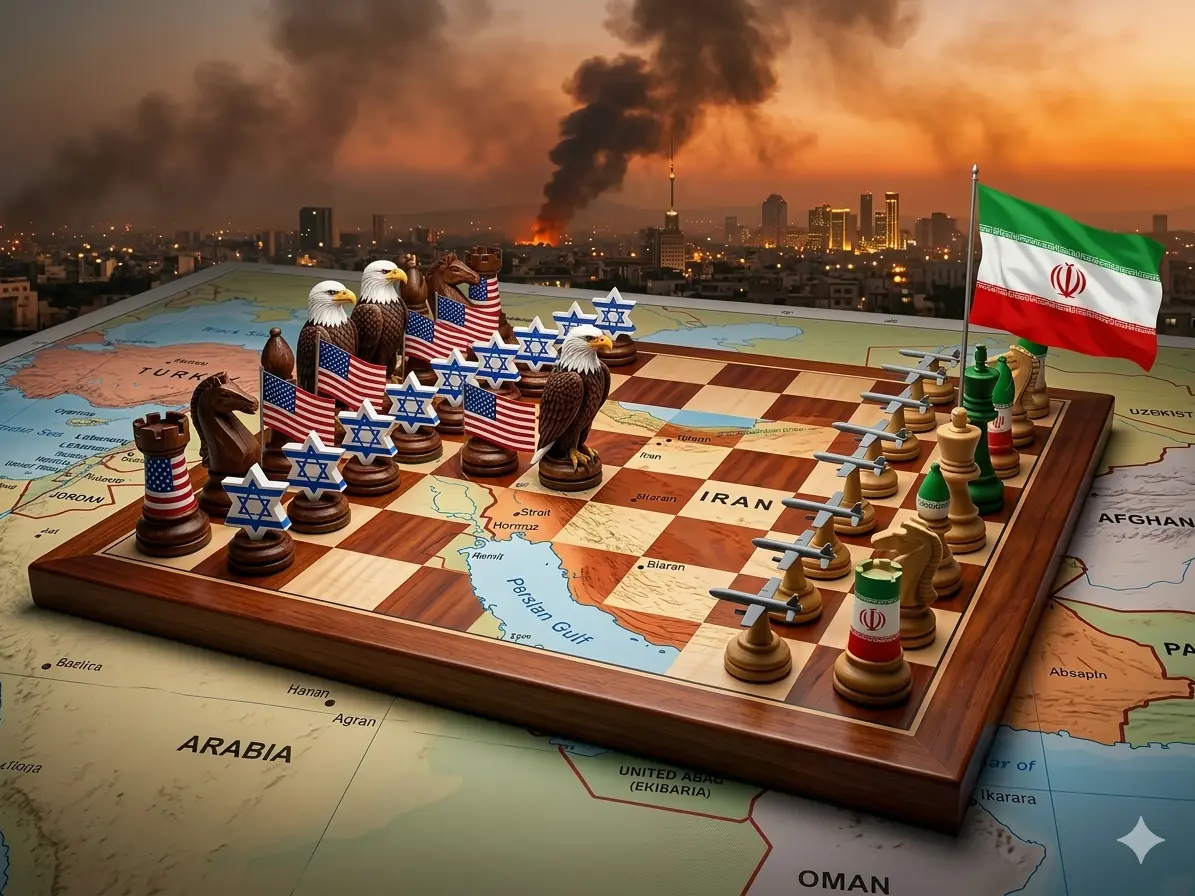
&imwidth=800&imheight=600&format=webp&quality=medium "US‑Iran‑Israel war highlights: Iran has agreed to never again close Hormuz: Trump")
The US–Israel–Iran conflict has entered a pivotal cooling-off period as a 10-day ceasefire between Israel and Lebanon officially took effect at midnight on April 17. The truce, brokered by the United States and mediated by Pakistan, is seen as a critical extension of the broader two-week ceasefire between Washington and Tehran to de-escalate the six-week-old regional war.
In the US, President Donald Trump has announced that Iran has agreed to surrender its stockpile of enriched uranium, which he termed “nuclear dust”, signalling that a comprehensive peace deal is "close." Trump has already extended invitations to Israeli Prime Minister Benjamin Netanyahu and Lebanese President Joseph Aoun to the White House to formalise a "historic peace agreement."
However, the situation on the ground remains fragile. Just hours before the midnight deadline, a final surge of violence claimed at least seven lives in the Lebanese town of Ghazieh, while Hezbollah launched a parting salvo of rockets into northern Israel, wounding two. While Hezbollah has not issued a formal proclamation, its leadership has indicated they will respect the truce provided Israeli strikes cease. Israeli Prime Minister Netanyahu hailed the ceasefire but maintained a firm stance, insisting that the ultimate disarmament of Hezbollah remains a non-negotiable precondition for lasting stability.
Follow WION for all the latest developments, analysis, and live updates on the unfolding US‑Iran‑Israel crisis.
The US is considering releasing $20 billion in frozen Iranian assets in exchange for Iran relinquishing its stockpile of enriched uranium, news outlet Axios reported on Friday, citing US officials.
The report said that Washington and Tehran are in talks over a three-page framework aimed at ending the conflict that began on Feb. 28.
President Donald Trump said in another Truth Social post on Friday that Iran, with the help of the US, has removed or is in the process of removing all sea mines.
A senior Iranian official told Reuters that transit would be through designated lanes that Iran deemed safe for navigation and would exclude naval vessels.
Italian Prime Minister Georgia Meloni said that it is “vital” for Iran to give up its “quest for nuclear weapons.”
She also said that opening of the strait is a fundamental principle of international law, applicable also to “every other strait or shipping channel”.
US President Donald Trump claimed on Friday that “Iran has agreed to never close the Strait of Hormuz again.”
“It will no longer be used as a weapon against the World!” Trump wrote in yet another Truth Social post.
Maritime tracking firm Kpler confirmed that three Iranian oil tankers successfully exited the Persian Gulf through the Strait of Hormuz, marking the first such loaded vessels to bypass the US naval blockade established on April 13. Kpler told the AFP news agency that the Deep Sea, Sonia I and Diona – carrying a combined five million barrels of crude- passed through on Wednesday after loading at Iran’s Kharg Island earlier this month.
UK Prime Minister Keir Starmer has reached the Elysee Palace for a meeting with French President Emanuel Macron. They will host a video conference involving 40 countries. India has also been invited to the meeting. The meeting is regarding a coordinated, independent mission to secure the Strait of Hormuz once a lasting ceasefire is achieved. There will be critical in-person participation from German Chancellor Friedrich Merz and Italian Prime Minister Giorgia Meloni. This core European group was joined virtually by a powerful coalition of global economic powers, most notably India, represented by Foreign Secretary Vikram Misri, and Japan, both of which are heavily dependent on the waterway for energy security.
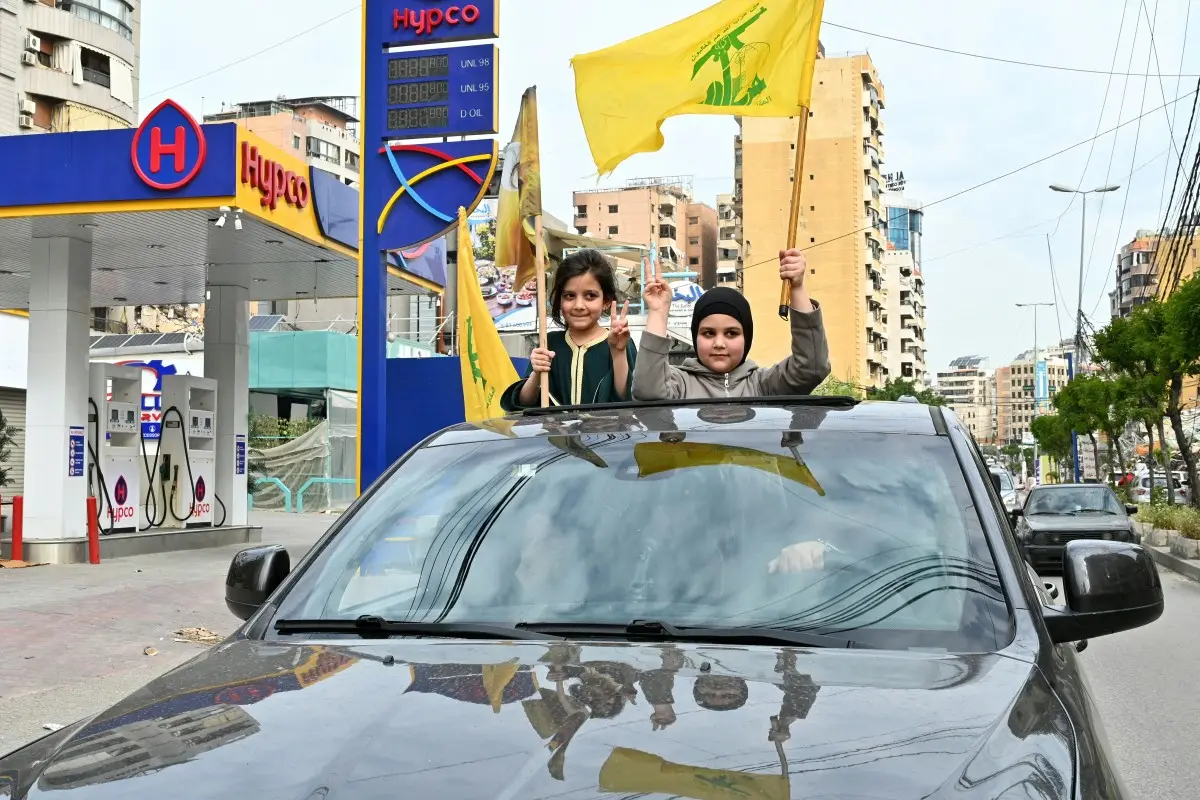
The 10-day ceasefire agreed between neighbouring states Israel and Lebanon holds despite initial violation. It is transitioning into a state of "tense calm" following several early violations. While the initial hours were marked by reports of shelling and military activity. Tens of thousands of displaced Lebanese are currently streaming toward southern Lebanon and Beirut's southern suburbs in Dahiyeh. Heavy traffic is reported on the coastal highway as families rush to assess damage to their homes.
India's Foreign Ministry has said that it was invited to join the UK and France for the initiative to restore safe navigation through the strategic waterway of the Strait of Hormuz.
Israeli strikes on Tyre in southern Lebanon killed at least 13 people just before the 10-day ceasefire with Israel took effect at midnight, a city official said on Friday.
The official, who asked not to be identified, said another 35 people were injured, and emergency workers were still searching the rubble for another "15 missing".
The strikes targeted six residential buildings which were destroyed, and came just minutes before midnight (2100 GMT Thursday), an AFP correspondent said.
Alongside hundreds of others forced to flee south Lebanon, Amani Atrash and her family waited eagerly on Friday morning for bulldozers to reopen the Qasmiyeh bridge, which Israel bombed just hours before a ceasefire began.
Her family was among the tens of thousands of people hoping to go home after being displaced by the Israel-Hezbollah war -- despite warnings against returning to the south from the Iran-backed militant group, Lebanese officials and the Israeli army, which continues to occupy parts of the area.
"We set off an hour before the ceasefire took effect so we could reach the bridge once it opens, allowing us to return to our town," said Atrash, 37, who fled north at the start of the war.
"The wait is very difficult because we want to get there as quickly as possible," she told AFP as she sat in her car in a line stretching for kilometres northeast of the coastal city of Tyre.
The Lebanese militant group Hezbollah said Friday that it was keeping its "finger on the trigger" in case of any Israeli violations of a ceasefire that went into effect overnight.
In a statement, the Iran-backed movement said it had carried out "2,184 military operations" against Israel and its troops inside Lebanon, adding: "The fighters will keep their finger on the trigger because they are wary of the enemy's treachery."
Stock markets fell Friday as investors awaited news of an extension to the Iran-US ceasefire, while crude prices edged back down following the previous day's rally.
The losses follow a healthy, record-breaking week for equities fuelled by hopes the Middle East war, which began in late February, could be close to an end after Donald Trump said negotiators were close to a deal.
But worries abound that a shaky truce agreed earlier this month -- and which ends next week -- could fall apart and spark a fresh market rout.
A Pakistan-flagged tanker that entered the Persian Gulf over the weekend has become the first carrier to exit through the Strait of Hormuz with a crude cargo since a US blockade began on Monday, underscoring just how limited traffic through the vital chokepoint remains.
The Shalamar sailed just south of Iran’s Larak island and out into the Gulf of Oman late Thursday with around 450,000 barrels of crude loaded at Das Island in the United Arab Emirates, according to ship-tracking data. The Aframax tanker, only half full, is signaling Karachi as its destination.
Japan on Friday welcomed a 10-day ceasefire between Israel and Lebanon that could pause fighting between Israel and the Hezbollah militant group.
Israel has not been fighting with Lebanon itself, but rather with the Iranian-backed Hezbollah militant group inside Lebanon.
Japan's Deputy Chief Cabinet Secretary Masanao Ozaki told reporters in Tokyo that the U.S.-mediated agreement was a positive move.
"We strongly hope that the agreement is maintained and would lead to further stability and peace in the region," Ozaki said.
Iranian President Masoud Pezeshkian said, “Last year at the UNGA, I urged a return to the Golden Rule of Islam, Christianity, Judaism, and human conscience; ‘Do not do to others what you would not want done to yourself’- a universal principle so blatantly violated by the Zionist regime.”
He added, “Nuclear weapons for one regime, but war against an entire nation over its peaceful nuclear program? Scientists assassinated in Iran, Iraq, and Syria, children killed in Minab—has human conscience died in some world leaders?”
Smoke was seen rising from the Israel-Lebanon border from northern Israel on Friday (April 17), hours after Israel and Lebanon agreed to a ceasefire.
The ceasefire began on Thursday (April 16) as a 10-day truce took effect at 5 p.m. EST (2100 GMT), signalling a pause in Israel’s conflict with Iran-backed Hezbollah, which has run in parallel to the war with Iran.
Israeli Prime Minister Benjamin Netanyahu said in a video statement he had agreed to the 10-day pause and that there was an opportunity to strike a historic deal with Lebanon, though it remained unclear whether the truce would hold.
Israeli attacks have killed more than 2,100 people in Lebanon since March 2 and forced more than 1.2 million to flee, Lebanese authorities said. Hezbollah attacks have killed two Israeli civilians, while 13 Israeli soldiers have died in Lebanon over the same period, according to Israel.
The ship's embarked carrier air wing includes eight F-35C stealth fighters, F/A-18 fighter jets, EA-18G electronic attack aircraft, E-2D command and control planes, MH-60 helicopters and CMV-22B Ospreys for logistics support.
A South Korean oil tanker has transited the Red Sea for the first time since the effective closure of the Strait of Hormuz, Seoul's oceans ministry said on Friday.
Import-dependent South Korea has taken steps to mitigate the risks to its energy supplies since US-Israeli attacks on Iran in late February prompted Tehran to shut off access to the strait, now under a US blockade.
Seoul has sought new sources of oil and said this month that it would send five Korean-flagged ships to the Saudi Arabian Red Sea port of Yanbu to establish alternative routes.
The ministry announced on Friday the "first case of crude oil being transported into the country via the Red Sea, a detour, since the blockade of the Strait of Hormuz".
The ongoing West Asia conflict has severely impacted the cashew processing industry in Palasa, bringing exports to a standstill and forcing several units to shut down operations.
Palasa is home to nearly 300 cashew processing units, collectively handling around 500 tons of raw cashew nuts daily. Of this, about 125 tons of processed cashews are typically exported each day to cities like Gorakhpur, Indore, Kanpur, and Jeypore, as well as to international markets including Pakistan, Bangladesh, and Afghanistan. The industry provides employment to over 20,000 people.
However, the sector relies heavily on imported raw cashew nuts, primarily sourced from African nations such as Ghana, Ivory Coast, Benin, Tanzania, along with Indonesia, making it particularly vulnerable to global disruptions.
French President Emmanuel Macron on Friday said he was concerned that a ceasefire between militant group Hezbollah and Israel "may already be undermined by ongoing military operations."
"I call for the safety of civilians on both sides of the border between Lebanon and Israel," he said on X. "Hezbollah must lay down its arms. Israel must respect Lebanese sovereignty and end the war," he added.
A 10-day ceasefire agreed between Israel and Lebanon took effect at midnight local time (2100 GMT Thursday).
Turkey is hosting a high-level diplomatic push in Antalya as regional powers step up efforts to end the ongoing Middle East war.
Foreign ministers from Turkey, Pakistan, Saudi Arabia and Egypt are set to meet on the sidelines of the Antalya Diplomacy Forum, with the conflict and the blockade of the Strait of Hormuz expected to dominate discussions.
President Recep Tayyip Erdogan, who will address the forum, has called for extending the fragile ceasefire and resuming negotiations, saying diplomacy must replace military action.
Pakistan, which hosted the first round of US-Iran talks, is positioning itself as a key mediator, with Prime Minister Shehbaz Sharif also attending the forum after stops in Qatar and Saudi Arabia.
An Israeli strike on the southern Lebanese town of Ghazieh has killed at least seven people and wounded 33, the health ministry said, hours before the ceasefire between the two countries went into effect.
Lebanese state media reported a "massacre against civilians" in the town, noting that rubble removal operations were ongoing, while the health ministry said its toll is "preliminary and not final".
Trump said Iran has agreed to hand over its store of enriched uranium and that the two sides were "close" to a peace deal ending six weeks of conflict.
"They've agreed to give us back the nuclear dust," Trump told reporters at the White House, using his name for the enriched uranium stockpile that the United States says could be used to build nuclear weapons.
Israel's emergency service, Magen David Adom, said in a statement that two people were wounded, one of them seriously, in Karmiel and Nahariya after rocket fire in northern Israel as the army and Iran-backed Hezbollah exchanged new cross-border fire shortly before the truce was due to take effect.
Israeli Prime Minister Benjamin Netanyahu said the 10-day ceasefire with Lebanon offered an opportunity for a "historic peace agreement" with Beirut, but insisted that the disarmament of militant group Hezbollah remained a precondition.
Trump earlier said Netanyahu and Lebanese President Joseph Aoun had agreed to the truce starting at 2100 GMT on Thursday evening.
Iran's foreign ministry welcomed the Israel-Lebanon truce, calling it part of the earlier two-week ceasefire deal struck between the Islamic Republic and the United States to pause the Middle East war, state media reported.
Ministry spokesman Esmaeil Baghaei "welcomed the announcement of the ceasefire in Lebanon and noted that the cessation of the war in Lebanon was part of the ceasefire understanding between Iran and the United States, mediated by Pakistan", state news agency IRNA posted on Telegram.
Iran’s Parliament Speaker Mohammad Baqer Ghalibaf said the Lebanon ceasefire was the result of Hezbollah’s “steadfastness” and the unity of the “Axis of Resistance,” adding that Tehran would approach the truce with caution.
“We will remain together until the full realisation of victory,” he said in a post on X, while thanking Pakistan and Army Chief General Asim Munir for their mediation efforts.
Ghalibaf added that Iran would stay committed to its position, saying, “we are true to our pledge.”
A 10-day ceasefire agreed between neighbouring states Israel and Lebanon took effect at midnight local time (2100 GMT Thursday). Israel has been fighting Hezbollah since the militant group launched rocket attacks in support of Iran last month.
Hezbollah has not officially said if it will recognise the ceasefire but one of its lawmakers told AFP on Thursday that the group would respect it if Israeli attacks on its militants stopped.

