'If we want to survive...': Putin wants Russian families to have more children

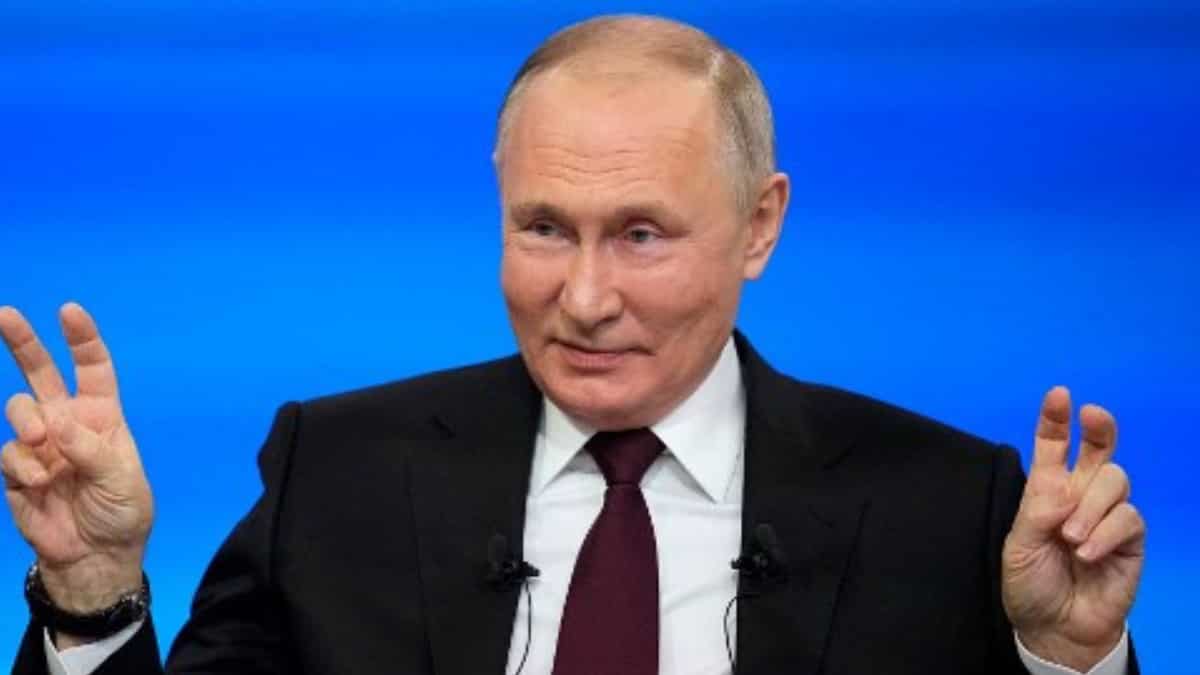
Vladimir Putin
President Vladimir Putin wants Russian families to have more children, at least two, for the nation's ethnic survival.
He said on Thursday (Feb 15) that the families must have three or more children for the country to develop and thrive.
Reports backed by the West indicate that ever since the Ukraine war began in February 2022, Russia has suffered significant losses. But Moscow hasn't unacknowledged such reposts yet.
Several reports have claimed that hundreds of thousands of people have fled the country in protest of the conflict or for fear of being called up to fight.
Meanwhile, Putin told employees at a tank factory in the Urals that two children per household were the minimum number required for Russians to maintain their identities.
"If we want to survive as an ethnic group - well, or as ethnic groups inhabiting Russia - there must be at least two children," he said.
The Russian president further said that if each family had just one child, the population would shrink and "in order to expand and develop, you need at least three children".
Putin declaredhimself a supporter of "traditional values" based on family, nation and the Orthodox Christian faith.
In the course of his 24 years in power, the country has severely restricted expressions of sexual orientation and gender identity and banned the "LGBT movement" as "extremist".
Watch:Ukraine battered on land, attacks on sea
Population crisis in Russia
Last year in November, Putin urged the women in the nation to give birth to as many as eight children.
While speaking at the World Russian People's Council in Moscow, he suggested that it should be a norm to create large families.
In terms of population, Russia has suffered two decades of gradual decline following the collapse of the Soviet Union.
The state statistics bureau estimated the population to be 146.4 million at the start of 2023, down from nearly 149 million 20 years earlier but up from a low of about 143 million between 2007 and 2012.
(With inputs from agencies)