&imwidth=800&imheight=600&format=webp&quality=medium "‘Gaddafi ecstasy pills’ highlight Libya’s growing role in drug trafficking in Africa, Europe and beyond")
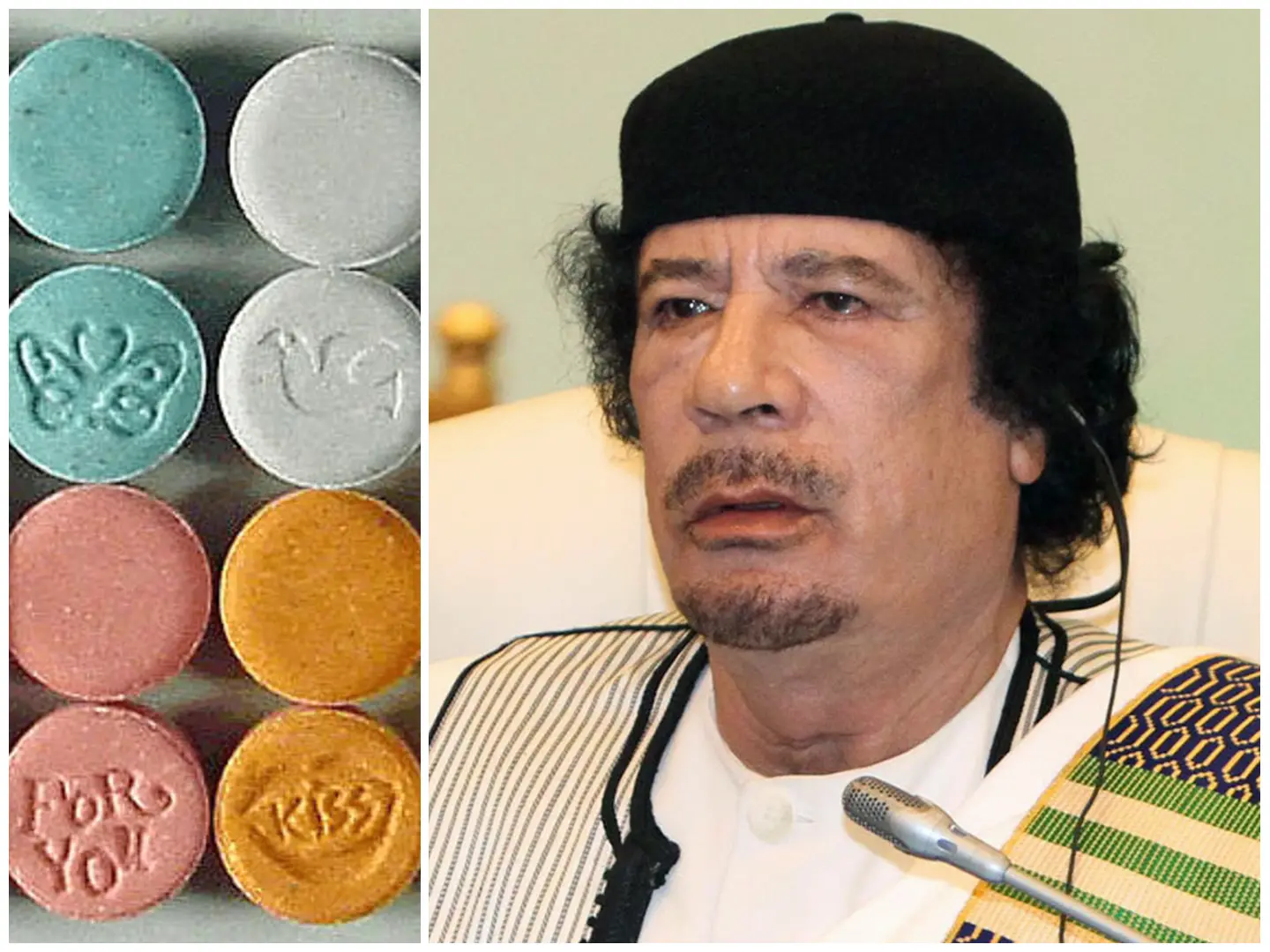
One might wonder what's common between Muammar Gaddafi and ecstasy pills, but a recent haul of the party drug bearing the visage of the late Libyan leader is bringing to focus Libya's emerging role as a narcotics hub. Authorities of the north African nation recently seized about 100,000 ecstasy pills moulded in the shape of Gaddafi’s face, hair and famous Bedouin robes. The shipment came by sea from an unnamed European country, reported Reuters and other outlets.
How the Gaddafi-shaped ecstasy shipment was seized
The reports said that security agents received a tip-off that a gang planned to move the drugs by sea, and tracked the shipment until it reached a Libyan port. Officers intercepted a cargo van and found the pills hidden inside, said Al Rada for Combating Terrorism and Organised Crime. About 100,000 XTC pills were seized and suspects referred to prosecutors. The pills were brown and moulded with Gaddafi’s distinctive features.

After Gaddafi's death, Libya became a transit hub for synthetic drugs
Gaddafi was one of the last-standing dictators who fell in the wake of the Arab Spring-inspired protests of 2010-11. He was captured and killed by rebel fighters helped by US-led NATO forces in October 2011. Since his death, Libya has been ravaged by instability and civil conflict.
Trending Stories
Currently, it is a de facto divided state, with the Tripoli-based Government of National Unity controlling the west, and forces linked to Khalifa Haftar in the east and much of the south.
Amid this, the narcotic underworld appears to have grown. The seizure of ‘Gaddafi pills’ highlights Libya’s growing role as a transit hub for synthetic drugs and other narcotics moving across Africa, Europe, the Middle East and beyond.
Libya, the regional narco hub: From cannabis to cocaine and synthetics
The United Nations Office on Drugs and Crime (UNODC) said in a report this January that Libya had become a major transit hub for synthetic drugs and other narcotics. Trafficking networks have exploited Libya’s fragmented governance, porous borders, long coastline and weak institutions.
Cannabis resin, cocaine, MDMA/ecstasy, Captagon and illicitly sourced pharmaceuticals are moving through Libya. The trafficking networks connect suppliers in the Americas with markets in Western and South-Eastern Europe, the Middle East and Africa.
Cocaine shipments now arrive directly from Ecuador, Colombia and Brazil at Libyan ports. Consignments move through West African ports and overland routes across Niger and Chad.
In 2024, cocaine seizures in Libya were estimated to have street value of up to $7.8 million.
Ecstasy, pharmaceuticals and synthetic drugs surge in Libya
This is not the first time in recent years that synthetic drugs were seized in Libya. In March 2023, authorities seized 1.7 million ecstasy tablets at Misrata port in five second-hand cars aboard a commercial vessel. Another 600,300 tablets were later seized from the same vessel at Benghazi.
Pharmaceutical trafficking is also widespread, with more than 4 million tramadol pills seized in 2023. Benghazi authorities found 15 million pregabalin tablets in 2023 and another 8.6 million in January 2024, having a combined black-market retail value of around $34.5 million.
Libya, a new narco state in the making?
Over the past decade, Libyan ports such as Misrata, Benghazi, al-Khoms and Tobruk have become key entry and redistribution points.
Drug trafficking in Libya is slowly becoming a lucrative, albeit dangerous industry, if one goes by the reports. The clandestine industry overlaps with migrant smuggling. Proceeds from narcotics are fuelling firearms trafficking and illicit currency markets. Armed groups are being strengthened, further weakening Libya’s national institutions.