
&imwidth=800&imheight=600&format=webp&quality=medium "‘Freedom of navigation, energy security’: QUAD Foreign Ministers meet begins in Delhi - What leaders said in opening remarks")
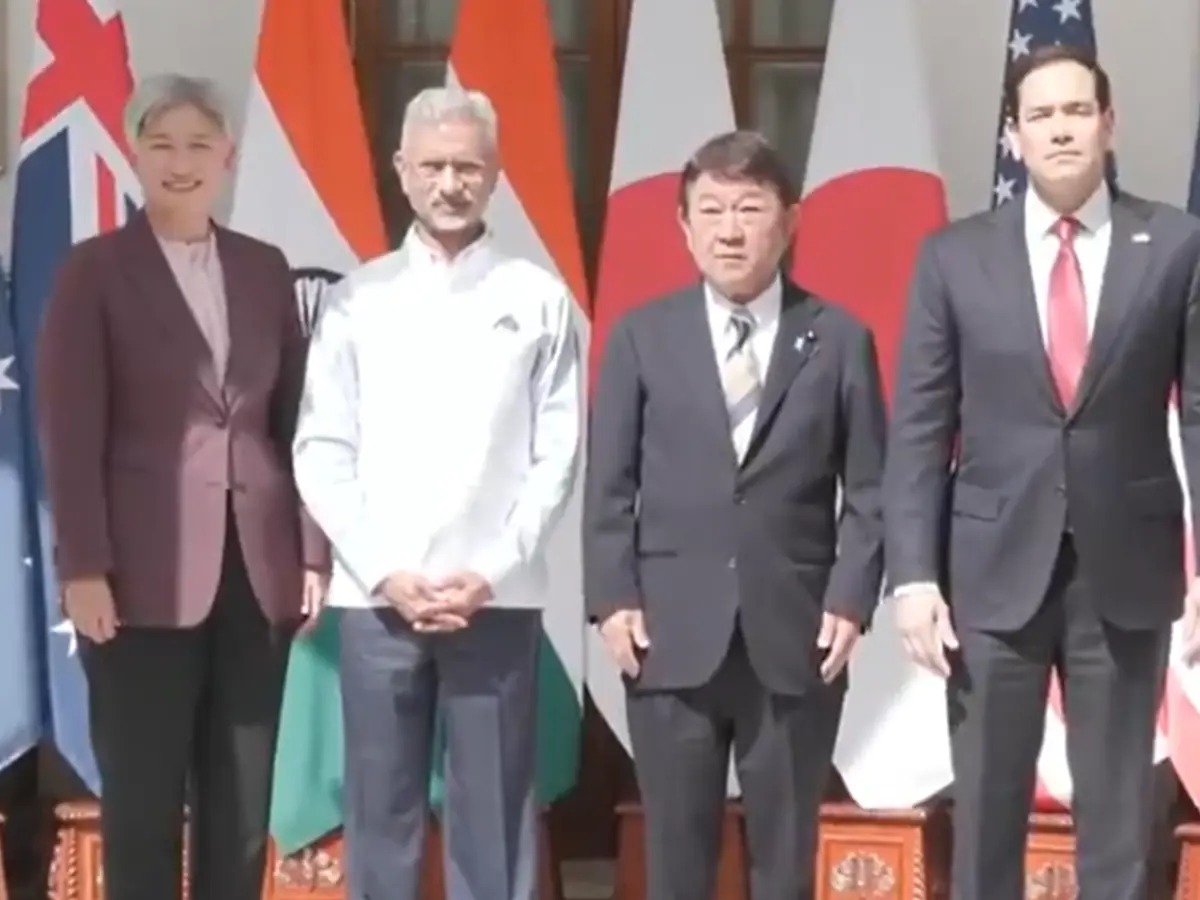
The Quad Foreign Ministers meet began in New Delhi on Tuesday (May 26). The meeting is being attended by US Secretary of State Marco Rubio, Australian Foreign Minister Penny Wong and Japanese Foreign Minister Toshimitsu Motegi. The leaders expressed their shared commitment to a free, open and secure Indo-Pacific, while stressing the need for stronger cooperation on maritime security, resilient supply chains, critical technologies, economic security, humanitarian response and regional stability. They also underlined the importance of trusted partnerships and accelerating QUAD collaboration amid growing global and regional challenges.
Also Read: Quad foreign ministers' meet takes place in Delhi after Trump-Xi summit. What will be different?
What Jaishankar said?

Opening the QUAD Foreign Ministers’ meeting in Delhi, External Affairs Minister S Jaishankar said that the grouping would deliberate on “shared activities” while addressing the many global challenges and opportunities facing the Indo-Pacific region. Stressing that the QUAD’s focus remains firmly on the Indo-Pacific, Jaishankar highlighted issues such as “supply chain resilience, connectivity choke points, manufacturing and resource concentrations and gaps in critical infrastructure” as key concerns requiring stronger partnerships and trusted cooperation. “The Indo-Pacific has, in addition, its own particular concerns,” Jaishankar said, adding that these challenges require “enhancing strategic confidence, ensuring maritime security, promoting economic choices, and fostering a deeper collaborative ethos.” Highlighting recent progress, the minister said QUAD officials had advanced collaboration in areas including maritime security, critical technologies, economic resilience and humanitarian assistance and disaster relief (HADR). “As maritime democracies, pluralistic societies and market economies, we share the responsibility towards a free and open Indo-Pacific,” he said, expressing confidence that the discussions would be “useful and productive.”
What Rubio said?
US Secretary of State Rubio thanked Jaishankar and the Indian government for hosting the summit, recalling that his first meeting as Secretary of State was a QUAD meeting — a move he said reflected Washington’s commitment to the grouping. Rubio said the QUAD is evolving from a forum that only discusses challenges into one that actively takes action on them, adding that recent global events have made the bloc’s cooperation even more relevant. Highlighting the collective strengths of India, Australia, Japan and the United States, Rubio said the four nations can jointly contribute to humanitarian response, energy security, freedom of navigation, critical minerals and resilient supply chains. He also said that the meeting comes at a crucial time and expressed confidence that the grouping would make further progress on key regional issues. Highlighting the strengths of the four-member alliance, Rubio said each country — India, Australia, Japan and the United States — brings unique capabilities ranging from humanitarian assistance and critical minerals to defence and strategic cooperation.
What Japan's FM said?
Japan's FM Toshimitsu Motegi said the gathering sends a strong message that the QUAD will continue to promote cooperation for a “free and open Indo-Pacific.” Stressing the need for Indo-Pacific nations to strengthen resilience and economic security, Motegi said countries in the region must have the capacity to determine their own future. He also expressed hope for frank discussions aimed at accelerating QUAD collaboration.
What Australian FM said?
Australia's Penny Wong described India as a key power shaping the Indo-Pacific and the wider world, stressing the importance of preserving countries’ freedom of choice and sovereign interests in the region. Wong said the four QUAD nations — India, Australia, Japan and the United States — share a common vision for a free and open Indo-Pacific despite having different histories and interests. Highlighting cooperation in disaster response, critical infrastructure, undersea cables, maritime security and critical minerals, she said all members are committed to making the QUAD stronger, more effective and focused on delivering a peaceful, stable and prosperous region.

