Four Central European nations as part of V4 group back India for UN Security Council seat

&imwidth=600&imheight=450&format=webp&quality=medium "Four Central European nations as part of V4 group back India for UN Security Council seat")
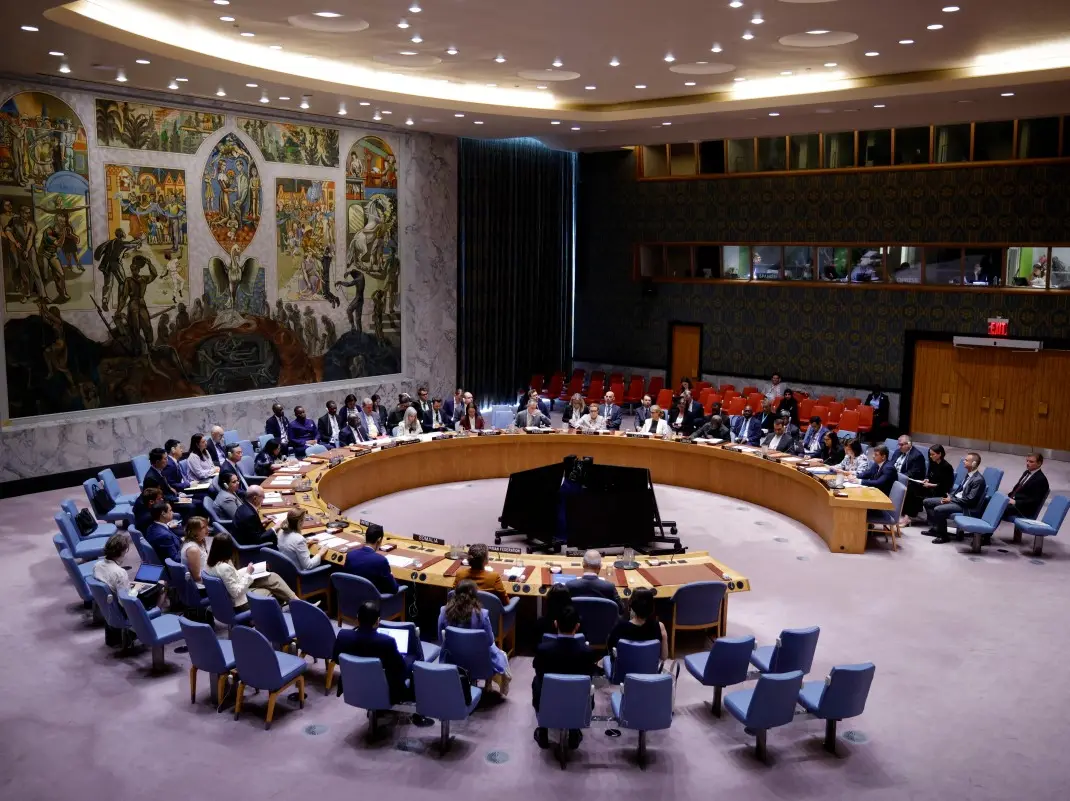
The United Nations Security Council. Photograph: (AFP)
Visegrád Group (Poland, Hungary, Slovakia, Czechia) backed India's UNSC permanent seat bid at the first V4+India ministerial meet with Jaishankar, agreeing on annual talks, defence, trade and tech cooperation.
Four Central European nations have given a collective boost to India’s long-running campaign for a permanent seat on the United Nations Security Council, after the first ministerial meeting between New Delhi and the Visegrád Group on the sidelines of the UN General Assembly in New York.
Slovak Foreign Minister Juraj Blanár, whose country currently holds the V4 presidency, said the grouping was united on the issue. “We all agree as V4 countries that India, as part of the Global South, an upcoming superpower in the Indo-Pacific region, must be at the table as a permanent member of the UN Security Council,” he said after the talks.
The Visegrád Group, Poland, Hungary, Slovakia and Czechia, met Indian External Affairs Minister S. Jaishankar in the new V4+India format. Jaishankar called it “a new historic occasion” and thanked Blanár for convening the session. He said the discussion had been “very, very productive.”
The ministers agreed to hold annual foreign ministers’ meetings and to launch an annual business forum, reflecting India’s deepening ties with the European Union and a desire for a more structured Central European track. They also pledged closer work on technology, innovation, research and education, as well as cultural links and people-to-people exchanges, including student mobility.
Defence featured prominently. Jaishankar noted a “very strong history” of military cooperation with all four V4 states and said both sides wanted to “refresh and take forward that record.” Space, connectivity and broader industrial and technological collaboration were also discussed.
The meeting brought together Poland’s Deputy Prime Minister and Foreign Minister Radosław Sikorski, Hungary’s Deputy Prime Minister and Foreign Minister Anita Orbán, Slovakia’s Juraj Blanár and Czech Foreign Minister Petr Macinka. They also exchanged views on the war in Ukraine and the conflict in the Gulf, describing the conversation as a useful stocktake of major global crises.
Jaishankar later said India already had “very good relations” with the V4 countries and valued their industrial strength, innovation and talent. The endorsement adds European voices to India’s argument that the Security Council, still structured around the post-1945 order, no longer reflects contemporary power. For the V4, the new format offers a dedicated channel to a large market and an increasingly influential Indo-Pacific actor, beyond their individual bilateral ties with New Delhi.
