Explained | How Ecuador became a nation held hostage by its own criminal gangs

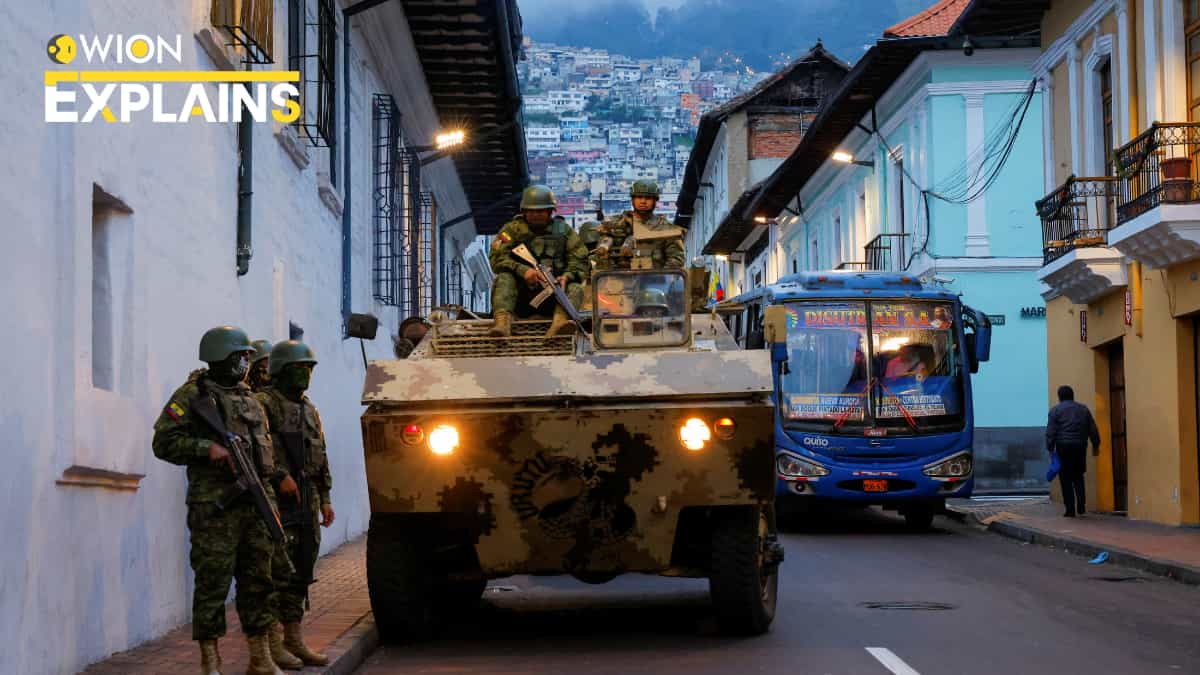
File photo.
Ecuador has declared a state of emergency for 60 days after one of the country's most notorious narco bosses escaped from prison. On Wednesday (Jan 10), President Daniel Noboa said that his country was at war with drug gangs. Noboa, who came to power in January, named 22 gangs as terrorist organisations which made them official military targets. Following the government announcements, gangs started hitting back with a fresh wave of violence across the country.
The crisis presents a fresh challenge for Noboa, who pledged during last year's election campaign that he would curb violence in the Central American country.
A fresh wave of violence
Violence is not new in Ecuador. Since the Covid pandemic in 2020, the security situation in the country worsened which also battered the economy. Citinggovernment data, a report by the news agency Reuters on Thursday said that the number of violent deaths rose to 8,008 in 2023, nearly doubling the figure reported in 2022.
The government has blamed the situation on the growing reach of cocaine-trafficking gangs, who have destabilised swathes of South America. Ecuador's prison system is also a major contributor to the de-stability.
Inside jails, gangs have taken advantage of the state's weak control to expand their power. In recent times, prison violence has become increasingly common, resulting in numerous deaths.
Govt's crackdown and chaos that unfolded
Last Sunday, the police said that Adolfo Macias, a notorious narco boss and leader of the Los Choneros, disappeared from the prison where he was serving a 34-year sentence. This caused President Noboa to declare a state of emergency in Ecuador for sixty days, which included a nationwide curfew from 11 pm to 5 am. Exceptions were given to workers and individuals travelling to and from airports with a scheduled flight during curfew hours.
As the week began on Monday, there were incidents of violence in at least six prisons. Reuters reported that as of Wednesday, more than 100 guards and other staff were still being held hostage by prisoners.
In central Ecuador's Riobamba, around 39 inmates escaped from a prison but some of them were re-captured. The report said that seven police officers had also been kidnapped of which three were freed.
Unrest has spread in the streets. On Tuesday, videos circulated on social media showing armed men setting vehicles on fire in a street in Esmeraldas. On the same day, two police officers were killed in Guayas province where Guayaquil is located.
The most dramatic display of violence came when armed men wearing balaclavas stormed a studio of public broadcaster TC carrying weapons and grenades on Tuesday. The gunmen held journalists hostage. Over a dozen people in the group were arrested.
Explosions were also reported in several cities on Tuesday, but there were no reports of injuries.
The police said on Wednesday that 70 people had been arrested since Monday in response to incidents like the TV station take-over. Schools were shut across the country (on Wednesday), with students tending to online classes and many businesses choosing to close for the day.
Since the state of emergency began, 329 people, mostly members of gangs like Los Choneros, Los Lobos and Los Tiguerones, were arrested, armed forces commander Jaime Vela told reporters on Wednesday evening. "There is no hostage who has been murdered," Vela said in response to videos shared on social media which showed prison staff being subjected to extreme violence, including being shot and hanged.
'An armed conflict'
A day after declaring a state of emergency, President Noboa said in an updated decree on Tuesday that he recognised an "internal armed conflict" in Ecuador and identified several criminal gangs as terrorist groups, including Los Choneros. The decree ordered the armed forces to neutralise the groups.
"It is a non-international armed conflict. We are fighting for national peace. We are also fighting against terrorist groups, which today number more than 20,000 people," Noboa told a local radio station on Wednesday.
Also watch |Ecuador: Violent chaos unfolds as soldiers patrol streets, nationwide curfew imposed
"We will not give in to the stupid things they are used to doing. They, I mean the terrorists who are in these prisons. It is difficult, it is hard and I also sympathise with the families of the kidnapped officials. We are in a state of war, we are in a state of war, and we cannot give in to these terrorist groups," he added.
After coming to power, the president has been touting his "Phoenix Plan" for security. This plan includes a new intelligence unit, tactical weapons for security forces, new high-security prisons, and reinforced security at ports and airports - key points for drug shipments - which would cost some $800 million.
In December last year, Noboa said that the US would provide new weapons worth $200 million for the army, and the rest of the funds would come from the national budget.
Later this year, he plans to hold a security-focused plebiscite. This would include asking citizens if the government should undo a ban on the extradition of Ecuadoreans wanted abroad and if the seizure of assets from suspected criminals should be allowed.
(With inputs from agencies)