

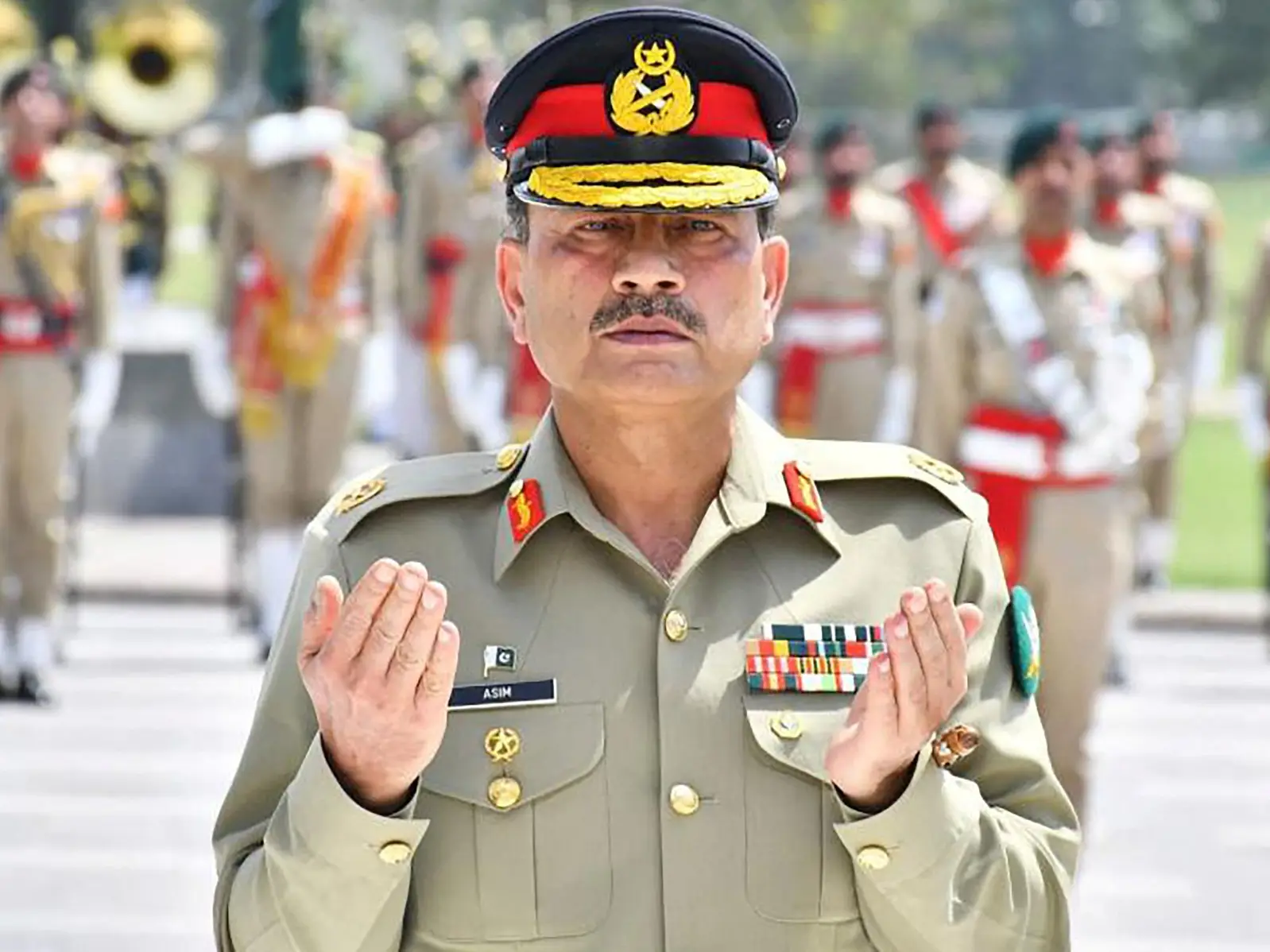
&imwidth=800&imheight=600&format=webp&quality=medium "Embarrassment or routine? German security asks Pak Field Marshal Asim Munir to prove identity, netizens question his popularity")
Pakistan Army Chief Field Marshal Asim Munir was at the Munich Security Conference in Germany, and he has taken the internet by storm. A video of Munir entering the event venue has gone viral, in which the security is seen asking him for his ID. Netizens are questioning his popularity. Social media users are having a field trip; many interpretations of the situation have been established.
Some say it is the usual protocol, and attendees need to produce identity proof, which is standardised for everybody. So, Munir was not treated differently in accordance with the rules, said some netizens. But largely, his dignity was questioned on how the man holding the highest military rank of Pakistan was not recognised at a security event.
WATCH VIDEO HERE:
As per news agency ANI, Germany-based Sindhi political organisation, the Jeay Sindh Muttahida Mahaz (JSMM), has strongly objected Munir's participation in the conference. They expressed "deep shock and regret" seeing him attending the summit on security.
In a statement, JSMM alleged that Pakistan's military establishment has a historical record of human rights violations and political interference. The group referred to the 1971 events in former East Pakistan that led to the creation of Bangladesh, describing them as genocide. It also accused Pakistan's military and intelligence agencies of supporting extremist elements in the region -- allegations that Islamabad has consistently denied.
The organisation further claimed that Pakistan's military wields disproportionate influence over the country's political and judicial institutions. It cited the assassinations of former leaders, including Liaquat Ali Khan and Benazir Bhutto, as well as the execution of former Prime Minister Zulfikar Ali Bhutto, as examples of alleged instability linked to military dominance. It also referenced the imprisonment of former Prime Minister Imran Khan, attributing it to tensions with the current military leadership. Additionally, JSMM alleged ongoing enforced disappearances and extrajudicial killings in Sindh, Balochistan, Khyber Pakhtunkhwa, and Pakistan-occupied Jammu and Kashmir.
(With agency inputs)

