Climate crisis may increase trafficking and slavery, says report

Climate change
A new report reveals that people who are forced to leave their homes as an impact of climate crisisare at risk of modern slavery and human trafficking in the coming times.
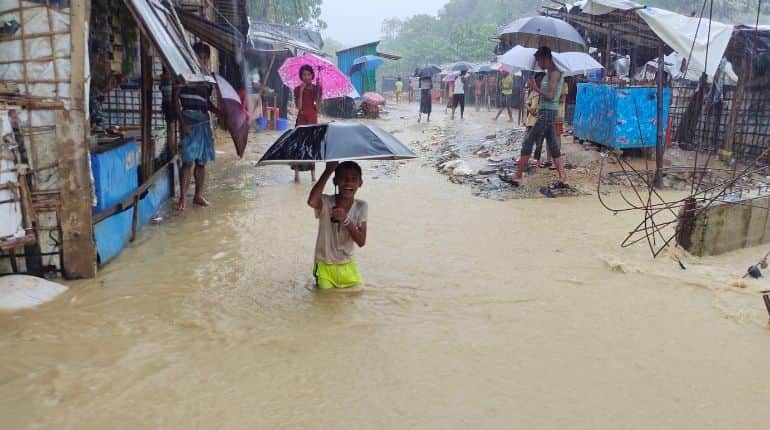
The climate crisis and the increasing frequency of extreme weather disasters including floods, droughts and mega fires are having a devastating effect on the livelihoods of people already living in poverty and this is making them more vulnerable to slavery, says the report.
Researchers from the International Institute for Environment and Development and Anti-Slavery International have found that drought in northern Ghana had led young men and women to migrate to major cities.
The report further reveals thatmany women begin working as porters and are at risk of trafficking, sexual exploitation and debt bondage.
A woman who migrated to Accra from northern Ghana, used to farm until the land was ruined by flooding. She was then forced to move.
For a period of seven years she has worked as a porter (kayayie), carrying items on her head.
She was quoted by The Guardian as saying, “Working as akayayiehas not been easy for me. When I came here, I did not know anything about the work. I was told that the woman providing our pans will also feed us and give us accommodation. However, all my earnings go to her and only sometimes will she give me a small part of the money I’ve earned.”
Fran Witt, a climate change and modern slavery adviser at Anti-Slavery International said that the research shows the domino effect of climate change on millions of people’s lives.
"Extreme weather events contribute to environmental destruction, forcing people to leave their homes and leaving them vulnerable to trafficking, exploitation and slavery.”
As per an estimate by The World Bank estimates that by the year 2050, the impact of the climate crisis will force more than 216 million people across six regions, including sub-Saharan Africa, South Asia and Latin America, from their homes.