Boris Johnson uses threat of Brexit cliff edge to demand European Union trade deal by end of 2020

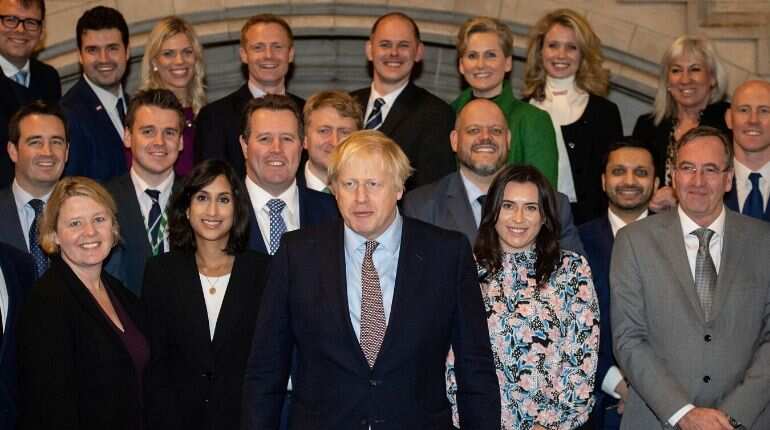
British Prime Minister Boris Johnson
British Prime Minister BorisJohnsonwill use the prospect of aBrexitcliff-edgeat theendof2020todemandtheEuropean Union gives him a comprehensive freetradedealin less than 11 months.
In his boldest move since winning a majority in Thursday's election,Johnsonwill use his control of parliament to outlaw any extension of theBrexittransition period beyond2020.
"Our manifesto made clear that we will not extendthe implementation period and the new Withdrawal Agreement Bill will legally prohibit government agreeing to any extension," a senior government official said on Tuesday.
After the United Kingdom leaves theEuropean Union on January31, it enters a transition period in which it remains anEUmember in all but name while both sides try to hammer out adealon their post-Brexitrelationship.
A comprehensive freetradedealwould encompass everything from financial services and rules of origin to tariffs, state aid rules and fishing, though the scope and sequencing of any futuredealis still up for discussion.
Sterling dropped as much as 0.7 per centto $1.3236 in Asia after ITV first reported the move.
By enshrining in law his campaign promise not to extendthe transition period beyond theendof2020,Johnsoncuts the amount of time he has to strike atradedealto 10-11 months from nearly three years.
WhileJohnson's large majority gives him the flexibility to change the law should he need to, he is sending a message to theEUwhose leaders have cautioned London that more time would be needed for a comprehensivetradedeal.
"We are going to make sure that we get thisdealdone in time," Michael Gove, one of the most senior ministers inJohnson's government, told the BBC.
Johnsonand USPresident Donald Trump said on Monday they looked forward to continued close cooperation and the negotiation of an "ambitious" UK-USfreetradeagreement.
If the United Kingdom and theEUfailed to strike adealon their future relationship and the transition period was not extended, thentradebetween the two would be on WorldTradeOrganisation (WTO) terms more burdensome for businesses.
TheEUhopes to starttradetalks with Britain by March, leaving just 10 months to strike adealand get it approved by London and theEU, including member states’ parliaments.
TheEUinsists it will not seal atradedealwith a large, economically powerful neighbour without solid provisions to guarantee fair competition.
TheEU’sdemands will focus on environmental and labour standards, as well as state aid rules to ensure Britain would not be able to offer products on the bloc’s single market at unfairly low prices.
Britain’s conundrum is that it will be under pressure to loosen rules on agricultural and food standards to strike a bilateraltradedealwith the United States.
But this would be crossing a red line for theEU, which would restrict access to its market to protect its own producers.
Fishing is a particularly thorny issue asEUcountries will no longer be able to operate in British waters as they do now.
With industry supply chains in theEUcrossing borders multiple times for products like cars and drugs, agreeing exact rules to designate where products come from - and hence what regulations and taxes apply will also be fraught.
"It will be very complicated. It’s about an array of relations, intrade, in fishing and cooperation in security and foreign policy,” German Chancellor Angela Merkel told anEUsummit news conference on Friday.