As ministers visit controversial shrine, Japanese PM Suga vows not to wage another war

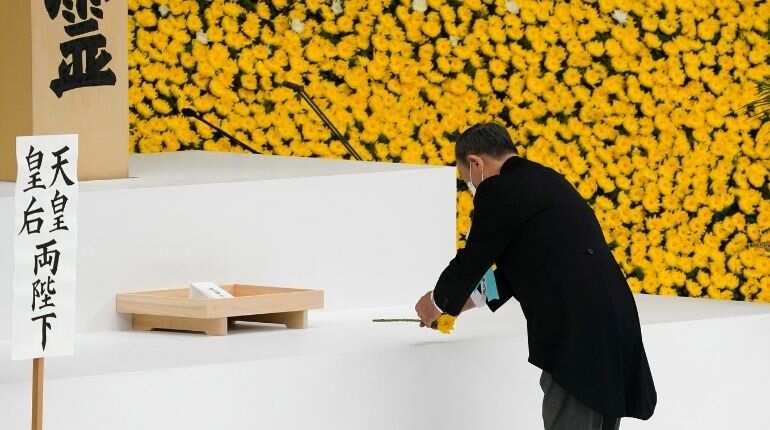
Yoshihide Suga, Japan's prime minister, wearing a protective mask lays a flower during a memorial service marking the 76th anniversary of the end of World War II in Tokyo, Japan August 15, 2021.
Sunday marked the 76 years of Japan's surrender in World War II. On the anniversary, threeJapanese cabinet ministers were seen visiting a shrine that neighbouring nations consider a symbol of Tokyo's former militarism.
While Suga himself did not visit the shrine, according to a report by the Sankei newspaper, he reportedly sent a ritual offering through his secretary.
In commemoration of the end of World War Two, Prime Minister Yoshihide Suga pledged Japan would never again wage war.
"Since the end of the war, Japan has consistently walked the path of a country that values peace," Suga said in a speech at a memorial ceremony in Tokyo. "We must never again repeat the devastation of war. We will continue to remain committed to this conviction."
The visit of Suga's minister came after two other cabinet members, including Japan's defence minister, visited theYasukuniShrineon Friday, sparking outrage in China and South Korea.Earlier today, China's Association of Performing Arts also boycotted Chinese actor Zhang Zhehanthe for visiting the shrine.
Even after almosteight decades since the end of the war, the conflict continues to cause friction between Japan and its neighbours, particularly China and North and South Korea, with the Yasukuni shrine in Tokyo atthe focal point of the conflict.
Japan's Yasukuni Shrine honours2.5 millionwar dead, including 14 Second World War leaders convicted as "Class A" war criminals, which has made it a flashpoint for tension.
While the Koreans remain bitter over Japanese rule from 1910 to 1945, the Chinese remain resentful of Japan's invasion and brutal occupation of parts of China from 1931 to 1945.
Conservatives say leaders should be able to commemorate the war dead, similar to the many Japanese who pay respect to relatives at the shrine
Despite this, China and both Koreas have expressed opposition due to the inclusion of war criminals among those honoured at Yasukuni.
China's foreign ministry spokesperson Hua Chunying while reacting angrily to Sunday's visit, said:"The actions of some Japanese politicians on the issue of the Yasukuni Shrine are a blasphemy of historical justice and serious injury to the feelings of the people from victimised countries in Asia, including China.".
(With inputs from agencies)