As China steps up threats, Australia unveils biggest defence reform since World War II

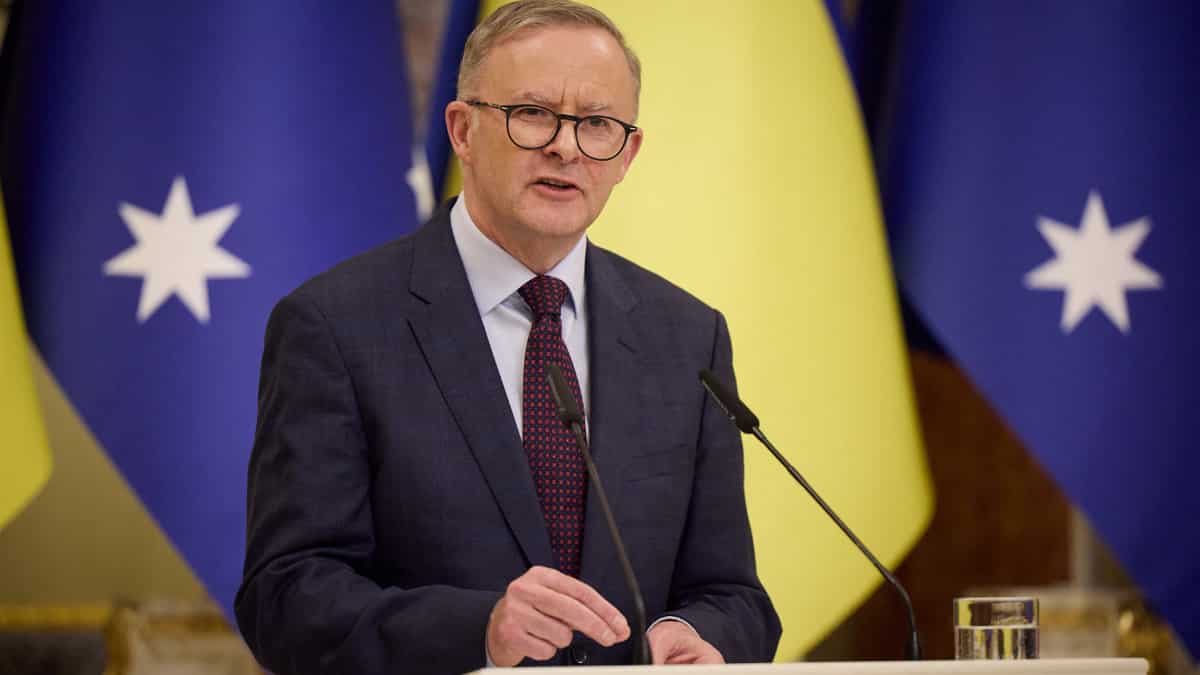
Anthony Albanese
In response to China's growing military prowess, Australia on Monday unveiled a strategic review of its defence forces, the biggest since World War II, which will further enhance its long-range strike capabilities.
Australia's military reviewed its deterrent capabilities as a result of China's escalating military might on its shores. With the new reforms, the Australian military forces will be refocused on deterring potential enemies.
During the launch of Defense Strategic Review in Canberra, Prime Minister Anthony Albanese said, “We cannot fall back on old assumptions. We must build and strengthen our security by seeking to shape the future rather than waiting for the future to shape us."
“We need to have greater control over our national sovereignty. So not only is manufacturing things in Australia, good for jobs and good for our economy, there’s also a national security issue,” he told reporters.
While giving the Australian defences an overhaul, defence minister Richard Marles said a proactive approach is needed and Canberra must not wait for the enemies to arrive at its shores through air, sea or online.
"Today, for the first time, in 35 years, we are recasting the mission of the Australian defence force," Marles said.
The review looks at the billions of dollars allocated by the previous administration to the defence forces. It re-evaluated the decisions taken in past in light of projected threats, with one notably from China, which is becoming more and more powerful.
"This build-up is occurring without transparency or reassurance to the Indo-Pacific region of China's strategic intent," the review said.
"China's assertion of sovereignty over the South China Sea threatens the global rules-based order in the Indo-Pacific in a way that adversely impacts Australia's national interests."
Stronger relationship with allies, including India
The review also suggested more self-sufficiency paired with deeper ties with its allies and important countries in the region, particularly Japan and India. It said that the threat of a major conflict in the region represents the highest degree of strategic risk for Australia.
Priorities in the review
The development of a nuclear-powered submarine programme is the first of the review's six objectives. This was also previously stated under the AUKUS agreement with the United States and the United Kingdom,
Watch | US lawmakers sold banking stocks amid crisis: Report
Additionally, it suggests accelerating the purchase of long-range strike missiles and expanding Australian weapons production. The nation also seeks to strengthen its defence partnerships with its neighbours in the area, notably those in the Pacific.
The F-35A Joint Strike Fighter and F/A-18F Super Hornet need to be upgraded technically in order to use long-range anti-ship missile systems. To increase the size of the ADF workforce and the number of personnel in shipyards needed to increase the submarine force, an urgent recruitment drive is also required.
WATCH WION LIVE HERE
You can now write for wionews.com and be a part of the community. Share your stories and opinions with us here.