‘Outcome depends on US changing unreasonable demands’: Iran after Vance announces ‘bad news’ of failed talks in Islamabad

&imwidth=600&imheight=450&format=webp&quality=medium "‘Outcome depends on US changing unreasonable demands’: Iran after Vance announces ‘bad news’ of failed talks in Islamabad")
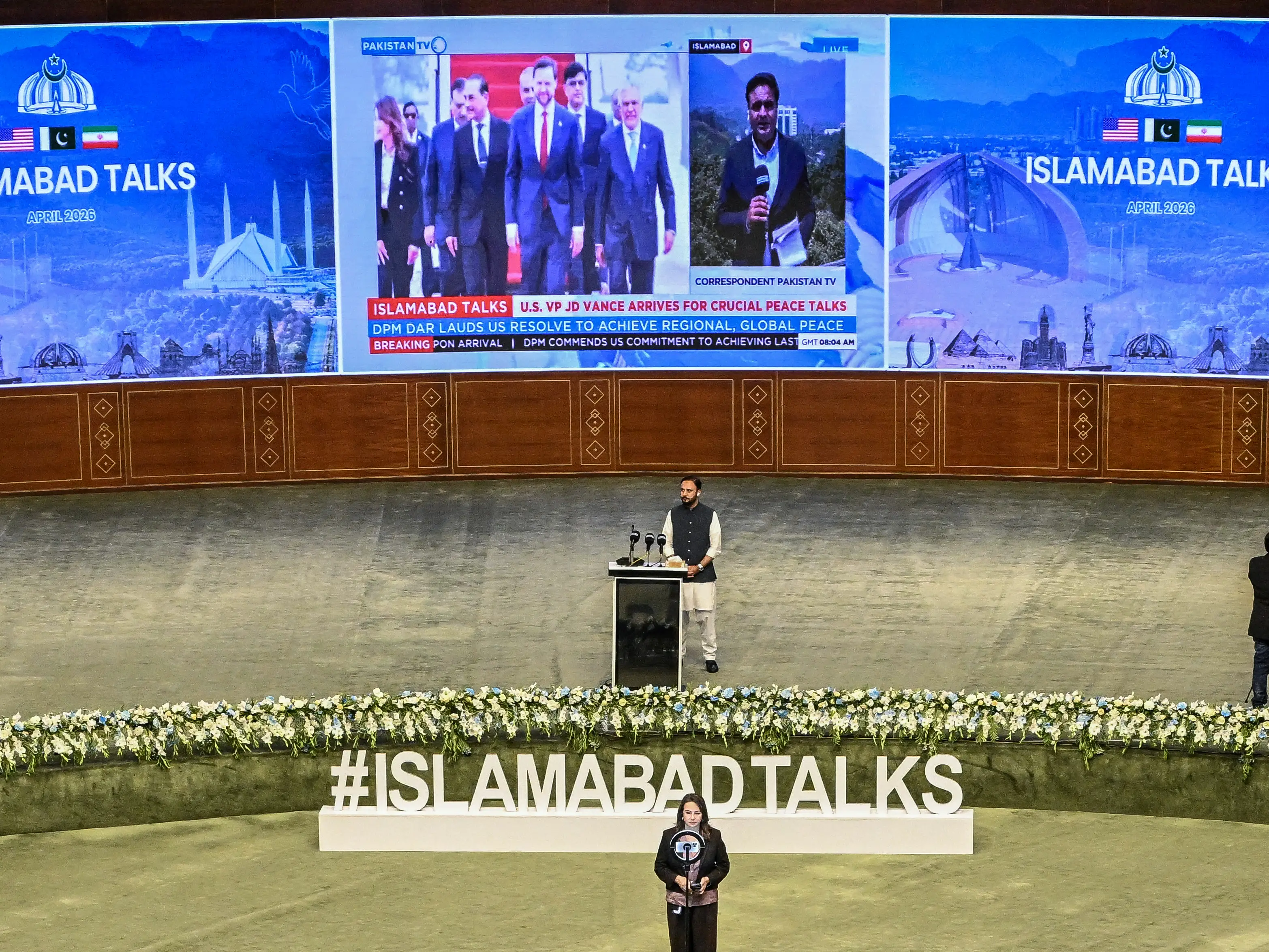
Journalists work at a media facilitation center ahead of US–Iran peace talks in Islamabad on April 11, 2026. Photograph: (AFP)
US-Iran talks in Islamabad ended in deadlock over nuclear programs and the Strait of Hormuz. Both sides blame each other's "unreasonable" demands, though mediators continue working on revised proposals.
Talks between the US and Iran, held in Islamabad, have ended without a breakthrough, with both sides blaming each other for the deadlock as key sticking points remain unresolved. According to Iran’s Fars news agency, the outcome of the negotiations depends on Washington “changing unreasonable demands”, particularly on contentious issues such as the Strait of Hormuz and Tehran’s peaceful nuclear programme. The agency reported that experts from both sides are working to find common ground, while a Pakistani mediator is attempting to narrow the differences and bring the positions closer together.
Fars also cited a source close to the Iranian delegation as saying that the United States sought “through negotiation everything they couldn’t obtain during war”. The source added that Iran had rejected what it described as “ambitious conditions” relating to the Strait of Hormuz, nuclear energy and other key issues.
Negotiators from both countries have stepped back to consult their respective expert teams on draft proposals, with talks expected to resume once revised texts are prepared, the agency said. However, US Vice President JD Vance confirmed that the latest round of discussions failed to produce an agreement acceptable to both sides.
Meanwhile, the Iranian embassy in Ghana posted on social media platform X, “The US flew their Vice President halfway across the world to Islamabad. 21 hours of talks. They demanded everything they couldn't achieve through war. Iran said a BIG NO. The talks are over. The Strait is still closed. And the VP is flying home empty-handed. Just Iran's word. Again. They don't have any option left to save face.”
‘Bad news’
“We have not yet reached an agreement acceptable to the Iranian side,” Vance said after several hours of talks, signalling a continued impasse in the high-stakes negotiations.
In a pointed remark, Vance said Iran had “chosen not to accept” the terms put forward by Washington. He stressed that the United States had clearly outlined its red lines, including areas where it was willing to show flexibility and those where it would not compromise. “The bad news is that we have not reached an agreement. And I think that’s bad news for Iran much more than it’s bad news for the United States,” he said.

