
&imwidth=800&imheight=600&format=webp&quality=medium "WATCH | Wolf captured on camera for the first time using rope to retrieve crab-trap bait")
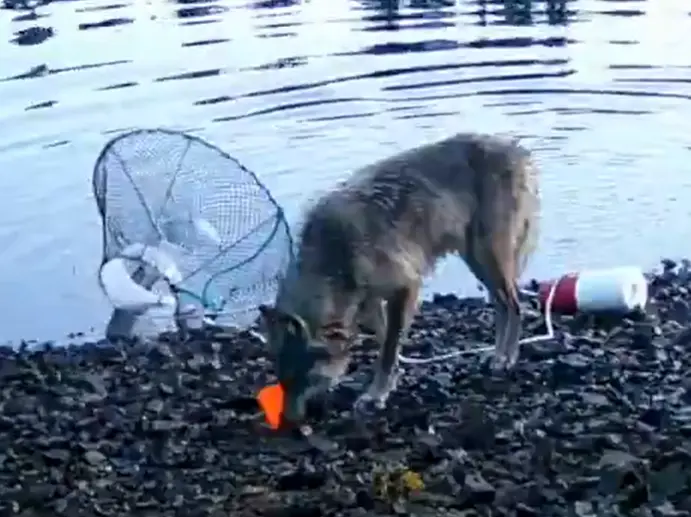
A female wild wolf from the central coast of British Columbia has been recorded in a viral video using a unique method to access a crab trap. This behaviour, marking the first documented instance of tool use by wolves, shows the animal pulling the trap from the ocean to consume the bait. The crab traps belong to the Heiltsuk Nation, an Indigenous group working to control the European green crab, an invasive species disrupting local ecosystems. This conservation initiative includes setting traps in shallow and deep water areas along the coast.
Watch the video here
Initially, researchers suspected that the damage to the traps might be the work of a bear or wolf, as it was believed these animals could not dive deep enough to access the traps. But after installing cameras to observe the traps, they were surprised to discover a wolf swimming to shore with a floating buoy in her mouth. She dropped the buoy on land, grasped the attached rope, and used it to pull the trap out of the water.

Once the trap was in a shallow area, the wolf opened it and consumed the herring bait. According to Kyle Artelle, co-author of the study, the wolf's actions demonstrated clear problem-solving and planning. It was suggested that the wolf might have observed humans using similar traps or learned how to retrieve traps from shallower waters during low tides. The deliberate nature of the wolf's behavior indicates that this is not a random action, but a methodical approach to reaching her goal.
Experts like Artelle emphasize that this could be a form of tool use, akin to human problem-solving. Future research will explore whether other wolves in the region might adopt this behavior and whether it could be passed down through generations. Marc Bekoff, a renowned animal behaviorist, noted that further studies would help determine if this is an isolated incident or the start of a new behavioral trend among wolves in the area.

