‘One in 50 million chance’: US woman with rare double uterus pregnant in both

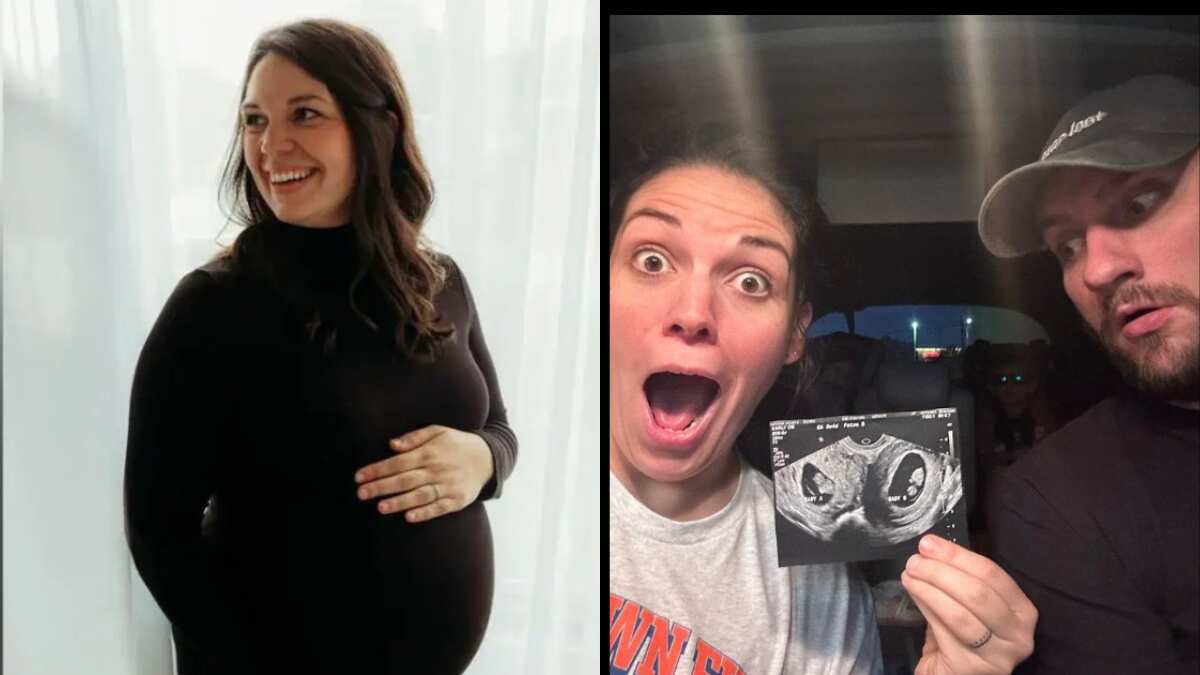
Kelsey Hatcher
A 32-year-old woman from Alabama, United States, Kelsey Hatcher who was born with two uteruses is now pregnant in both. She and her husband Caleb, in a recent interview, said that they were very surprised to learn that Kelsey was pregnant earlier this year but even more surprised when they found out that she was expecting two babies.
‘Doubleuhatchlings’
Kelsey, who is documenting her story on her Instagram account “doubleuhatchlings,” said she and her husband during her routine eight-week ultrasound appointment, back in May, found out that not only was she having twins but also that a foetus was present in each of her uteruses.
The massage therapist and mother-of-three has known about her rare condition “uterus didelphys” – where a person is born with two uteruses and two cervixes – since she was 17 years old.
ALSO READ |This AI tool can predict heart attack risk in individuals up to 10 years in future: Study
“We were kind of blown away! During that first ultrasound we had LOTS of laughs,” said Kelsey, in an Instagram post.
“When I first found out, I was like, ‘I wonder if there’s anybody I can reach out to just to, you know, see what their experiences were,’” Hatcher told ABC News’ show ‘Good Morning America.’
“But I think I’ve only read of two other cases (in which) they’ve had (pregnancies) in completely separate uteruses, and no one that I’ve been able to reach out to,” the 32-year-old added.
Kelsey has three children ages seven, four and 23 monthsold and said with each of her three previous pregnancies, she had a single baby carried in one uterus which went full-term, with no complications.
‘Don’t be alarmed’
Speaking about her reaction to the news, Hatcher said she told the nurse to not be alarmed if she saw a second uterus on the ultrasound but the nurse saw a second baby on the scan. “Before she could say anything, I said, ‘Oh my gosh, there’s another one,’” Hatcher told ABC News.
“Probably all I did was laugh for 30 minutes or so because it was just like, this is not happening,” she added. Pregnancies in both uteruses are exceedingly rare. Hatcher said she was told the odds were one in 50 million.
Doctors explain
“Most likely what happened is that she ovulated separately and had one egg come down each fallopian tube, meaning coming down on each side of the uterus, and then sperm travelled up on each separate uterus and fertilisation occurred separately,” Shweta Patel, the obstetrician-gynaecologist caring for Hatcher at the University of Alabama at Birmingham’s Women & Infants Center, told ABC News.
Separately, Patel also told NBC affiliate WVTM that the pregnancy was “very, very rare” and because of its uniqueness, her pregnancy is considered high-risk.
Kelsey’s daughters could also be born hours, days, or even weeks apart considering that her uteruses could begin contracting at different times. “I think medically, this is such a rare thing that we don’t have a better way of describing it besides still calling them twins,” said Patel.
Hatcher is expected to give birth to both the babies or “the girlies” as she affectionately calls them, with a due date of December 25, Christmas Day.
(With inputs from agencies)