

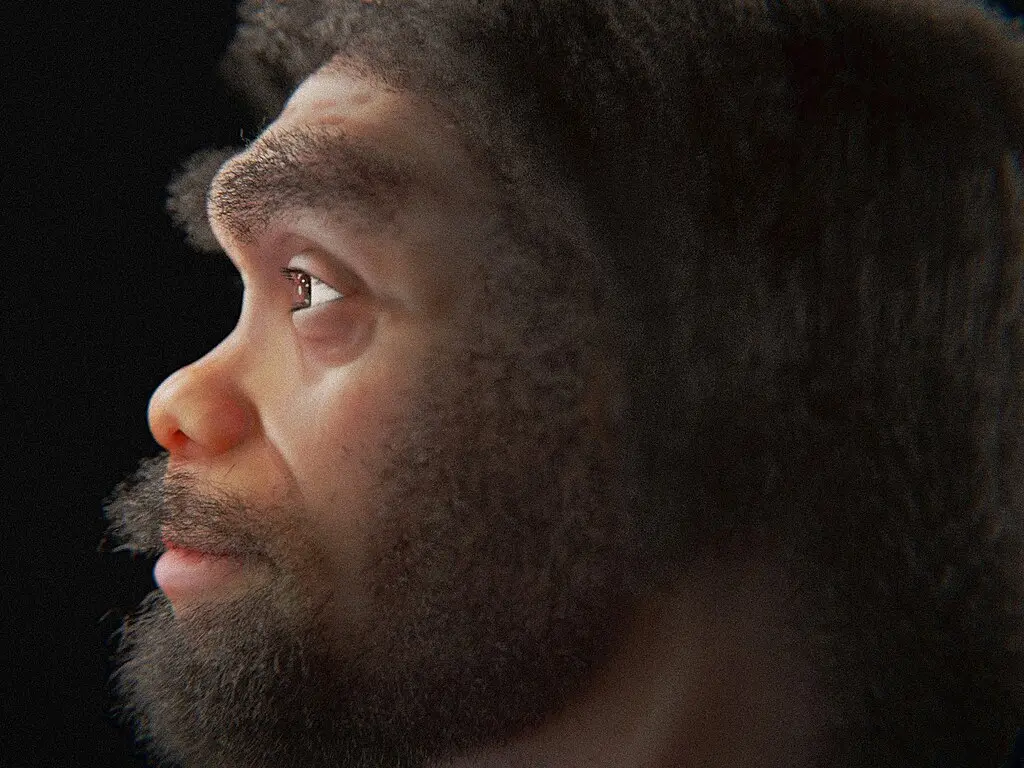
&imwidth=800&imheight=600&format=webp&quality=medium "Humans are a million years old, lived in Asia and belong to 'Dragon Man', Chinese skull analysis shows")
Humans are much older than earlier estimates, an analysis of a skull fossil in China has shown. Previous studies have suggested that humans first appeared in Africa 600,000 years ago, but the latest finding changes all that and pushes our origins back by 400,000 years. The Chinese skull Yunxian 2 was previously classified as being from the primitive human species Homo erectus. This species was a direct ancestor of modern humans and the first to walk fully upright. It is also believed to be the first human species to have left Africa. The fossilised cranium was found badly crushed in Hubei, China, in 1990. Homo erectus has long been seen as a direct ancestor of modern humans. Prof Chris Stringer, an anthropologist and research leader in human evolution at the Natural History Museum in London, led the study as his team reanalysed the skull. They created a model of the skull using CT scanning, light imaging and virtual reconstruction techniques. Small anatomical elements were also incorporated from Yunxian 1, another crushed fossil found at the site in 1989.
Earliest humans were 'Dragon Man' and not Homo Erectus
It showed that the skull likely belongs to a group called Homo longi (dragon man), a species closely linked to Denisovans and that lived alongside our own ancestors. This makes the fossil the closest ever found linked to the split between modern humans and our closest relatives, the Neanderthals and Denisovans. Study author Chris Stringer, an anthropologist and research leader in human evolution at the Natural History Museum in London, said, "This changes a lot of thinking because it suggests that by one million years ago our ancestors had already split into distinct groups, pointing to a much earlier and more complex human evolutionary split than previously believed. It more or less doubles the time of origin of Homo sapiens." Also Read: Humans can survive cosmic winter by befriending super intelligent aliens, scientist says
The reconstruction of the Yunxian 2 skull showed that it had primitive traits similar to Homo erectus, including a large, squat braincase, a strong brow ridge, and a more projecting lower face. But the features in the face and rear of the braincase, and a larger brain capacity, closely resemble Homo longi ('Dragon Man') and Homo sapiens. This showed that Yunxian 2 is not a Homo erectus, but is an early member of the lineage with Homo longi and several other Chinese fossils being a part of it. Springer says that this discovery points to the possibility that our common ancestor, and maybe even the first Homo sapiens, lived in western Asia rather than Africa.

