

&imwidth=800&imheight=600&format=webp&quality=medium "China's dinosaur hotspot reveals a tweeting beast in only second such discovery")
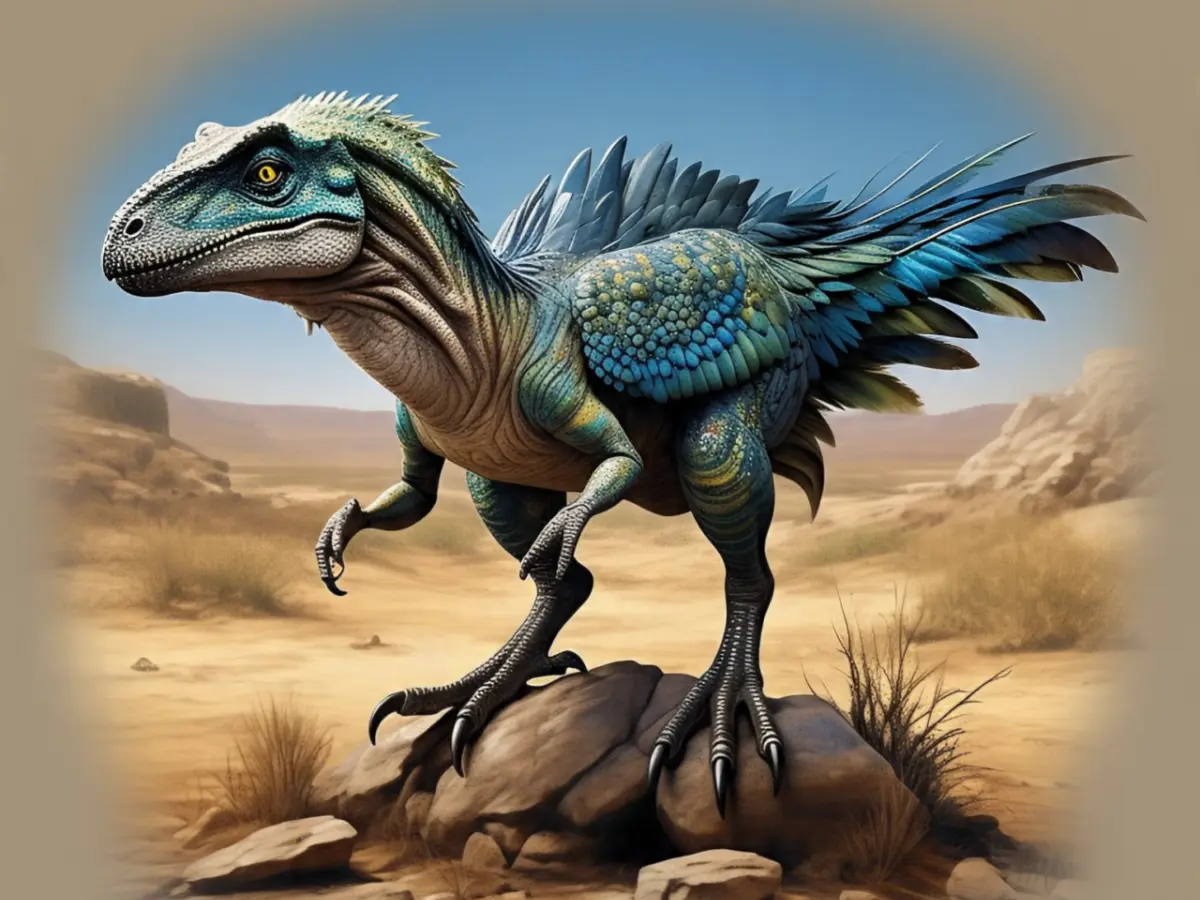
Humans have never seen dinosaurs in flesh and blood and have built on the fossils collected over the years. We have imagined them roaring and standing several feet taller than us. But a new study has suggested that not all dinosaurs were beasts. Scientists have discovered a group of herbivorous dinosaurs that looked like birds with feathers all over their bodies and tweeted like them, too. This is based on the research carried out on new fossilised dinosaur bones, which included parts of the voice box. Published in PeerJ by Chinese scientists, the study states the discovery of fossils belonging to a 2-foot-long new dinosaur species, Pulaosaurus qinglong. The species has been named after "Pulao," a mythical Chinese dragon known for a loud voice. The species belongs to Neornithischia, a subgroup of Ornithischia, a herbivorous dinosaurs whose pelvic region resembled birds. Also Read: No brain, no problem: Starfish use chemical ‘Mind Control’ to launch underwater raids
Yanliao Biota, dinosaur fossil hotspot in China
The dinosaur bones were discovered in Yanliao Biota, a region in northeastern China that has yielded several dinosaur fossils over the years, all approximately 165–150 million years old. The fossil belongs to an immature Pulaosaurus qinglong and was found extremely well preserved in the Upper Jurassic Tiaojishan Formation in Hebei Province. There is an almost full skeleton, comprising vertebrae, limbs, pelvis, bones of the larynx or voice box, and even some rare soft tissue structures. This is the first time neornithischian dinosaur specimens were found in this hotspot. Till now, only small theropods and early birds were studied from the region. There had been a lack of a robust fossil record of ornithischians, so researchers couldn't trace back early diversification within the group. Also Read: Scientists who 'de-extincted' dire wolf now want to bring back from dead THIS 12ft tall bird
Dinosaurs that tweeted like birds
Scientists were surprised to see fossilised larynx bones, since it is only the second dinosaur discovered with it. This helped them piece together the sound of the dinosaur. The cartilage structures in Pulaosaurus's larynx are elongated and shaped like a leaf, resembling those in modern birds. This suggests that its voice was possibly like birds. An analysis of other parts of its body showed that the dinosaur preferred chewing on soft food. The gut cavity had small, round pebbles and tiny impressions in it, which could be plant seeds or other plant material. Researchers say that the discovery of this dinosaur fills a major gap in the study of neornithischian dinosaurs.

