

&imwidth=800&imheight=600&format=webp&quality=medium "No brain, no problem: Starfish use chemical ‘Mind Control’ to launch underwater raids")
In a mind-breaking breakthrough, researchers have discovered that the sea star – the infamous crown of thorns starfish, the notorious brainless coral predator is not a mindless creature as once perceived in marine biology. These starfish coordinate their behaviour using signals to form a collective consciousness that helps them move and act together. This means the creature with no brain and blood uses chemical mind control to move and hunt in sync.
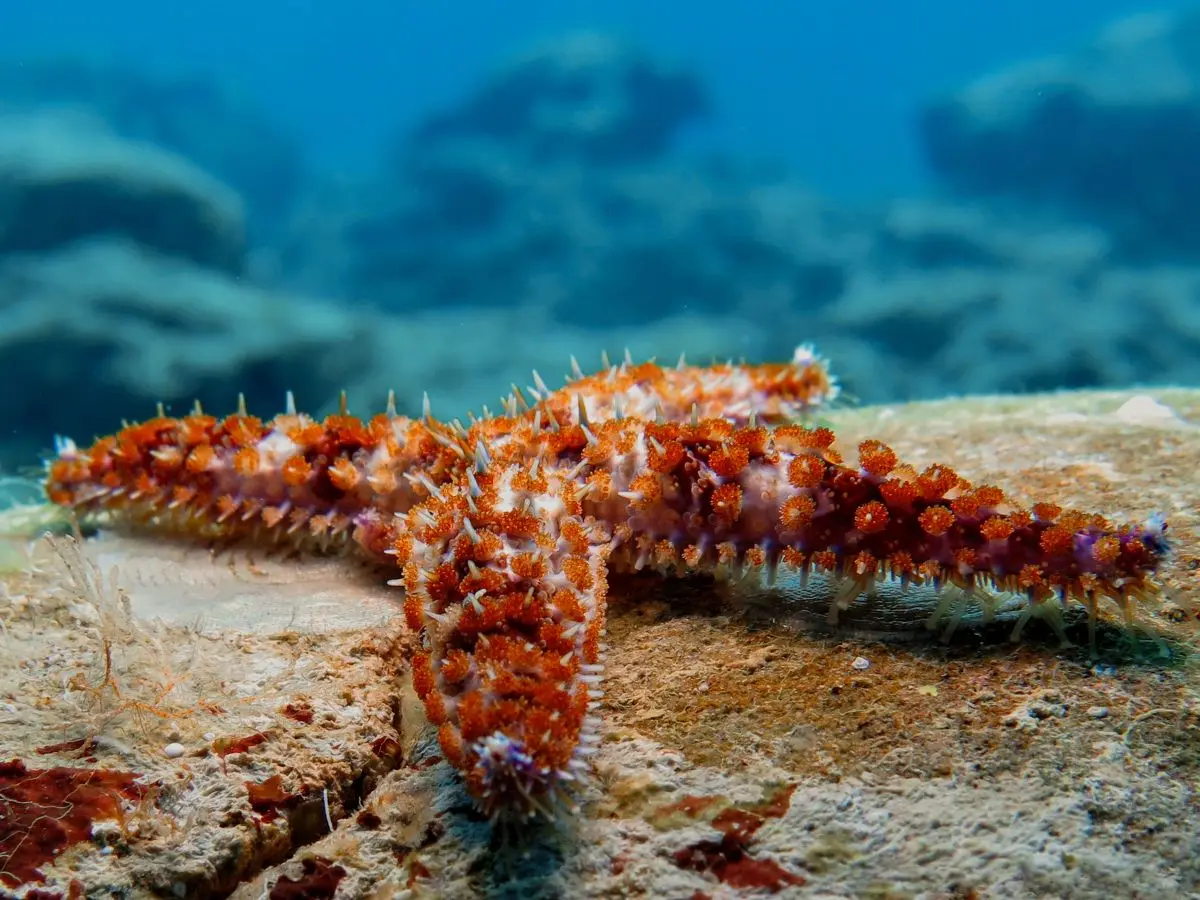
The study reveals that starfish use their spines as both sensors and secretors. These spines release unique proteins known as COTSPs (Crown-of-Thorns Starfish-Secreted Proteins) which disperse in the water and influence the behaviour of nearby starfish.
These starfish might come across as harmless creatures, but they are incredibly destructive predator which organises and devours acres of coral reefs in just months. The protein is not a result of any immune or stress response, nor is it a result of any other physical action like skin shedding. It is a communication tool. However, it remains a mystery what messages they carry. The result, though, is a coordinated, almost military-style march toward coral colonies.
Scientists put them in lab tanks and watched them as starfish suddenly oriented themselves, moved together, and swarmed the signal source like zombie soldiers under one command.
Starfish operate without a brain; they have a ring-like mouth and radial nerves in their arms. This discovery is a big deal as it gives scientists better scope to counter the swarm as a whole instead of tackling each one individually. Researchers have already synthesised the chemical signals and used them to lure starfish into traps. These "attractins" could help curb the reef-killing outbreaks of these predators, offering a non-toxic, scalable way to protect coral ecosystems.

