Pak SC notes violations in no-trust proceedings, says Dy Speaker has no authority to pass ruling

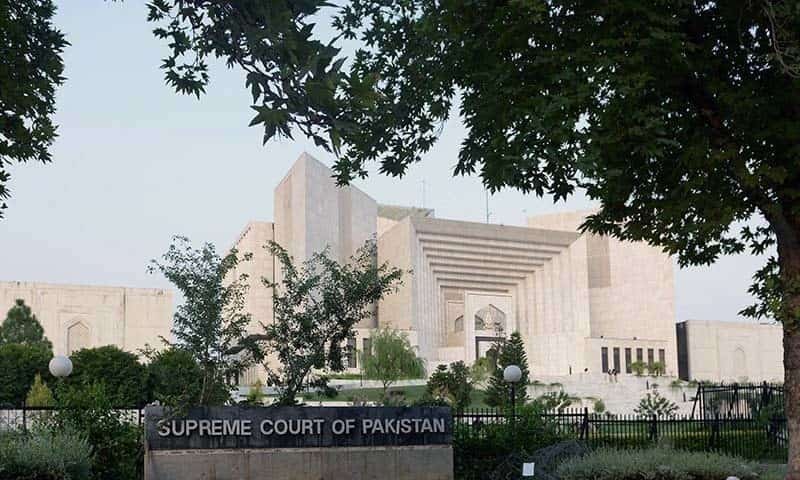
(File photo) Pakistan Supreme Court
Pakistan Supreme Court expressed doubts on the jurisdiction of the deputy speaker who called the no-confidence motion filed by the opposition members “unconstitutional” and rejected their plea.
The top court’s comments came on Monday as it began hearing the high-profile case after it took suo moto cognizance of the matter.
A day earlier, the opposition had approached the SC against Deputy Speaker Qasim Suri for rejecting the no-trust motion against Prime Minister Imran Khan citing so-called foreign conspiracy.
A five-member larger bench was convened which comprised Chief Justice Umar Ata Bandial, Justice Ijazul Ahsan, Justice Mazhar Alam Khan Miankhel, Justice Munib Akhtar and Justice Jamal Khan Mandokhail.
During the hearing, Justice Ahsan noted that there were violations in the proceedings of the no-confidence motion, PTI news agency quoted Dawn newspaper.
Similarly, Justice Akhtar expressed doubts over the deputy speaker's constitutional authority to pass such a ruling, the paper said.
He said, “In my opinion, only the speaker had the right to pass the ruling. The Deputy Speaker chairs the session on the non-availability of the Speaker."
Justice Bandial observed that a debate before voting on the no-confidence motion had been clearly mentioned in the law but didn't take place.
Representing the joint opposition, Farooq H Naek urged the top court to issue a verdict on the matter today (Monday).
However, Justice Ahsan denied his request saying that it was impossible to pass the verdict in a day as the court’s decision will have far-reaching outcomes.
"We can't pass a decision in the air," Justice Bandial said.
The Supreme Court then adjourned the hearing till 12 pm on Tuesday.
On Sunday, after a brief hearing, the court issued a written order saying that it would like to "examine whether such an action (dismissal of the no-trust motion on the basis of Article 5) is protected by the ouster (removal from the court's jurisdiction) contained in Article 69 of the Constitution."
The decision of the court would also determine the legality of the presidential order to dissolve the National Assembly.
Watch |Protest in Pakistan after multiple state addresses by Imran Khan amid political crisis
(With inputs from agencies)