Explained | Why Pakistan’s national elections remain a delayed affair

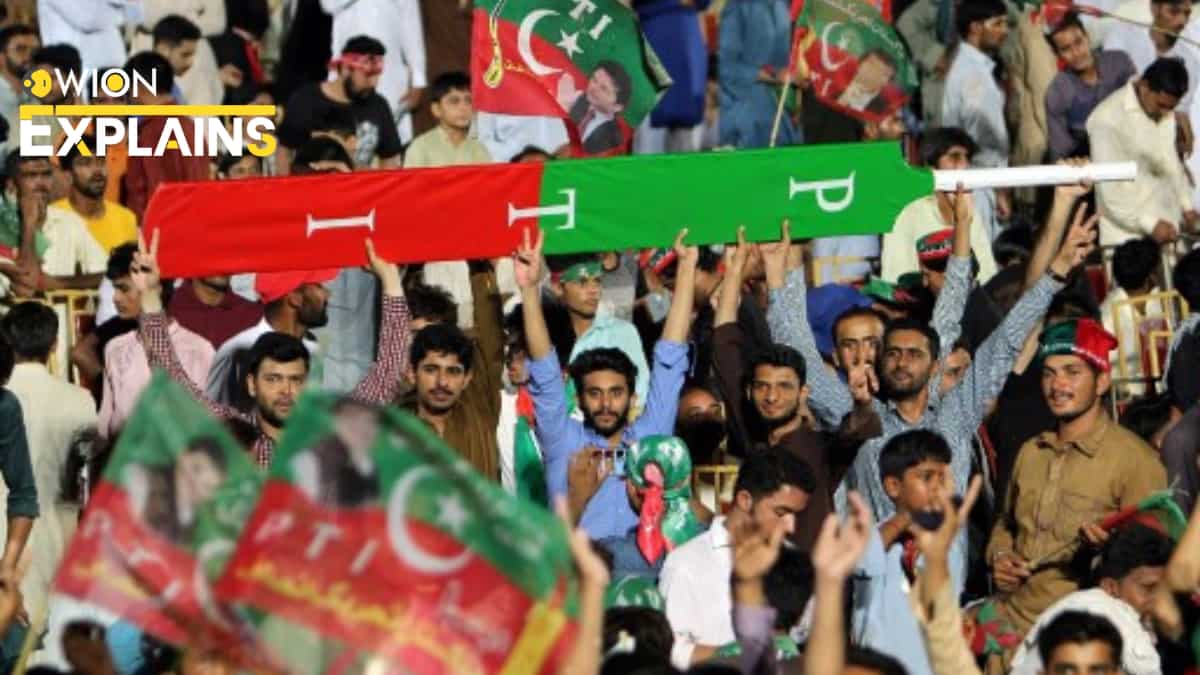
Imran Khan's supporters holding a giant Bat, party's previous election symbol
Pakistan's senate passed a resolution on Friday (Jan 5) to delay the South Asian country's national elections slated for February 8. While the resolution is non-binding since the senate forms just oneof the organs of the Pakistani parliament, the spotlight is back on the attempts to delay the elections that should have been held months back. Pakistan's last national elections were held in 2018 when the Members of the National Assembly (MNA) were elected for a five-year tenure.
The resolution came days after Pakistan's only World Cup-winning former cricket captain-turned-politician ImranKhan'sPakistan Tehreek-e-Insaf (PTI) lost cricket batas its election symbol after Pakistan's election commission deemed itsintra-party polls 'unconstitutional'.
Pakistan has one of the lowest literacy rates in South Asia, with some of Imran Khan's strongholds in the predominantly tribal Khyber Pakhtunkhwa province particularly backward in terms of Human Development Indicators. Voters in these tribal areas identify Khan's party primarily with its bat symbol.
Given Khan's acclaimed record as one of the finest cricketers Pakistan has ever produced, his party had been identified with the cricket bat across Pakistan.
At the end of 2023, Khan's nomination was rejected from the two National Assembly constituencies in Mianwali and Lahore. His fate on a third national assembly seat currently remains inconclusive.
But even if Khan can contest elections, he remainsformally disqualified from holding public office until 2028.
Between 2018 and 2024: Who held Pakistan's Prime Minister's Office
In July 2018, Imran Khan's PTIwon the most seats in Pakistan's National Assembly. Khan managed to forge an alliance that kept him in power until April 2022, when helost avote of no confidence in the parliament. The PTI leaderblamed the military and the United States for plotting to remove him.
After Imran Khan's ouster from power, Pakistan Muslim League (Nawaz) leader Shehbaz Sharif, the brother of former Prime Minister Nawaz Sharif was chosen as leader of the Pakistan Democratic Movement (PDM), an alliance chiefly consisting of the PML-N and Bilawal Bhutto's Pakistan People's Party. Shehbaz Sharif served as Pakistani prime minister between April 2022 and August 2023.
In between, the ousted Pakistani leaderImran Khan called for snap elections as he deemed his ouster 'illegal'.
In January 2023, Khan got the provincialassemblies in Punjab and Khyber Pakhtunkhwa provincesdissolved in a bid to force nationwide snap elections. This coincided with a devastating economic crisis that Pakistan faced amid attempts by Shehbaz Sharif's administration to secure a loan tranche from the International Monetary Fund (IMF).
A dozencases and an assassination attempt later, in May 2023,hours after Imran Khan wasarrestedfrom a courtroom in the capital Islamabad, his supporters pushed through the gates of army headquarters in Rawalpindi. The violent attack in Rawalpindi,long deemed the real nucleus of power in Pakistan behind the semblance of democracy that exists in the capital Islamabad, expanded the political instability in the nation. Khan's supporters continued to call for early elections.
Imran Khan was sentenced to three yearsin prison in August 2023after being convicted of selling state gifts when he was prime minister.
In August 2023,Anwaar-ul Haq Kakar, a teacher-turned-politician from Pakistan's restive province of Balochistan, becamePakistan's caretaker prime minister after the National Assembly was dissolved.
Kakar, Pakistan's 24thprime minister since the country's existence in 1947, heads the Balochistan Awami Party formed in 2018. According to Pakistani law, the elections should have been held within 90 days of the dissolution of the National Assembly. The elections by that timeline should have been held in October 2023.
But in October 2023, Nawaz Sharif returned from his self-imposed exile in London after four years, and secured bail on corruption cases he was facing convictions in. Sharif, a four-time prime minister of Pakistan, will now reportedly contest the February elections.
The elections now standpostponed to February due to the re-demarcation of constituencies following a new census.
Amidst fears from political analysts that an extended period without an elected government could lead to military consolidation, the continued attempts to postpone Pakistani elections raise concerns about the balance of power in a nation where the military has remained the real power behind Pakistan's Prime Minister Office.
Watch |Pakistan Elections 2024: Election panel faces flak ahead of polls
For the elections slated in February, Imran Khan's Pakistan-Tehreek-e-Insaf (PTI), assassinated former Pakistani PM Benazir Bhutto's Pakistan People's Party and Nawaz Sharif's Pakistan Muslim League (Nawaz) are the top contenders.
(With inputs from agencies)