Venus in its youth likely had Earth-like features and probably hosted life: Study

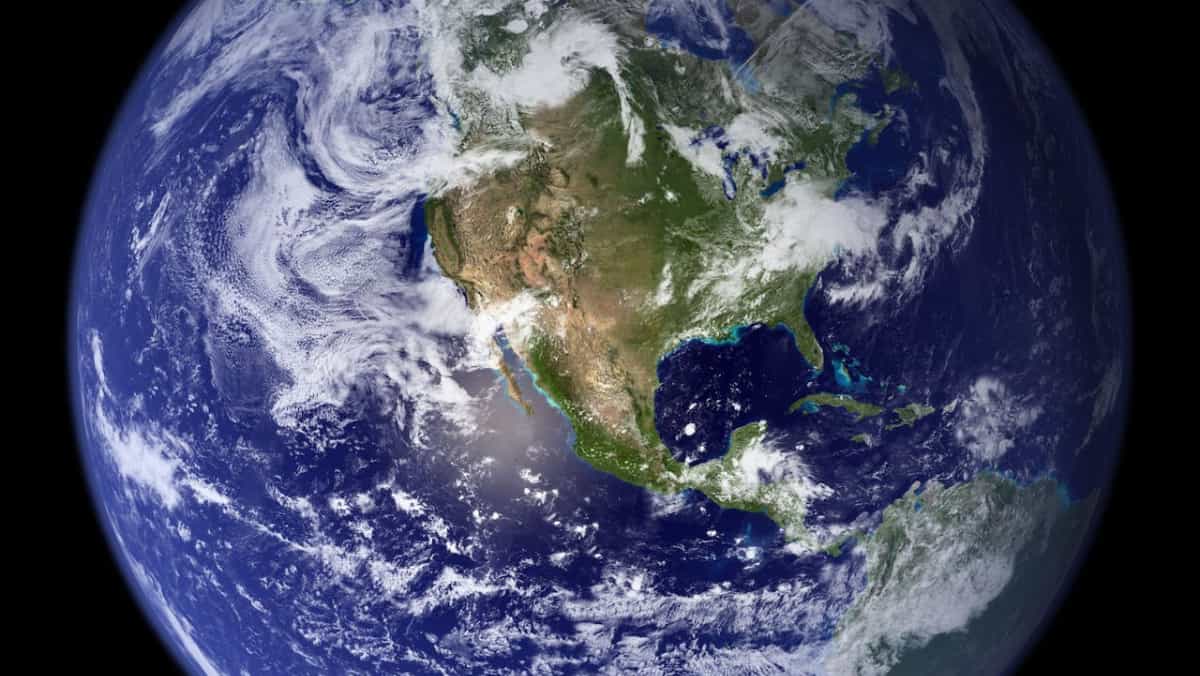
Representative image of Earth
Venus, as we know it today, has little resemblance to Earth. But a recent study has revealed that in its youth, Venuslikely had some of our planet's features.Currently, Venus' extreme temperatures and sulfuric acid-laden clouds make it a hostile environment.
However, the study published in the journal Nature Astronomy says that in its early days, Venus might have shared Earth-like characteristics that involved plate tectonics.
The research, led by Matthew B. Weller, a planetary scientist at the Lunar and Planetary Institute in Houston, indicated that both Earth and Venus likely experienced plate tectonics during a similar time period.
Reports quoting the study said that the geological processes related to plate tectonics might have hidden away a substantial amount of the carbon dioxide responsible for the current scorching conditions on Venus.
Is Venus a potential haven for life?
According to Dr. Weller, this information opens up the possibility that billions of years ago, Venus might have been a place where life could have thrived.
The presence of plate tectonics implied that Venus would have been "coolerand then there would have been more liquid water,"Dr. Weller said.
Rather than identifying visible surface features like the San Andreas fault, the researchers focused on the composition of the atmosphere, specifically nitrogen.
When rocky planets such as Earth and Venus form, nitrogen gets trapped in minerals. However, during volcanic eruptions, these minerals melt, breaking chemical bonds and allowing nitrogen to escape into the atmosphere, where it remains.
Dr. Weller explained that nitrogen serves as a diagnostic tool for deciphering a planet's tectonic history.
To reach their conclusions, Dr. Weller and his colleagues from Brown University and Purdue University employed computer simulations to explore two tectonic models.
The first, known as the "stagnant lid," applies to worlds like Mars and the Earth's moon, where the outer crust forms a solid, immobile shell, trapping most gases beneath it.
Watch |Malaysia warns Meta, TikTok over allegedly restricting content supporting Palestinians
The second model was about plate tectonics. About 80 per cent of volcanic activity on Earth occurs along mid-oceanic ridges, where tectonic plates spread apart and magma rises.
(With inputs from agencies)
WATCH WION LIVE HERE
You can now write for wionews.com and be a part of the community. Share your stories and opinions with us here.