Tens of thousands of invisible nanoplastic particles present in bottled water: Study

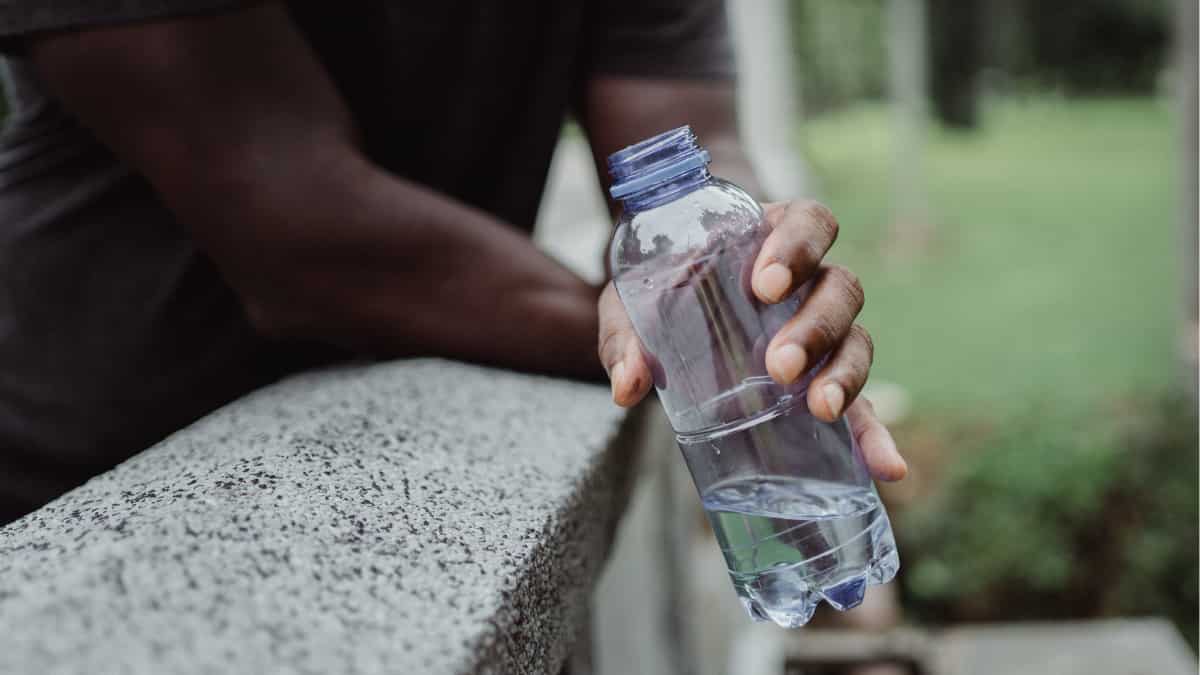
Plastic bottle
Scientists have found that the average litre of bottled water contains nearly a quarter million invisible pieces of ever-so-tiny nanoplastics. They have detected and categorised these nanoplastics for the first time by a microscope using dual lasers in a major study.
The researchers have discovered bottled water sold in stores can contain 10 to 100 times more bits of plastic than previous estimations.
The presence of microscopic plastic pieces was found by scientists long ago, but in the latest study, researchers at Columbia and Rutgers universities calculated microscopic plastic to find out how many or what kind of pieces are present in bottled water.
To carry out the study, published on Monday (Jan 8) in the Proceedings of the National Academy of Sciences, the scientists observed five samples each of three common bottled water brands.
Without revealing the names of the brands, the scientists said that they found particle levels ranged from 110,000 to 400,000 per litre, averaging at around 240,000.
The study titled, 'Rapid single-particle chemical imaging of nanoplastics by SRS microscopy', underlines the health impact of microplastics and nanoplastics, which are now omnipresent in our daily lives.
The study found that these are particles that are less than a micron in size and there are 25,400 microns in an inch. The microns are also called micrometres because it is a millionth of a metre. Just for reference, human hair is about 83 microns wide.
Previous research has focused on slightly larger microplastics ranging from observable five millimetres (less than a quarter of an inch) to one micron. According to the study, bottled water had 10 to 100 times more nanoplastics than microplastics.
As quoted by The Associated Press, Naixin Qian, a Columbia physical chemist, who is also the lead author, said that much of the plastic seems to be coming from the bottle itself and the reverse osmosis membrane filter used to keep out other contaminants.
Are those nanoplastic pieces harmful to health?
The data indicates that these nanoplastics can easily enter our bodies, but the researchers still can't answer how will it impact the organs.
As quoted, study co-author Phoebe Stapleton, a toxicologist at Rutgers said: "That's currently under review. We don't know if it’s dangerous or how dangerous. We do know that they are getting into the tissues (of mammals, including people) … and the current research is looking at what they’re doing in the cells."
In a statement, the International Bottled Water Association said: "There currently is both a lack of standardized (measuring) methods and no scientific consensus on the potential health impacts of nano- and microplastic particles. Therefore, media reports about these particles in drinking water do nothing more than unnecessarily scare consumers."
(With inputs from agencies)