Scientists sound alarm as Arctic sea ice has not yet started freezing

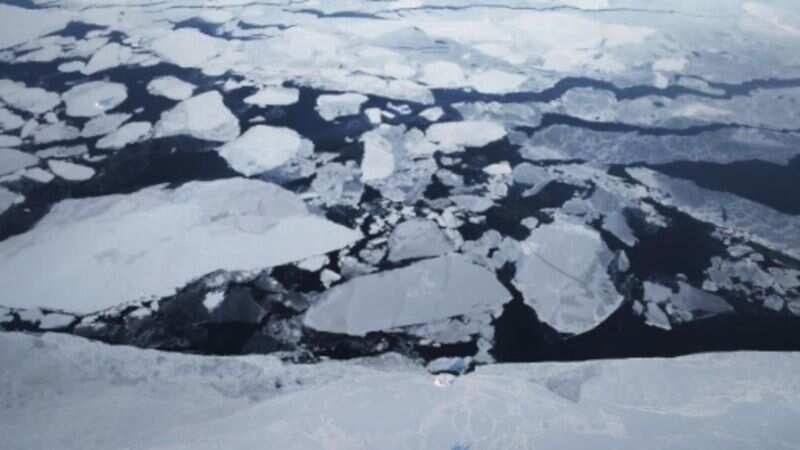
Arctic sea ice
For the first time in recent history,the main nursery of Arctic sea ice in Siberia has yet to start freezing even thought the month of October is soon to end.
Scientists believe that the delayed annual freezein the Laptev Sea has been caused due to the protracted warmth in the northernpart of Russia andthe intrusion of Atlantic waters.
This has been observed after the ocean temperatures of the area rose by more than 5C above average after a record-breaking heatwave.
The delay is being seen as yet another harmful effect of human-caused climate change that is damaging the nature.“The lack of freeze-up so far this fall is unprecedented in the Siberian Arctic region,” Zachary Labe, a postdoctoral researcher at Colorado State University was quoted saying by Guardian.
He also stressed that till the greenhouse gases reduce, the problems will keep on rising. “2020 is another year that is consistent with a rapidly changing Arctic. Without a systematic reduction in greenhouse gases, the likelihood of our first ‘ice-free’ summer will continue to increase by the mid-21st century,"he wrote in an email to the Guardian.
As per the recent observations and researches, the Siberian heatwave of 2020 was majorly made upby industrial and agricultural emissions — which was nearly 600 times.
The scientists explained that when this has been caused as the trapped heat takes longer to disappear into the atmosphere even at this time of the year when the sun is above the horizon for nearly two to three hours per day.
However, trapped heat is not the only reason behind this delay. Climate change, caused by human activities, is also responsible for pushingAtlantic currents into the Arctic and breaks up the formation between warm deep waters and the cool surfaces making it difficult for the ice to form.
“This continues a streak of very low extents. The last 14 years, 2007 to 2020, are the lowest 14 years in the satellite record starting in 1979,” said Walt Meier, senior research scientist at the US National Snow and Ice Data Center. He also added that the thickness of the ice is now half of what it was back in 1980s as majority of the old ice in the Arctic is now disappearing.
Scientists are also predicting an 'ice-free summer' which can happen between2030 and 2050. “It’s a matter of when, not if,”said Walt Meier.
It has also been predicted that the ice being formed at Laptev Sea, which is commonly known as the birthplace of ice, will now be thinner and may melt way faster than the previous years.