&imwidth=800&imheight=600&format=webp&quality=medium "One star, multiple deaths? Mysterious gamma-ray burst that keeps repeating stumps scientists")
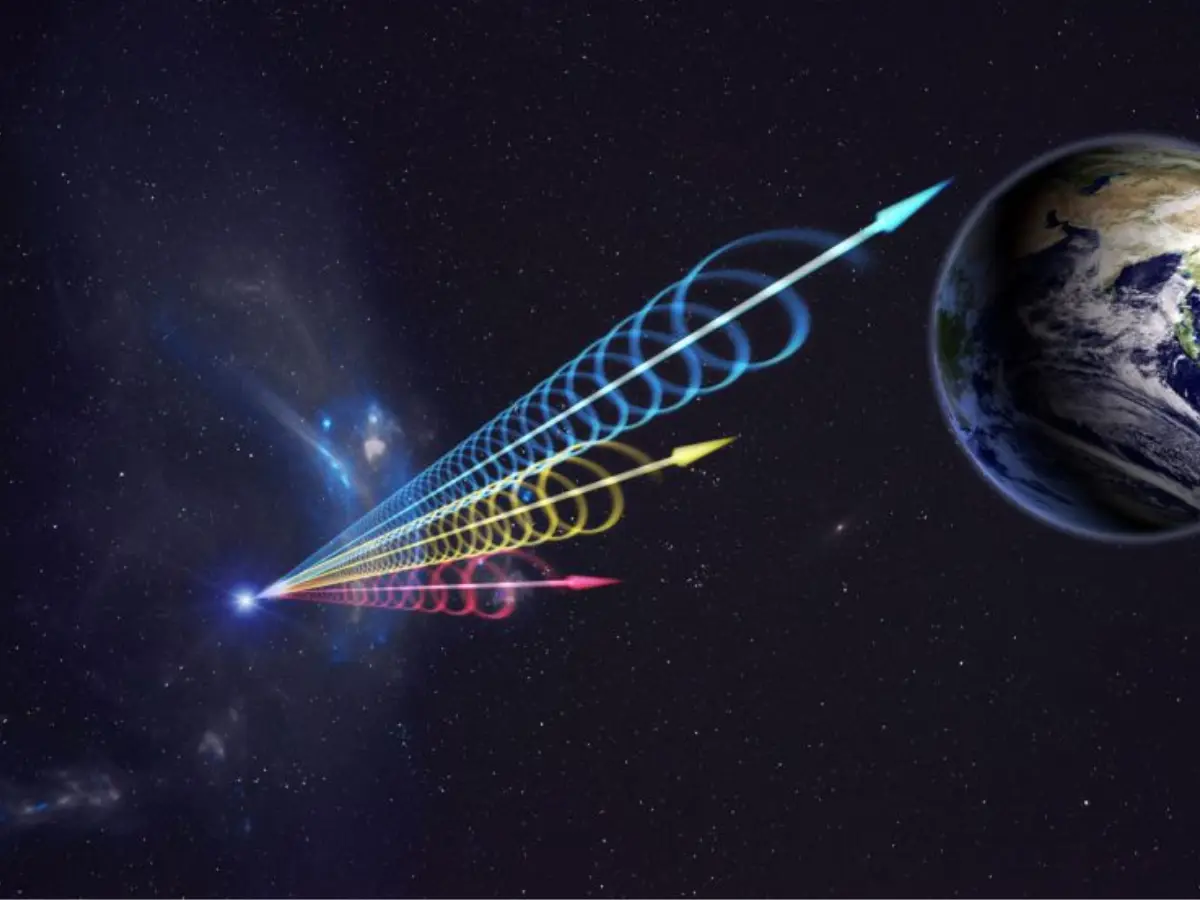
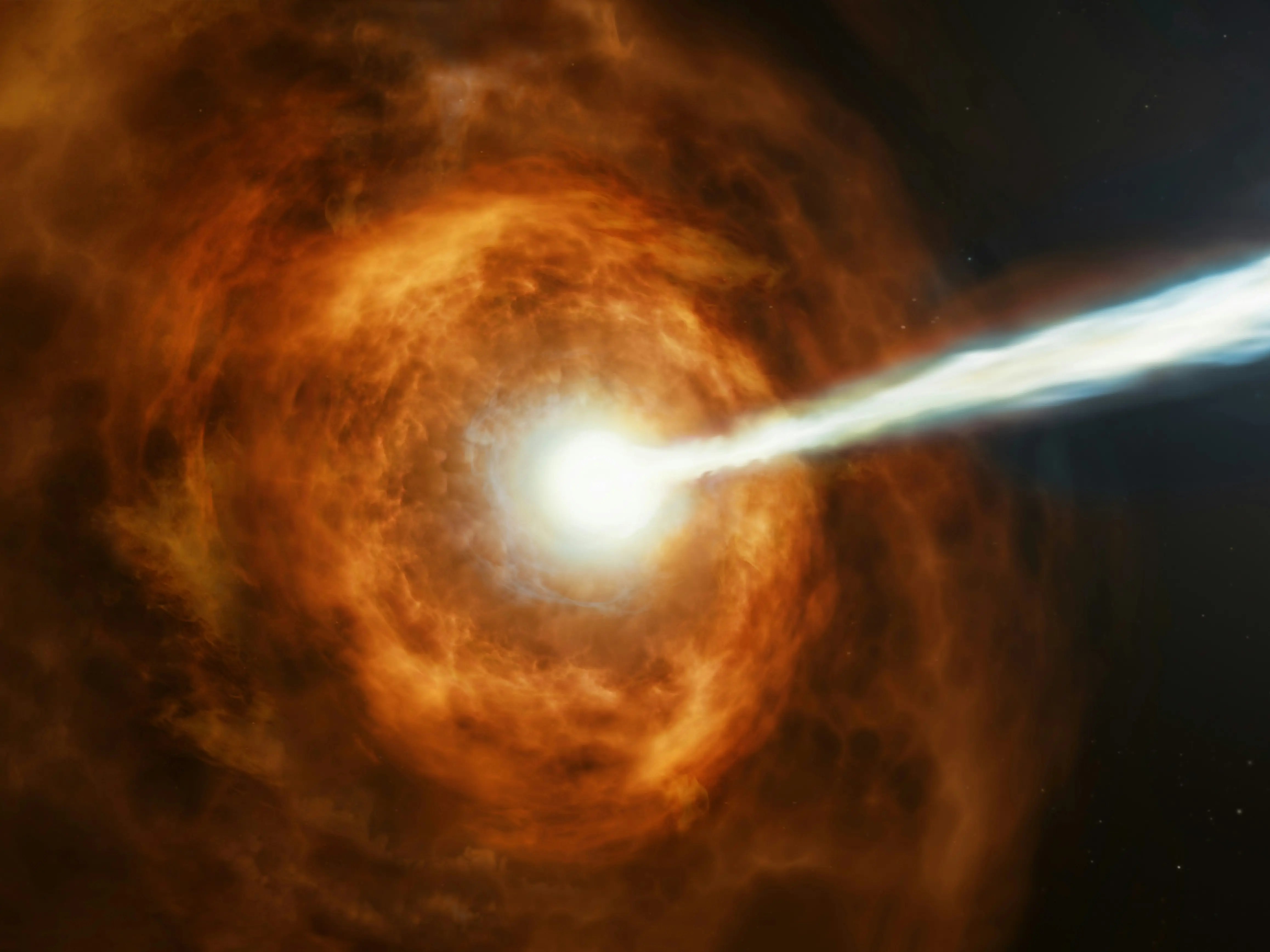
A new study published in The Astrophysical Journal Letters talks about the discovery of mysterious gamma rays that scientists are struggling to explain. Typically, such bursts happen when a star dies. They unleash a huge amount of energy, more than anything ever released in the universe. This gamma ray burst is being repeated multiple times in a single day. It indicates a stellar death that happened not once, not twice, but several times. How is it possible for a star to come back to life after being annihilated? The study authors are confused about this event. Martin-Carrillo, an astronomer at University College Dublin, Ireland, and coauthor of the study, said, "This event is unlike any other seen in 50 years of GRB observations. "GRBs are catastrophic events, so they are expected to go off just once because the source that produced them does not survive the dramatic explosion." Also Read: Dark matter breakthrough? Einstein Cross with five images stuns scientists. What is it?
This is not the first time that astronomers have seen a star exploding multiple times. That happened in the case of a binary star system where a white dwarf and an ordinary star are locked to each other. When they get too close, the white dwarf starts drawing the energy of the star, ultimately triggering a thermonuclear explosion that kills them both. But before the main supernova, several smaller blasts occur. But that won't generate a double or triple GRB. Also Read: Scientists identify TRAPPIST-1e as a potential Earth-like world, here’s why
Longer and periodic gamma-ray burst

This is why GRB 250702B has stumped scientists ever since it was first spotted on July 2 by NASA's Fermi Gamma-ray Space Telescope. There were three distinct bursts. Surprisingly, Einstein Probe, an X-ray telescope, also detected the gamma ray a day before Fermi. "This is 100-1000 times longer than most GRBs," co-lead author and Radboud University astronomer Andrew Levan said in the statement.
Another aspect, as pointed out by Martin-Carrillo, is that the gamma ray is periodic, something they have never seen happen before. To learn its origins, scientists used a wide-field infrared camera called the HAWK-I on the Very Large Telescope in Chile. It found that the gamma ray was coming from a distance of billions of light-years.
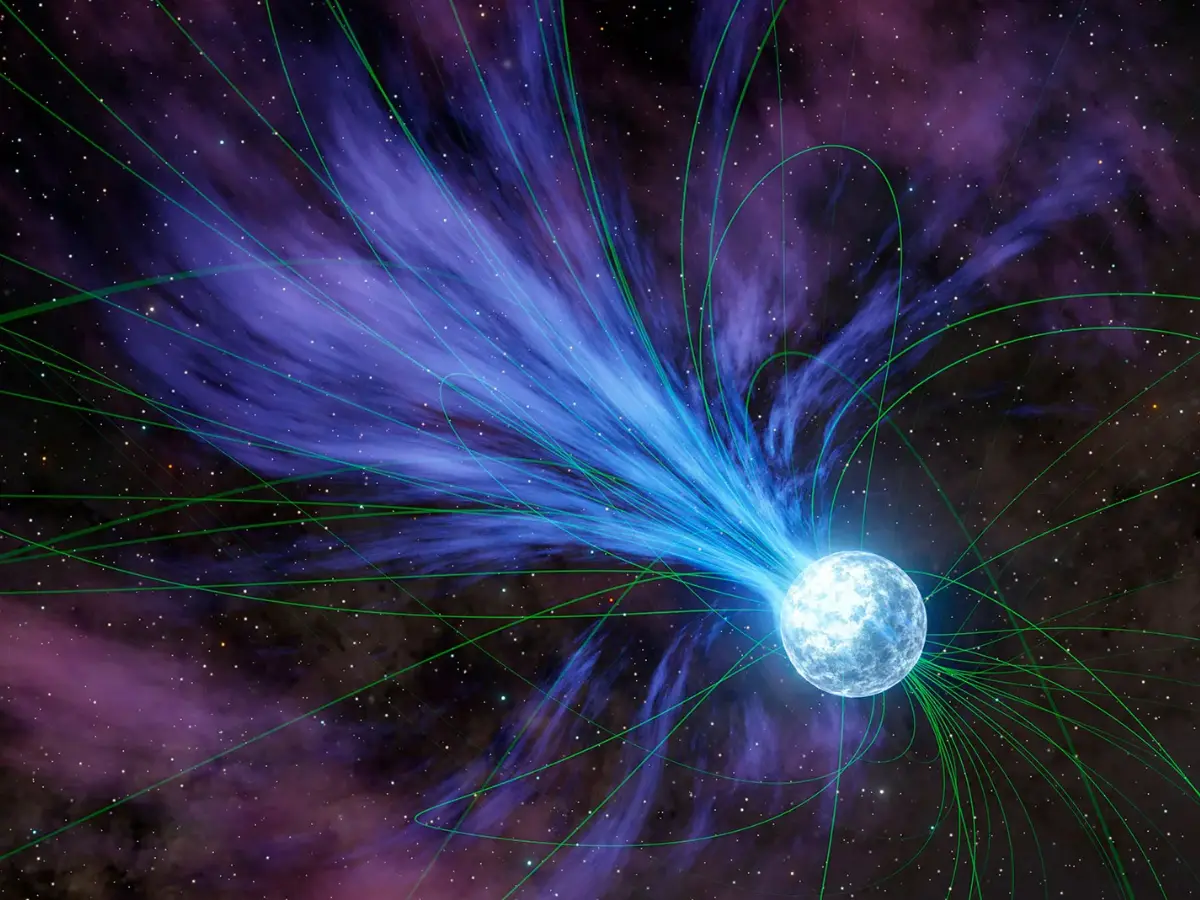
A few possible theories floated by the experts include a massive star that seems could be imploding under its own weight as some material keeps it powered, Martin-Carrillo said. However, in this case, the GRB would only last a few seconds. It could also be a scenario where a black hole is eating a star. But going by the GRB, it would have to be an "unusual" star and an equally "unusual" black hole. But there are only speculations, and it might be a long time before the true origins of the gamma ray are revealed.