Rare fossilised skin from an unknown creature is a whopping 286-million-years old

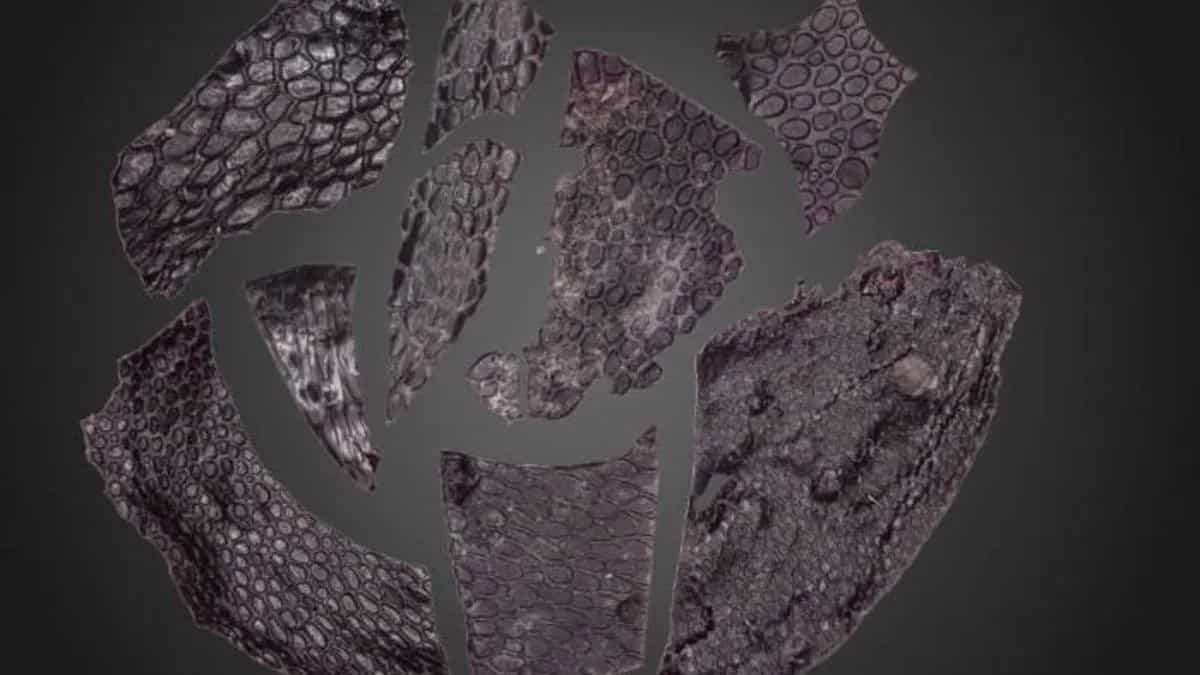
Rare fossilised skin found in US
Researchers have discovered the most aged skin fossil, roughly 286-million-years old. However, they do not know which creature it belongs to.
According to a study published inCurrent Biologyjournal, the fragment of the fossilised skin found has a distinctive pebbled texture, resembling the skin of a modern-day crocodile, and it exceeds the age of any known skin fossil by at least 21 million years.
Scientists believe it might have belonged to an early Paleozoic reptile. What makes the discovery more significant is the rare soft tissue in the fossilised skin.
Ethan Mooney, a palaeontology graduate student at the University of Toronto and the study's first author, said, "These types of discoveries can enrich our understanding and perception of these pioneering animals."
Researchers extracted the fossilised skin and another specimen from the Richards Spur limestone cave system in Oklahoma, a site known for its exceptional preservation conditions. Fine clay sediments, oil seepage, and an oxygen-poor cave environment at Richards Spur played a crucial role in preserving the skin.
"Animals would have fallen into this cave system during the early Permian and been buried in very fine clay sediments that delayed the decay process," Mooney elaborated.
"But the kicker is that this cave system was also an active oil seepage site during the Permian, and interactions between hydrocarbons in petroleum and tar are likely what allowed this skin to be preserved," she added.
ALSO READ |Thailand: Traces of new deadly bat virus which can infect humans found inside cave, says report
Study co-author Tea Maho of the University of Toronto Mississauga observed the tiny fossilised skin, smaller than a fingernail. After microscopic observation, she found detailed epidermal tissues, characteristic of amniotes.
Amniotes are a group of terrestrial vertebrates that includes reptiles, birds, and mammals. They evolved from amphibian ancestors during the Carboniferous Period.
"We were shocked by what we saw because it's completely unlike anything we would have expected," said Mooney. "The epidermis was a critical feature for vertebrate survival on land. It's a crucial barrier between the internal body processes and the harsh outer environment," she added.
The pebbled surface skin and hinged regions between scales suggest a resemblance to ancient and present-day reptiles. However, researchers couldn't confirm the species due to the absence of associated skeletal remains.
(With inputs from agencies)