&imwidth=800&imheight=600&format=webp&quality=medium "Photos: New comet C/2025 R2 (SWAN) that will next visit us in year 24,579 is here | When to watch")
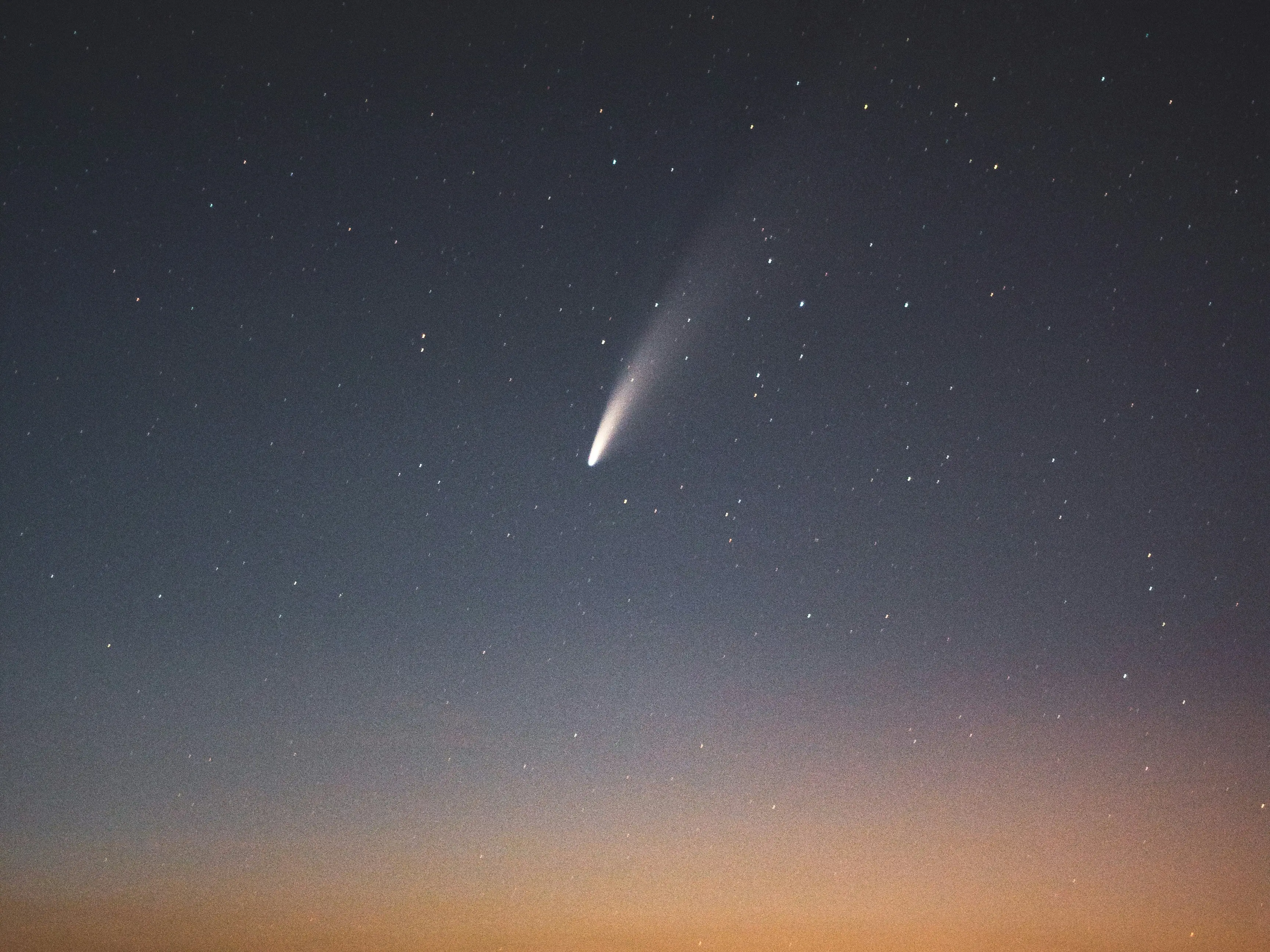
A new comet is in the sky, and it was only discovered on Friday, September 12, 2025. Officially named C/2025 R2 (SWAN), it was detected by the Solar Wind Anisotropies (SWAN) instrument on the SOHO spacecraft. The comet is quite bright, at around magnitude 7. It has a long tail that stretches across 2 degrees in the sky. Right now, you cannot see it with the naked eye, although powerful binoculars might offer you a glimpse of the celestial visitor. Scientists say that C/2025 R2 (SWAN) originated from the direction of the Sun relative to Earth, and this is why it wasn't spotted until recently. After discovering this visitor. NASA/JPL worked to understand its orbit around the Sun. Their calculations show that the comet completes an orbit around the sun every 22,554 years. So the next time it will pay us a visit will be in the year 24,579. Also Read: Asteroid to hit Earth? NASA says space rock bigger than 'Qutub Minar' is moving toward Earth
When will comet C/2025 R2 (SWAN) come near Earth?
The comet reached perihelion, or its closest point to the Sun, on September 12, 2025, at a distance of 75 million kilometres. Data suggests that Earth will cross the comet’s orbit on October 5, 2025. This might also lead to a meteor shower. According to the International Astronomical Union, comet C/2025 R2 (SWAN) will make its closest approach to Earth at a distance of 39 million kilometres sometime between October 12 – 19, 2025. If it survives, the comet will go far away for thousands of years, reaching its farthest distance from the Sun at 86 AU, somewhere within the outer Kuiper belt.
Australian comet expert Michael Matiazzo took a photo of the comet on September 14 and spotted a 2.5-degree-long tail. However, this tail will not be visible through binoculars. The comet is expected to be visible in the southern US soon, as it is currently very low on the western horizon. EarthSky reported several comet hunters, experts and astrophotographers had already captured several images of the new comet.