New Zealand: Scientists discover ancient river, old geothermal activity under iconic Lake Rotorua

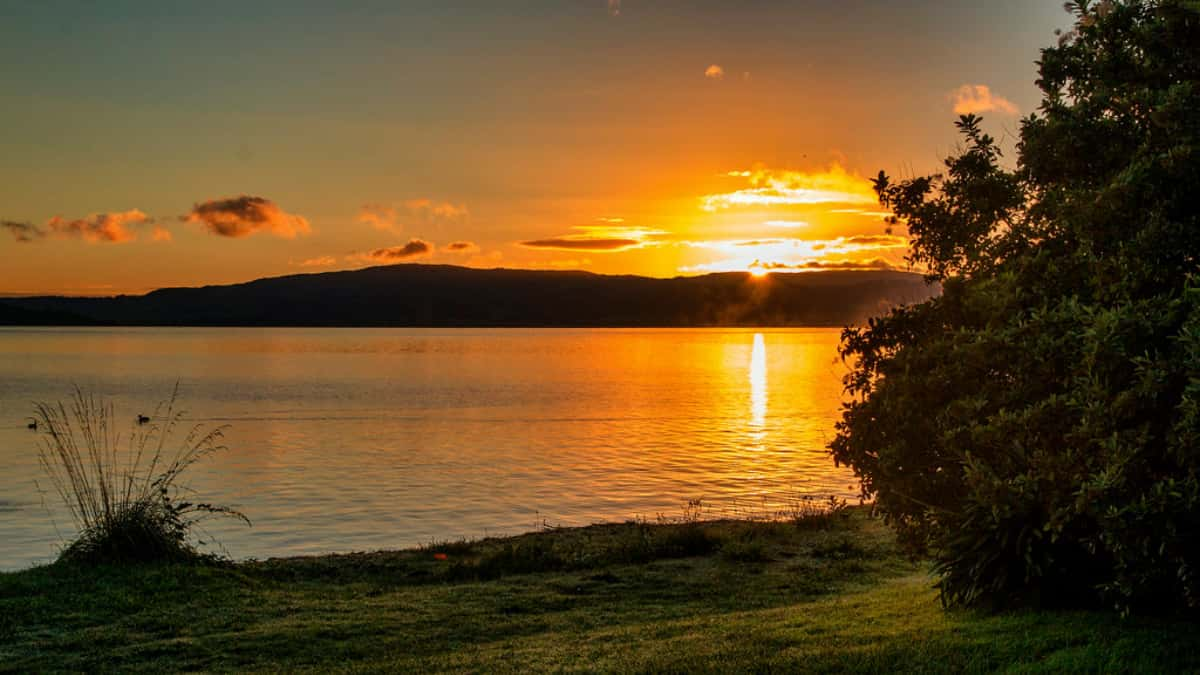
Lake Rotorua
Rotorua, a city in New Zealand, is named after the iconic Lake Rotorua. The city, which is located in the Bay of Plenty Region in the nation's North Island, is renowned for its geothermal activity and Maori culture.
Lake Rotorua is at the centre of a vast historic crater on the North Island, created by a dormant volcano. The lake has a rich history and is associated with many folklore and tales.
In the latest development, scientists have made a major discovery deep beneath Lake Rotorua. A research institute in New Zealand mapped the lake's floor, which revealed stunning and never-before-seen details, researchers at GNS Science stated.
New details revealed eruption craters, an ancient river and a large magnetic anomaly in the southern part of the lake. It is believed that the new mapping proves for the first time that Rotorua's mainland hydrothermal systems extend into the lake's hidden depths.
The maps indicate that lakes in the historically active region could house "significant" geothermal resources. The surveys have been carried out with the New Zealand Defence Force in 2016 and 2017.
Dr Cornel de Ronde of GNS Science explained that the mapping, which covered about 70 per cent of the lake at 1m resolution, revealed a variety of phenomena deep beneath the surface.
Dr de Ronde told Live Science that seeing the maps was similar to wearing spectacles for the first time and not realising you needed them. "You finally put those glasses on, and you can see the fine print," he said.
What are the discoveries?
The river that was observed once would have flown from Rotorua's Sulphur Point to the northwest of Mokoia Island. It appears on the map that the river curved to the northeast.
The latest mapping has provided an intriguing glimpse into how the terrain would have been before the lake developed within a massive caldera volcano that erupted 240,000 years ago.
The researchers were equally astounded by the thousands of pockmarks scattered throughout the lake floor, some of which measured more than 50m in diameter.
Dr de Ronde stated that all these indicated gas was being discharged from below, with the largest likely releasing methane stemming from decomposing organic matter.
The team of researchers also discovered evidence of a doughnut-shaped ring of negative heat flow on the lake floor surrounding a circular area of positive heat flow northwest of Mokoia Island, which is likely linked to a magnetic anomaly in the same location.
"This suggests a possible, separate, geothermal system in the lake associated with a magma body with recharge by lake water," he said.
(With inputs from agencies)