Medieval seal that can help fast track a person's entry into heaven to put on display in UK

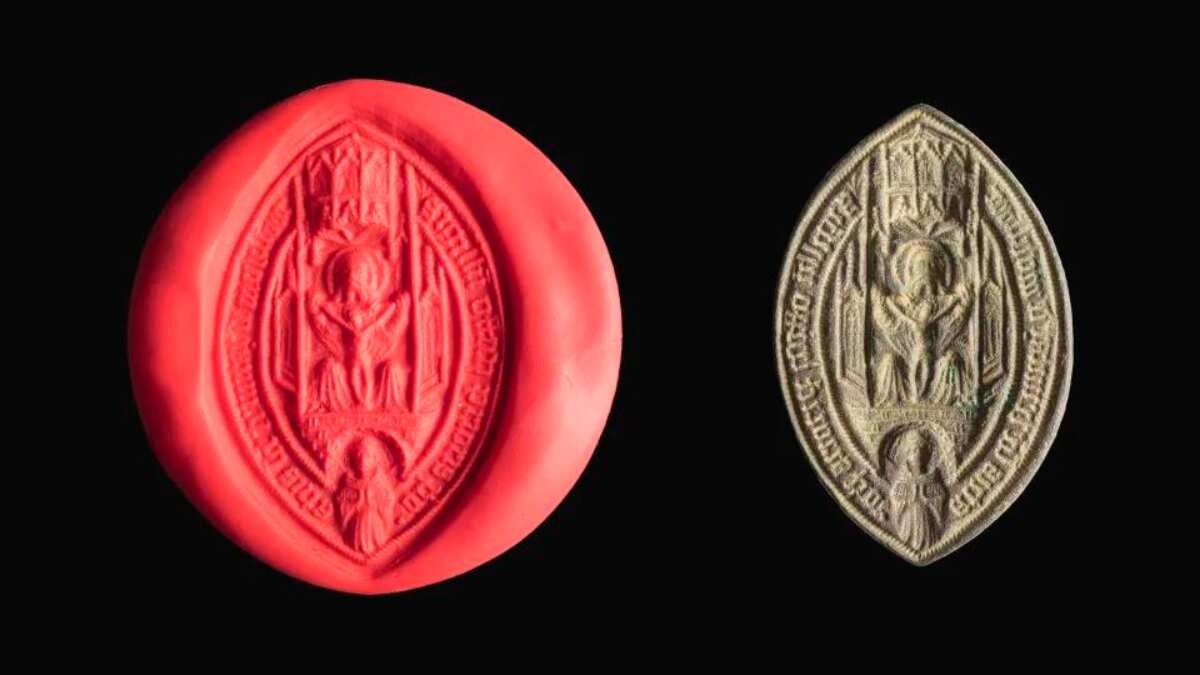
Seal indulgences
Depending on whether you believe in the concept of heaven and hell, this news might interest you. In the United Kingdom, a rare seal that can offer you a fast track to heaven or lessen your time in purgatory is going up for sale.
The seal, as per a report in The Guardian, was used to authenticate "indulgences" or written pardons for a person's sinful behaviour.
Centuries old seal
As per the report, the seal which was found by a metal detectorist just two miles from Mottisfont, an Augustinian priory and site of pilgrimage near Romsey, Hampshire, dates back to the 15th-16th century.
Estimates suggest that it datesbetween 1470 and 1520. It reportedly spent some 500 years buried in the field before it was discovered.
Religious institutions would grant these pardons in exchange for monetary donations. They were supposed to lessen — by one year and 40 days, an individual's time in purgatory after their death.
George Roberts, curator at the National Trust, said: "All this was done to help secure a place in heaven after their death. However, before they could reach heaven, they believed they would need to spend time in purgatory to be purified."
A pardon in exchange for money
Indulgences were written pardons that gained popularity in the medieval times.
The document certifying this purchase was certified with a stamp or impression that was created using the seat matrix pressed into hot coloured wax.

From left to right in the picture, the money collector, seal maker, and cardinal are depicted during the 1517 sale of indulgences.
Mottisfont, the priory near which this seal was found in 1201. The wealthy institution saw its income deplete as a result of the Black Death plague that swept through Europe in the 1340s.
Following this, the pope granted the institution permission to sell indulgences to raise funds.
"By being able to sell indulgences, Mottisfont priory could offer people a reduction in their time in purgatory—in effect, fast-tracking them to heaven. This of course came with a price, which was then used to support the priory’s finances," says Roberts.
However, as per the Guardian, the practice of selling these pardons became embroiled in accusations of corruptions that helped fuel the Protestant Reformation. With the dissolution of monasteries in 1536, Mottisfont too closed as a priory.
The rare seal matrix is made of cast copper-alloy. It has an inscription in Latin'sigillu[m] officii prioris p[ri]oretas sce trinitat[is] de Motesfont,' which means Seal of the Official of the Prior of the Priory of Mottisfont`and also features an inscription of the Trinity along with a figure of a praying cleric. It is now owned by the National Trust and will go on display at Mottisfont inHampshire starting Sunday.
(With inputs from agencies)
WATCH WION LIVE HERE
You can now write for wionews.com and be a part of the community. Share your stories and opinions with us here.

