In major breakthrough, scientists successfully implant heart made of titanium

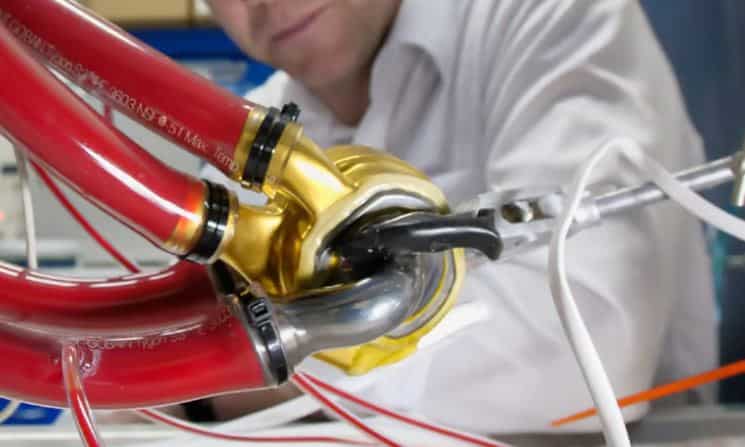
Heart made of titanium
In a major breakthrough related to artificial heart transplants, scientists at the Texas Heart Institute (THI) were able to carry out implantation using a "titanium-constructed" heart. The operation was conducted as a part of an early feasibility study overseen by the US Food and Drug Administration (FDA). The THI said the heart "is a titanium-constructed biventricular rotary blood pump with a single moving part that utilises a magnetically levitated rotor that pumps the blood and replaces both ventricles of a failing heart."
The heart is made by BiVACOR and uses the same technology as high-speed rail lines. BiVACOR is said to have been working on this device since 2013.
No friction
The advantage of thetitanium heart, which uses a magnetically levitated rotor, is that there is no friction involved. It reduces wear and tear and prolongs the heart's life.
The heart uses a small rechargeable external controller to keep it going. It is able to push blood at the rate of 12 litres per minute, enough to sustain an adult.
Other artificial hearts use flexible polymer diaphragms to pump blood. But the components of such hearts wear out soon and it reduces their lifespan.
"This achievement would not have been possible without the courage of our first patient and their family, the dedication of our team, and our expert collaborators at The Texas Heart Institute," said Daniel Timms, founder and CTO of BiVACOR.
"Utilising advanced maglev technology, our TAH brings us one step closer to providing a desperately needed option for people with end-stage heart failure who require support while waiting for a heart transplant. I look forward to continuing the next phase of our clinical trial.”
Watch:Gravitas: China's 11-year-old 'rocket boy' who has written over 600 lines of code
Despite all these benefits of the titanium heart, it's strictly meant for those who are waiting for a permanent heart transplant.
As per the American Heart Association, 3,400 heart patients acrossthe United States await a permanent transplant a day.
(With inputs from agencies)