'Doomsday glacier' in Antarctica leaves scientists concerned with alarming rate of erosion

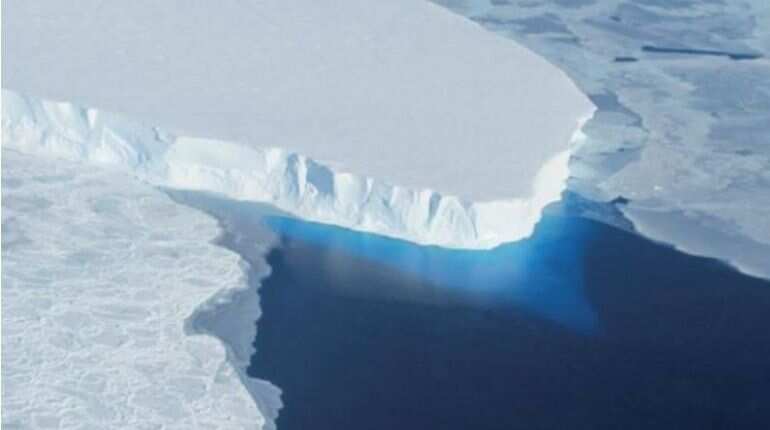
Thwaites Glacier
The Thwaites Glacier in Antarctica, also referred to as the “doomsday glacier” due to the threat that it poses to the global sea level in case of a collapse, is retreating at an alarming pace. According to CNN, scientists are worried about the rate of underwater erosion in the glacier due to global warming and in case of a complete collapse in the near future, it is capable of raising the sea level to catastrophic levels.
In the study published in the journal Nature Geoscience, the researchers compared historic data regarding the retreat of the Thwaites Glacier and concluded that in the past two centuries, the rate has gone up considerably and in the past decade, it has almost doubled resulting in “swift disintegration”.
"Thwaites is really holding on today by its fingernails, and we should expect to see big changes over small timescales in the future -- even from one year to the next -- once the glacier retreats beyond a shallow ridge in its bed," Robert Larter, one of the study's co-authors, said in the release.
While the levels are still not that dangerous right now, the researchers believe that the rate can keep getting worse and, in that case,thesea level can go up by at least 16 feet in a very short period of time.
"From the satellite data, we're seeing these big fractures spreading across the ice shelf surface, essentially weakening the fabric of the ice; kind of a bit like a windscreen crack," Peter Davis, an oceanographer with the British Antarctic Survey, told CNN in 2021. "It's slowly spreading across the ice shelf and eventually it's going to fracture into lots of different pieces."