Comb jelly from 700 million years ago may be Earth’s oldest animal, says new research

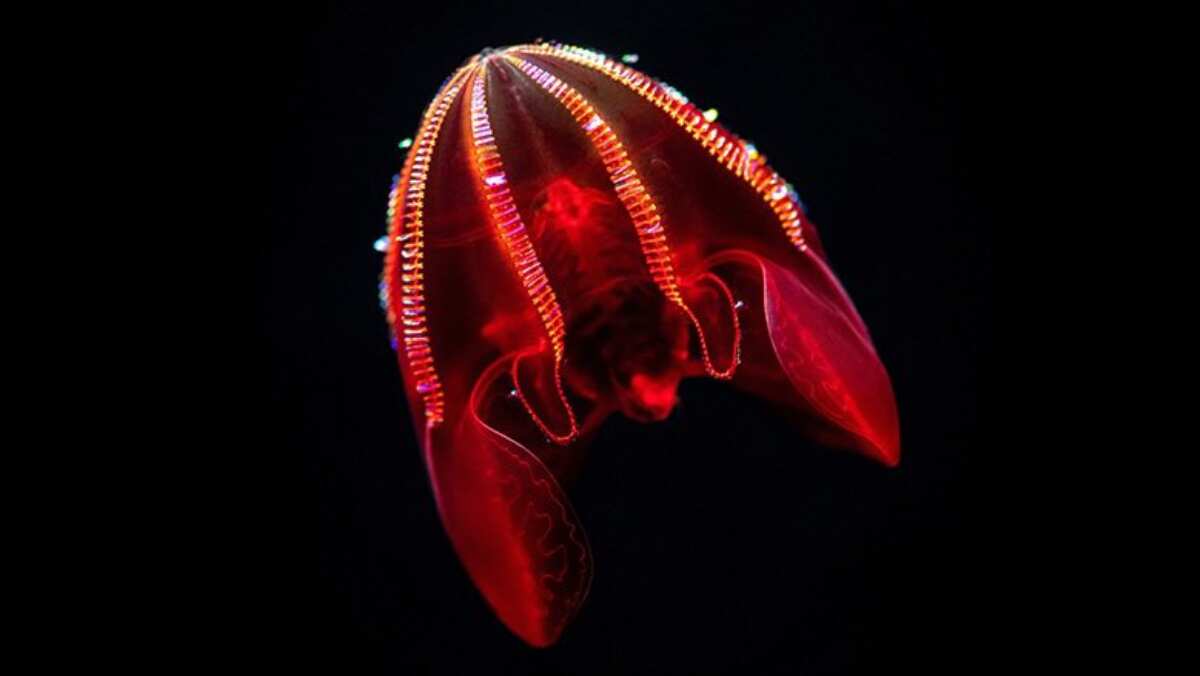
Comb Jelly
According to a recent study published in the journal Nature, researchers think they may have discovered the first animal to have walked the Earth 700 million years ago. Scientistsfrom the University of California Berkeley concluded that the first animal was probably a comb jelly, or ctenophore, a predator that scours the ocean waters for prey, they said in a press release.
Although comb jellieslooklike jellyfish, they are quite different from them and move through the water by using their cilia rather than tentacles. They may be found in seas all around the world and are still a vital component of the marine ecology.
Also Read | Apple bans employees from using OpenAI's ChatGPT
"The most recent common ancestor of all animals probably lived 600 or 700 million years ago. It's hard to know what they were like because they were soft-bodied animals and didn't leave a direct fossil record," said Daniel Rokhsar, a UC Berkeley professor and co-author of the study.
"But we can use comparisons across living animals to learn about our common ancestors."
Spongev/sctenophore:Debate over oldest animal
The question of whether the sponge or the ctenophore evolved first has been debated for a long time, according to the university. The majority of their lives are spent in one location, as sponges filter water via their pores to gather food particles.
Many have suggested that the sponge emerged first — before the ctenophore — because of its basic traits, according to experts.However, this new research says that while sponges came early, they were likely second to ctenophores.
Study ofchromosomeshelped reach the conclusion
To come to that conclusion, scientists examined how the genes were arranged in the creatures' chromosomes. The chromosomes of the ctenophore differ significantly from those of sponges, jellyfish, and other invertebrates, indicating to scientists that the ctenophore may have evolved much earlier or much later than the others.
"At first, we couldn't tell if ctenophore chromosomes were different from those of other animals, simply because they'd just changed a lot over hundreds of millions of years," said Rokhsar, adding, "Alternatively, they could be different because they branched off first, before all other animal lineages appeared. We needed to figure it out."
Watch | Japan to join India's UPI payment system, says Kono Taro, Japan's Digital Minister
"When the team compared the chromosomes of these diverse animals and non-animals, they found that ctenophores and non-animals shared particular gene-chromosome combinations, while the chromosomes of sponges and other animals were rearranged in a distinctly different manner," the news release said.
Researchers claim that the new perceptionis important for understanding the foundational behaviours of all animals and humans today, including how we move, consume, and detect our immediate environment.
WATCH WION LIVE HERE
You can now write for wionews.com and be a part of the community. Share your stories and opinions with us here.