&imwidth=800&imheight=600&format=webp&quality=medium "Earth has two moons? NASA confirms asteroid becomes earth's second moon until 2083")
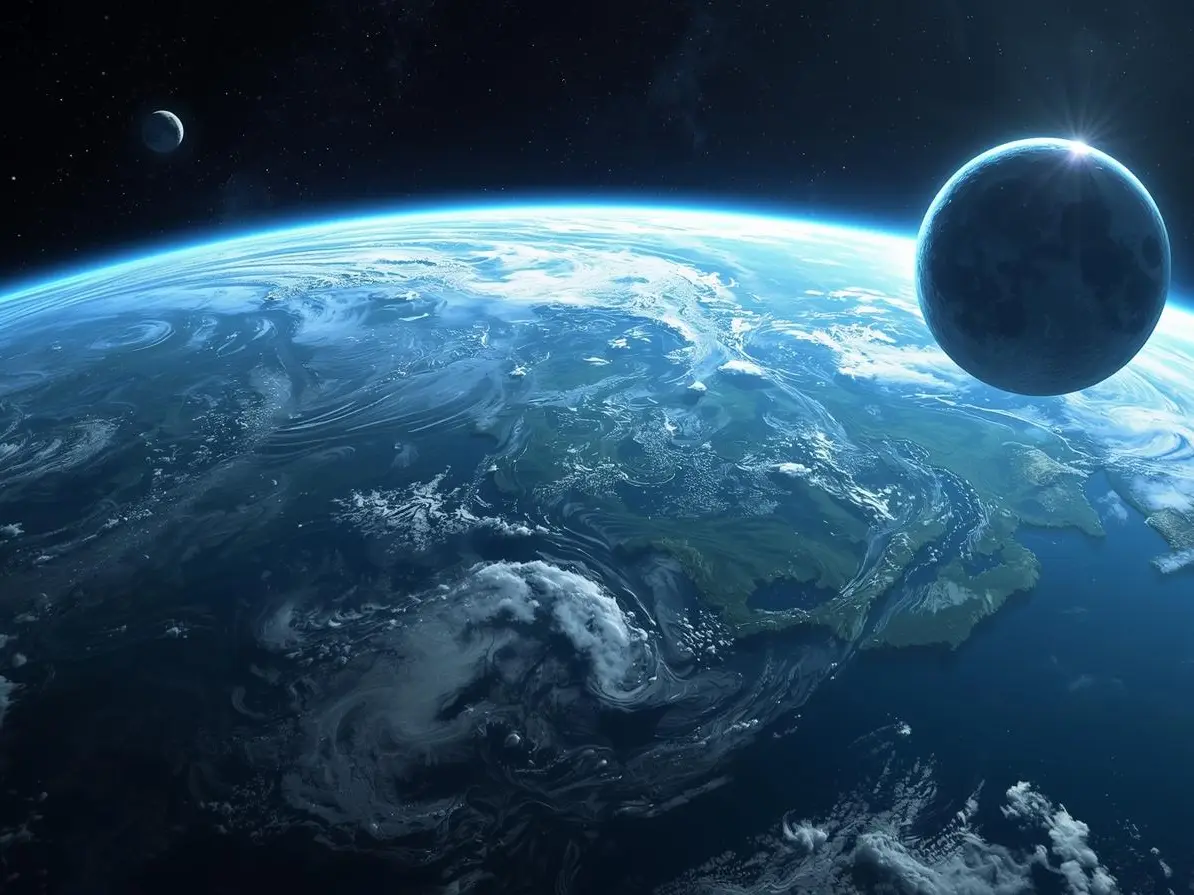
NASA has confirmed this week that Earth has a temporary “second moon”. It is a small asteroid captured in orbit around the planet, and it travels almost in synch with the Earth. It was discovered by the University of Hawaii this week. Astronomers suggest that it has probably been tagging along for around 60 years and is likely to continue along with the Earth until 2083. The celestial body is known as a ‘quasi-moon’ and is 18 to 36 meters wide and is approximately the width of a building.
The celestial body is identified as 2025 PN7. But unlike the moon, which is bound by gravity to the Earth, the 2025 PN7 is not bound to the Earth. At its closest, it will come as close as 4 million km distance of the Earth, roughly 10 times the distance to the moon; at its most distant, it can move away to 17 million km from the Earth. This to and fro movement is because of the interaction of the gravity of the Sun, the Earth. Such mini-moons are naturally captured objects that orbit the planet for a short period before either falling back into space or entering Earth’s atmosphere.
The celestial body was first observed earlier in the year, during a routine telescope survey. It came across at first as an illegible dot, but soon confirmed to be a companion of the earth. Till now, the Earth has found eight quasi-moons in total. Each of these is important in revealing information about near-earth gravity and how asteroids interact with it. This sparks scientific curiosity and highlights the dynamic nature of objects in near-Earth space.

Earth's main moon remains the dominant natural satellite, but these temporary companions. Our moon is brighter, bigger and a constant of the Earth. But 2025 PN7 is a silent traveller that has temporarily joined the Earth in its journey.