&imwidth=800&imheight=600&format=webp&quality=medium "4000-year-old human skull dating back to 2300 BC discovered on Indiana Riverbank")
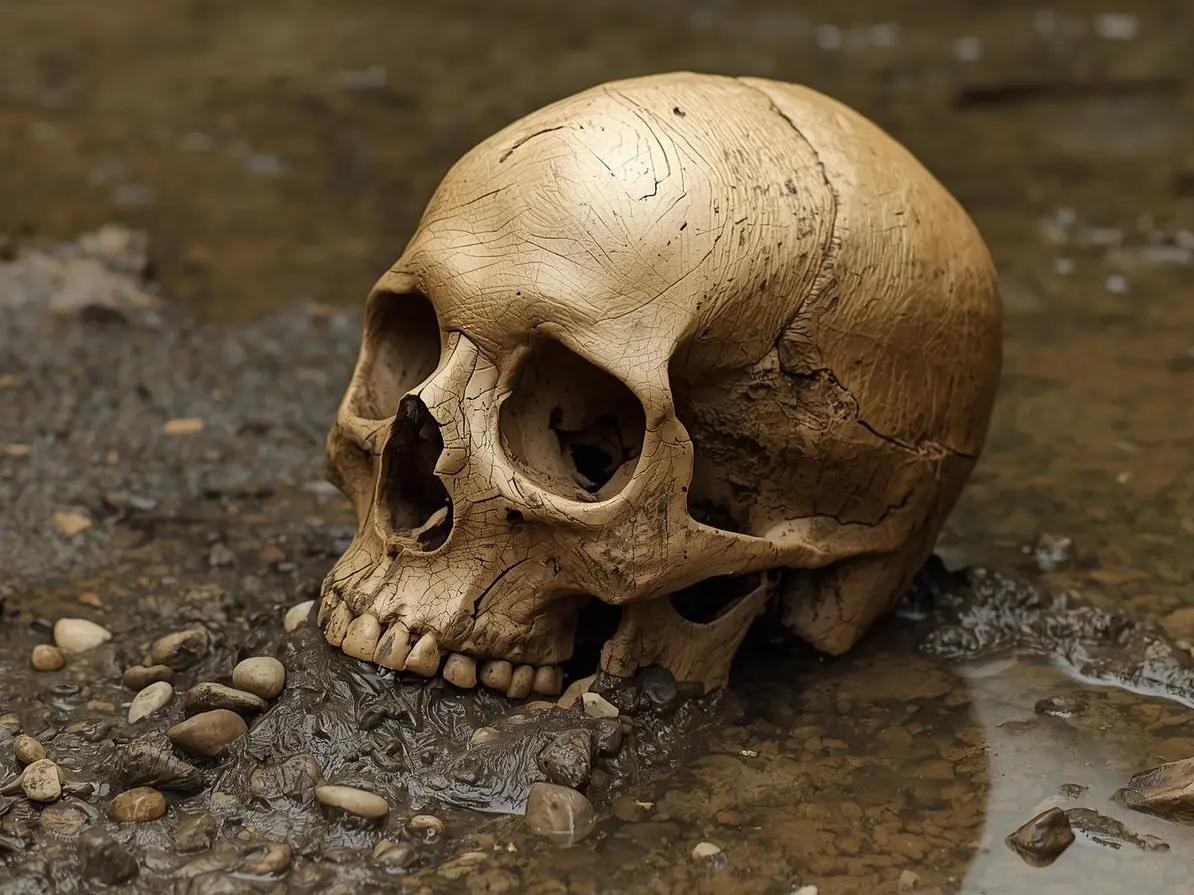
Around the time the Harappan civilisation thrived along the Indus River, humans were also wandering across the continent of North America. A portion of a human skull was discovered on June 2, 2025, on the bank of Whitewater River, Fayette County, Indiana. Fayette County Coroner Eddie Richardson on Monday announced the discovery on indigenous day.
Preliminary radiocarbon dating confirmed the remains are roughly 4,270 years old, at about 2300 BC.
The Coroner called the discovery ‘remarkable’ and signified that people had inhabited these lands so long ago.
This discovery underscores the importance of our community's vigilance and the necessity of professional collaboration,” Richardson said in a statement. “I want to commend the landowner for their responsible action in immediately reporting the finding.”
The discovery is exciting as DNA analysis of the bone can give a window to the genetic lineage, such as whether they are native american or even earlier, pre-Clovis group. Comparing them with the genome record of the area, they can reveal migration routes, whether they moved from northern ice-free corridors, coastal routes, or other early settlement pathways across North America. According to the Indiana State Museum and Historic Sites, during those times large population of Native Americans were concentrated in smaller areas, and they were shifting to a plant-based diet

The genetic makeup will also reveal biological context like sex, hair, eye, skin pigmentation, etc.Comparing these to modern Native American tribes will also help in studying the genetic continuity or divergence.
The University of Indianapolis helped in the initial identification of the portion of the human skull to confirm if the remains were from a human. The University of Georgia is handling a sample for more precise dating. However, specific details about the disposition of skull remains are unclear, whether it was brought in by river flow and or it was from the same place of discovery.