Only in America: An epidemic of gun violence without a cure

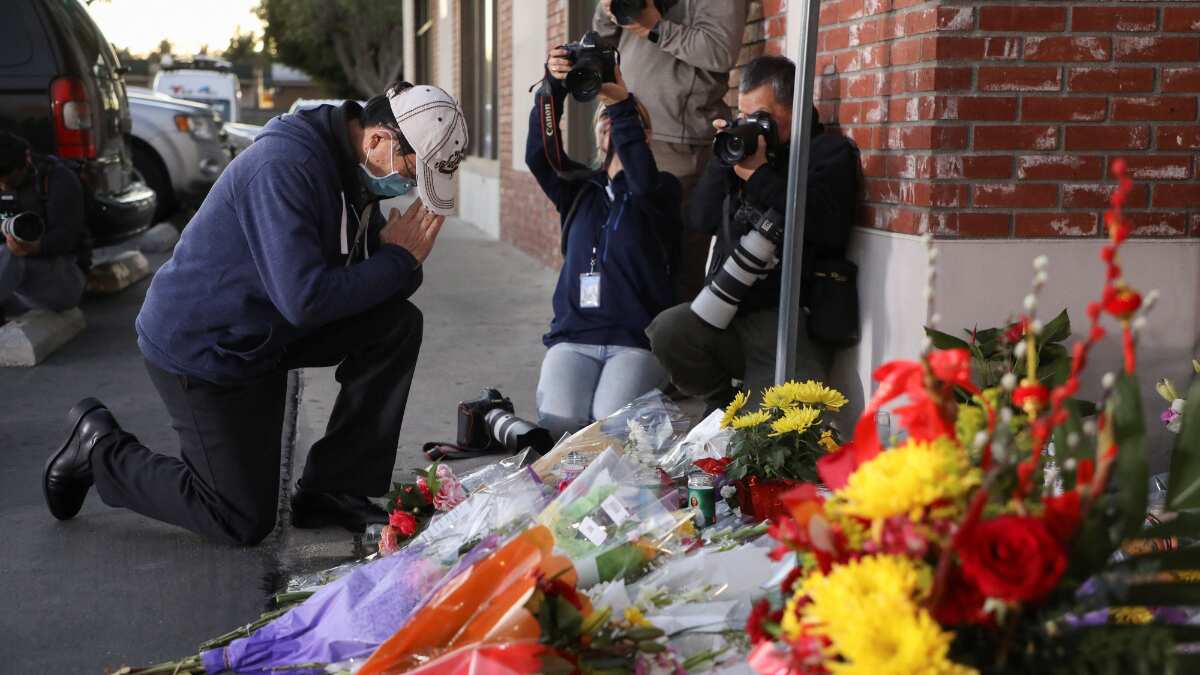
Chinese Lunar New Year shooting
Gun violencehas become so much part of daily life in the United States, the only country with more guns in private hands than people, that mass shootings rarely prompt shock and surprise. But they did in the first weeks of the year because of a sequence of events that spoke volumes of the country’s deep and deadly love affair with guns.
To explain, here is a timeline of events:
January 6 – A six-year-old boy shot and badly wounded a teacher he disliked with a 9mm handgun he carried into his school in the Virginia city of Newport News in his backpack.
January 17 – A neighbour watching his home security camera spotted a toddler wearing a diaper and waving a pistol wandering the hallway of an apartment building in the city of Beech Grove, Indiana. It’s still not clear how the student and the toddler got access to the weapons.
January 21 – A man using a submachine gun killed 11 people and wounded 10 at a dance hall in Monterey Park, near Los Angeles. The shooter, aged 72, killed himself after the vehicle in which he was fleeing was surrounded by police.
January 24 - Four people were shot dead at a mushroom farm in the Northern Californian town of Half Moon Bay and another three at a nearby farm. The shooter is under arrest.
These incidents established a sad record: the six-year-old student was the youngest shooter in the history of American gun culture. The 72-year-old the oldest. The average age of mass shooters in the US, according to the Rockefeller Institute of Government, a think tank, is 33.
Also Read |Biden calls for assault weapons ban after California witnesses third mass shooting within three days
The list above is incomplete. On New Year’s Day alone, there were mass shootings in Pennsylvania, North Carolina, Oklahoma and Ohio. Separately, two parties in different Florida cities ended with revelers gunned down.
By January 25, the Gun Violence Archive listed more shootings than days of the month – 39 compared with 25. The only non-violent days of January 2023 were January 11, 18 and 19.
Each act of violence triggers almost identical rituals. TV networks and print media dispatch reporters to interview grieving survivors, analysts ponder on the possible motives, politicians express sympathy – “we send thoughts and prayers” is a favourite phrase – advocacy groups demand tighter controls on the sale of guns, conservatives routinely blame insufficient mental health care.
For the makers of guns, headline-making shootings are a business opportunity. Sales of guns and ammunition routinely spike after each mass shootings. Why? Two reasons, criminologists say. One is to defend themselves in case they are caught in a shooting and the second fear of restrictions on the purchase of firearms – easier in most USstates than anywhere else in the world.
Lax gun laws have resulted in a steadily growing number of firearms owned by civilians. According to the National Shooting Sports Foundation, a gun trade association, that number now stands at 434 million. The USCensus Bureau’s latest estimate of the population is 333.2 million.
Opponents of tighter gun controls see any proposal – such as deeper background checks for buyers – as a move towards eliminating the Second Amendment of the USconstitution which guarantees the right to bear arms.
Its wording has been the centre of fierce debate for many decades. It says: “A well regulated militia, being necessary to the security of a free state, the right of the people to keep and bear arms shall not be infringed.”
It was ratified in 1791, at a time when muskets and flintlock pistols were the typical firearms. They held a single round at a time and it required high skill to fire three roundsin a minute. One can question whether the founders of the constitution would have used similar language had they imagined that the most frequently used firearm used in recent shootings fires 45 rounds a minute?
The USSupreme Court ended years of legal wrangling over the phrase “well regulated militia” with a ruling in 2008 saying the amendment guaranteed an individual the right to possess firearms independent of service in a state militia.
Gun culture is deeply rooted in the history of America, a country founded in armed insurrection against British colonial rule and later in westward expansion by armed settlers. The Wild West, frontier justice, gunslingers and cowboys and Indians are part of American lore, glorified by literature and Hollywood movies.
In America’s federal system, which gives considerable power to the states, regulations on guns vary and some are truly baffling. In Texas, for example, state law forbids the sale of pistols for buyers under 21 years of age. But it allows the sale of “long guns” to people aged 18.
Which is why a young man called Salvador Ramos waited till his 18th birthday to buy the AR-15 assault rifle, legally a “long gun” with which he killed 19 children and two teachers and wounded 17 others at his former elementary school at the city of Uvalde. Police shot and killed him. The “long gun” regulation is still in force.
One phrase that comes to my mind when I think about the USepidemic of violence is “American exceptionalism”, the belief shared by many Americans that their country is inherently superior to others. Those who have even the slightest reservations about that concept tend to face charges of lacking patriotism.
Former president Barack Obama had a taste of this when he answered a question at a NATO conference in 2009 about whether he subscribed to the idea of American exceptionalism. His response: “I believe in American exceptionalism. Just as the Brits believe in British exceptionalism, and the Greeks in Greek exceptionalism.”
Oops! Wrong answer in the eyes of many of his compatriots. But where guns and gun laws and shootings are concerned, there can be no doubt that America is exceptional. Judging from history, it will remain that way.
(Disclaimer: The views of the writer do not represent the views of WION or ZMCL. Nor does WION or ZMCL endorse the views of the writer.)
WATCH WION LIVE HERE
You can now write for wionews.com and be a part of the community. Share your stories and opinions with us here.
