Supreme Court of India backs sub-classification for SCs and STs in 6:1 verdict. Here's what it means

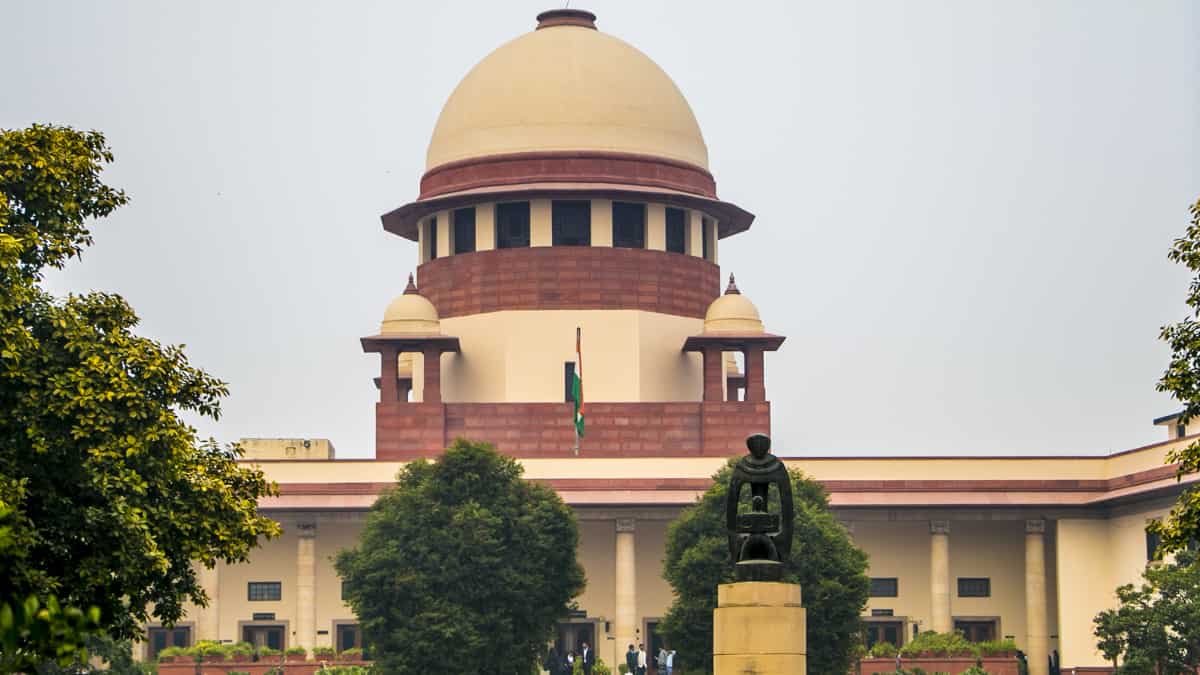
Supreme Court of India
The Supreme Court of India on Thursday (Aug 1) permitted the sub-classification of Scheduled Castes (SCs) and Scheduled Tribes (STs) tohelp uplift the more underprivileged and downtrodden.
A seven-judge constitution bench, led by Chief Justice of India D Y Chandrachud, delivered this landmark verdict with a 6:1 majority.
What does the judgement say?
The majority opinion, articulated through six separate judgements, states that subclassification must be based on "quantifiable and demonstrable data" provided by the states. This seeks to ensure that the process is not arbitrary.
With this ruling, the Supreme Court of India has overruled its previous 2004 judgement in the EV Chinnaiah case, which held that SCs and STs are homogenous groups that cannot be further subdivided for quotas.
The bench, comprising justices B.R. Gavai, Vikram Nath, Bela M Trivedi, Pankaj Mithal, Manoj Misra, and Satish Chandra Mishra, reviewed 23 petitions, including a prominent one filed by the Punjab government. The government had challenged a 2010 verdict by the Punjab and Haryana High Court.
Chief Justice Chandrachud, joined by Justice Misra, wrote the lead opinion while four other judges provided similar judgements. Justice Trivedi dissented.
Justice Gavai, in a separate verdict, emphasised the need for states to identify and exclude the "creamy layer" within SCs and STs from reservation benefits.
In her dissent, Justice Trivedi argued that states should not alter the scheduled caste list notified under Article 341 of the Constitution. Shemaintained that affirmative actions by states must align with constitutional principles. She further asserted that the Supreme Court should not justify state actions through its powers under Article 142.
The court had reserved its verdict on February 8 after hearing arguments for reviewing the 2004 EV Chinnaiah judgement.
(With inputs from agencies)

