Railways unveils India’s first bullet train between Mumbai and Ahmedabad – Here’s the first look

&imwidth=600&imheight=450&format=webp&quality=medium "Railways unveils India’s first bullet train between Mumbai and Ahmedabad – Here’s the first look")
Railways unveils India’s first bullet train between Mumbai and Ahmedabad Photograph: (ANI)
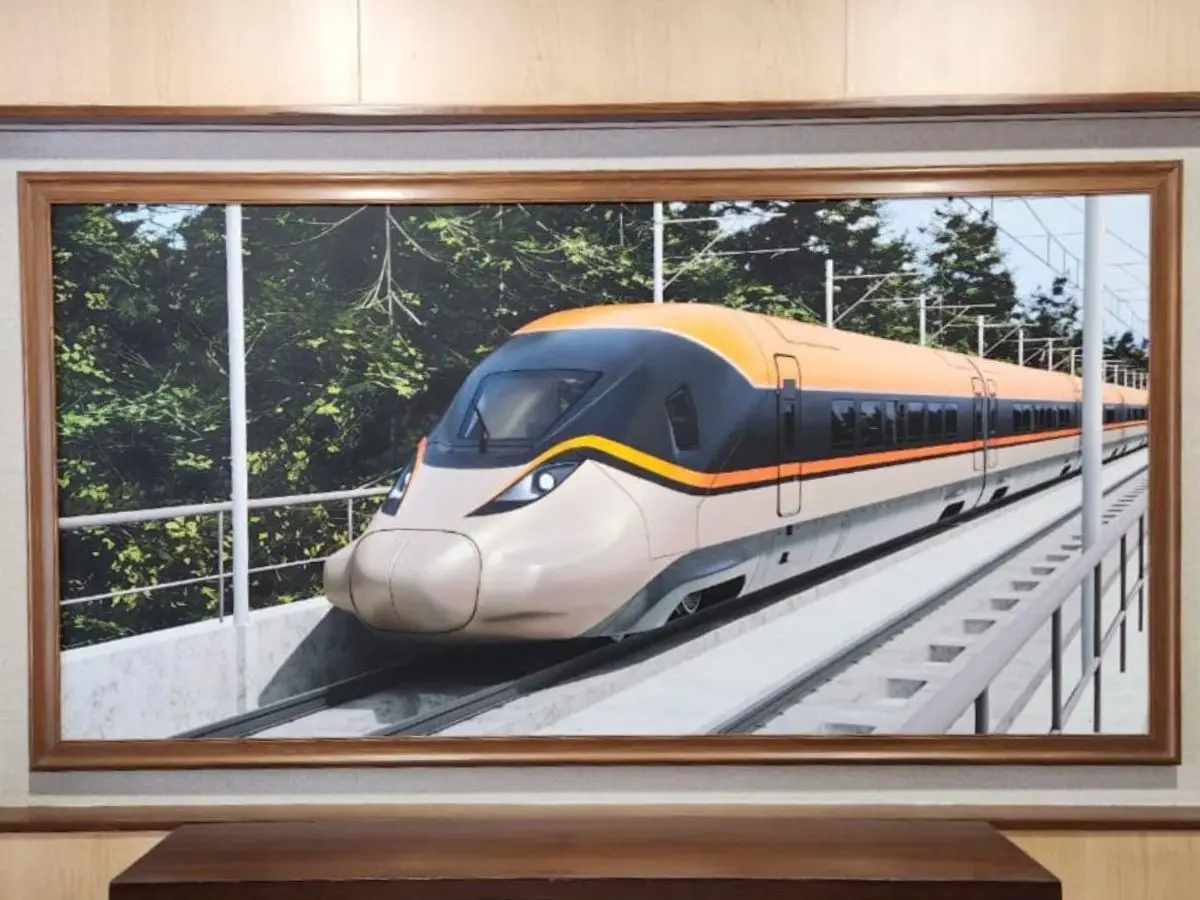
Indian Railways unveiled the first look of the Mumbai-Ahmedabad bullet train project, featuring a 280 kmph high-speed train under the Make in India initiative.
Indian Railways on Monday (May 18) unveiled the design of the country’s first bullet train that is set to run between Mumbai and Ahmedabad. The first look of the high-speed train has been displayed at the Ministry of Railways in New Delhi, showcased through a picture installed at Gate Number 4 of the building.
“A picture of the country's first proposed bullet train has been displayed at the Ministry of Railways. The picture has been installed at Gate Number 4,” the Indian Railways said in a statement, according to ANI.
Earlier in February, Railways Minister Ashwini Vaishnaw shared details of the project in the Lok Sabha. The 508-km Mumbai-Ahmedabad High-Speed Rail (MAHSR) project would pass through Maharashtra, Gujarat and the Union Territory of Dadra and Nagar Haveli. The route will have 12 stations, including Mumbai, Thane, Virar, Boisar, Vapi, Billimora, Surat, Bharuch, Vadodara, Anand, Ahmedabad, and Sabarmati.
The foundation work for the MAHSR project has been completed at eight stations in Gujarat, including Vapi, Bilimora, Surat, Bharuch, Anand, Vadodara, Ahmedabad, and Sabarmati. While the construction is still underway at Thane, Virar, and Boisar in Maharashtra, excavation at the Bandra Kurla Complex (BKC) station is nearing completion.
The MAHSR project also includes several river bridges, seventeen of which have been completed, while work is at an advanced stage at four major ones in Gujarat (Narmada, Mahi, Tapti and Sabarmati). Construction is also underway on four river bridges in Maharashtra.
Indian Railways said the project will strengthen indigenous high-speed rail technology under the Make in India initiative, with Chennai-based Integral Coach Factory (ICF) and Bengaluru-based BEML jointly developing train sets capable of speeds up to 280 kmph.
Vaishnaw said the MAHSR corridor has been planned for high-frequency services with a large passenger capacity, while fares are expected to stay competitive with current rail and air travel options. He added that the project’s safety systems have been developed with assistance from Japanese Railways and adapted to meet Indian operational needs and climatic conditions.

