PM Modi recalls Sudama's rice offering to Krishna at Kalki Dham. Know why

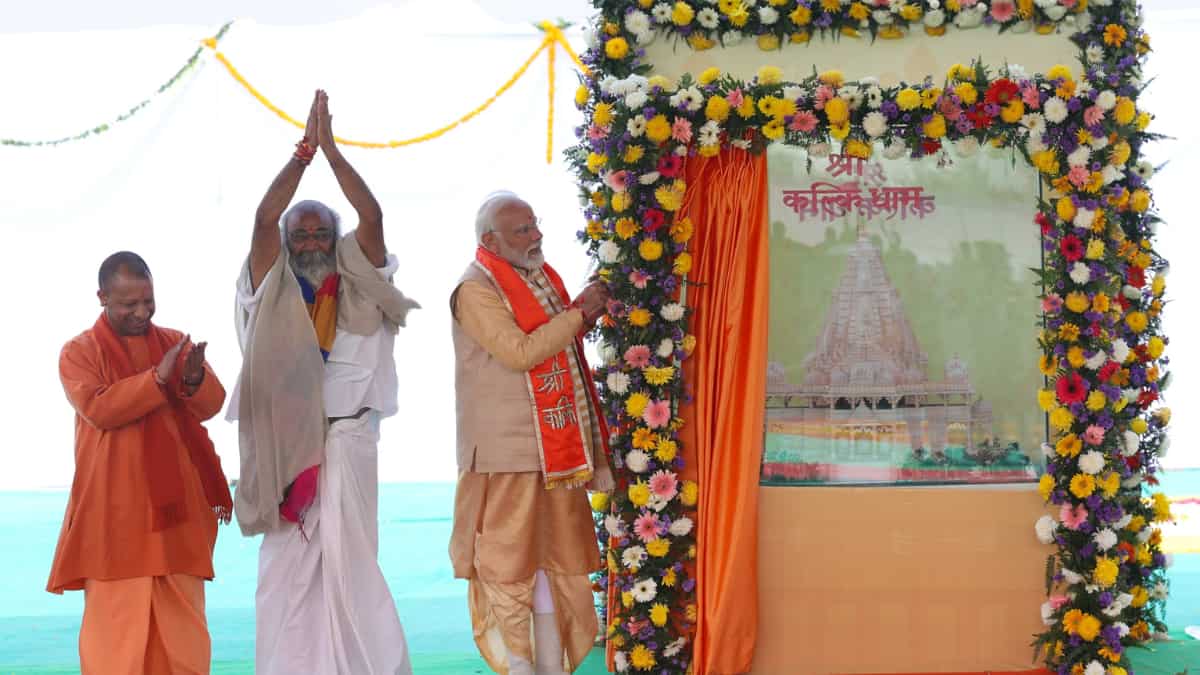
Uttar Pradesh CM Yogi Adityanath, Kalki Dham temple trust chair Pramod Krishnam and PM Narendra Modi
Prime Minister Narendra Modi, while speaking at the foundation layingceremony of the Hindu shrine Kalki Dham in Sambhal district of northIndia's Uttar Pradesh state, drew a unique parallel between the present-day politics and the Vedic times of Lord Krishna.
According to ancient Indian texts, Lord Krishna met Sudama when they both were disciples of the sage Sandipani. As a Brahmin living upon the alms of just up to seven households, Sudama lived a life of poverty with his wife and children. At one point in his life, Sudama went to meet his childhood friend Krishnawho then had become Dwarkadheesh, or the King of Dwarka in present-day Gujarat state in western India.
Sudama gave his friend Krishna a small cloth wrapped in rice because that was all he could get as offering due to his limited means. Krishna consumed that rice with tremendous affection in one of the most poignant moments of his life on earth.
It is in this context that India's Prime Minister Modi said that the times have changed so much that if in current times Sudama would give rice to Shri Krishna and itsvideo comes out, "a PIL would be filed in the Supreme Court and the judgment would come that something was given to Lord Krishna in corruption and Lord Krishna was doing corruption."
"It is better that you expressed your feelings and did not give anything," Modi said, while referring to Acharya Pramod Krishnam, the chairperson of the trust which is developing the Hindu shrine Kalki Dham in Uttar Pradesh.
What does it mean?
Prime Minister Narendra Modi's statement could be read in the context of the latest Supreme Court judgment on Electoral Bonds after the top court deemed the promissory banking note in all denominations as "unconstitutional".
Also watch |Gravitas: India's PM Modi inaugurates first Hindu mandir in Abu Dhabi | Temples in Muslim countries
A five-judge Constitution Bench of the Supreme Court earlier this monthunanimously struck down the electoral bond scheme which facilitated anonymous political donations. The top courtunderscored that the scheme violates the right to information under Article 19(1)(a) of the Constitution.
The Opposition hailed the Supreme Court's verdict and described itas step towards "the end of corruption."
(With inputs from agencies)