PM Modi dials UAE president; discusses West Asia tensions and Strait of Hormuz security

&imwidth=600&imheight=450&format=webp&quality=medium "PM Modi dials UAE president; discusses West Asia tensions and Strait of Hormuz security")
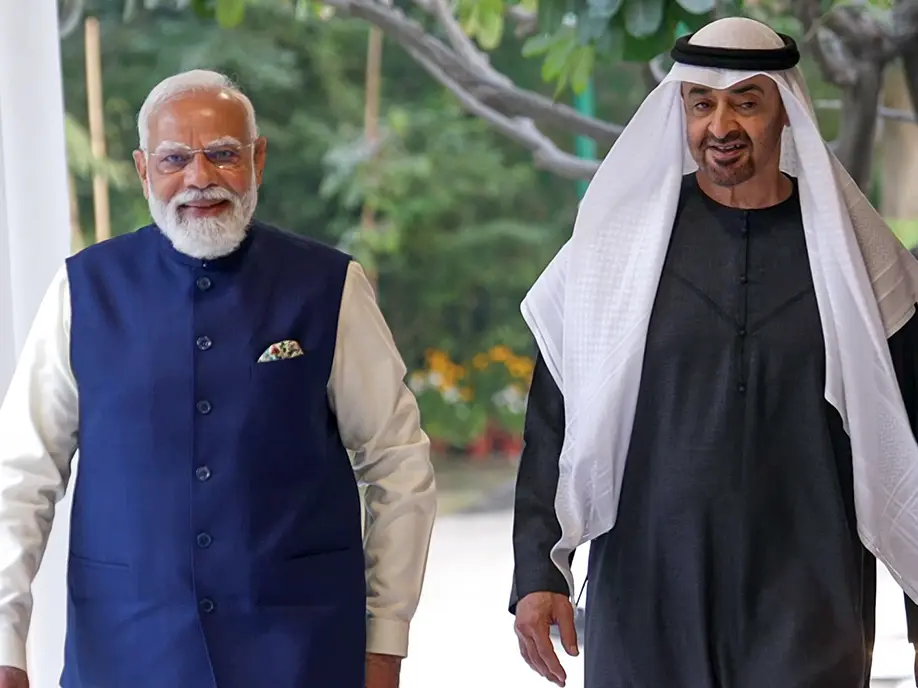
Narendra Modi and Sheikh Mohamed bin Zayed Al Nahyan Photograph: (ANI)
Modi and UAE President discuss West Asia tensions, condemn attacks, and stress secure Strait of Hormuz navigation amid ongoing regional conflict
Indian Prime Minister Narendra Modi on Tuesday (March 17) held a phone conversation with Sheikh Mohamed bin Zayed Al Nahyan, President of the United Arab Emirates, to discuss the escalating tensions in the West Asian region.
During the call, both leaders emphasised the importance of maintaining safe and uninterrupted navigation through the Strait of Hormuz, a critical global oil route. Modi also extended advance Eid greetings to the UAE President.
“Spoke with my brother HH Sheikh Mohamed bin Zayed Al Nahyan, President of the UAE and conveyed advance Eid greetings. We discussed the current situation in West Asia. Reiterated India’s strong condemnation of all attacks on the UAE that have resulted in loss of innocent lives and damage to civilian infrastructure,” said Modi. “We agreed on the importance of ensuring safe and free navigation through the Strait of Hormuz. We will continue to work together for the early restoration of peace, security and stability in the region,” he added further.
Also Read: He will be out of office soon': Trump targets Macron after France rejects Hormuz task force
Days after strikes targeting the UAE started, Narendra Modi held a conversation with Mohamed bin Zayed Al Nahyan, conveying India’s solidarity with Abu Dhabi. The call came as Iran pressed ahead with missile and drone attacks on multiple West Asian nations hosting US military bases, including the UAE, in retaliation for the joint US-Israel airstrikes over the weekend that reportedly killed Iran’s Supreme Leader Ali Khamenei along with several senior military officials.
Disclaimer: WION takes utmost care to accurately and responsibly report ongoing conflicts in West Asia involving Israel, Iran, the US, Gulf nations and non-state actors like Hezbollah, Hamas, Houthis, Islamic State, and others. Claims and counterclaims, disinformation, and misinformation are being made online and offline. Given this context, WION cannot independently verify the authenticity of all statements, social media posts, photos, and videos.

