Opinion: As daughter of a soldier, I find stone pelting gruesome

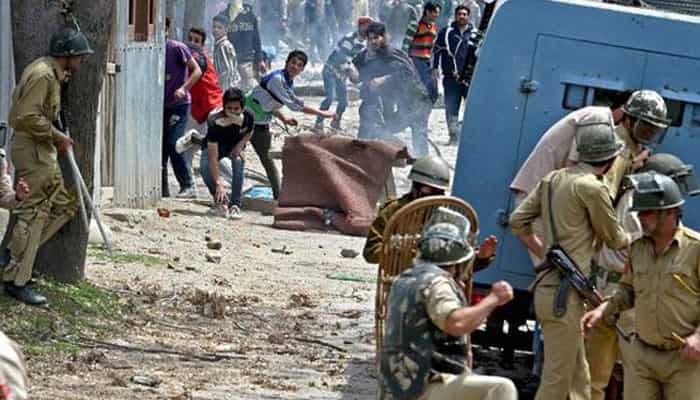
Stone pelters and Army
Every member of society, by its very existence, is clothed with human rights. Thus, it is also integral to recognise that the personnel of security forces, including the Army, the BSF, and the CRPF, have human rights as well that need to be protected.
The Indian army is the epitome of courage and fearlessness. The institution in itself is a representation of the idea of India.
The army has been deployed in every corner of India, including the state of Jammu and Kashmir to discharge its duties. In Jammu and Kashmir, the presence of the armed forces is directed mainly to provide assistance to the state government in civil and administrative matters as well as to maintain public order and ensure the security of the nation. The security forces are always in the forefront during any disturbances, be it a natural calamity such as floods, cloudburst and landslides, or a terrorist attack.
The personnel of the armed forces dedicate their lives towards the service of the nation and to uphold the honour of the flag and sovereignty of the country. However, there have been several incidents in which stones and petrol bombs have been hurled at the security personnel.
The human rights activists and organisations often take up cases of human rights of the perpetrators of violence who suffer injury or sometimes death during the incitement and criticise the armed forces.
Whenever the armed forces are required to retaliate either in defence or to restore peace, they are protected by the provisions of the AFSPA. The AFSPA act is applicable in the state of J&K which allows special powers to the armed forces.
However, it is then that these activists and others term AFSPA as a “tool of state abuse, oppression and discrimination”. It is essential to understand that these special powers are no privilege but a protection so that they can carry out their duties without fear and obstructions.
Every member of society, by its very existence, is clothed with human rights. Thus, it is also integral to recognise that the personnel of security forces, including the Army, the BSF, and the CRPF, have human rights as well that need to be protected.
Many activists and organisation have held the Indian army responsible for infringing upon the human rights of the perpetrators of violence, however, the army is responsible for safeguarding those very rights that are invoked.
The appalling and gruesome pictures of soldiers being pelted with stones, disarmed and being violently attacked by groups of people and the apathy of the state government, implicating the troops in criminal cases, was disturbing. The situation compelled us to approach the human rights commission and file a representation in the NHRC.
There have been attempts to add a communal twist to this issue and politicise it. However, the Indian Army is an apolitical and a positively secular institution. The Army’s loyalty is to the nation and not to any political party.
We are happy and reassured to see NHRC rising up to the occasion and promptly issuing a notice to the Government of India and the Ministry of Defence and calling upon them to submit a report.
(Disclaimer: The opinions expressed above are the personal views of the author and do not reflect the views of ZMCL)