&imwidth=800&imheight=600&format=webp&quality=medium "Kashmir’s water lifelines under sewage stress: Dal Lake, Jhelum face growing pollution threat")
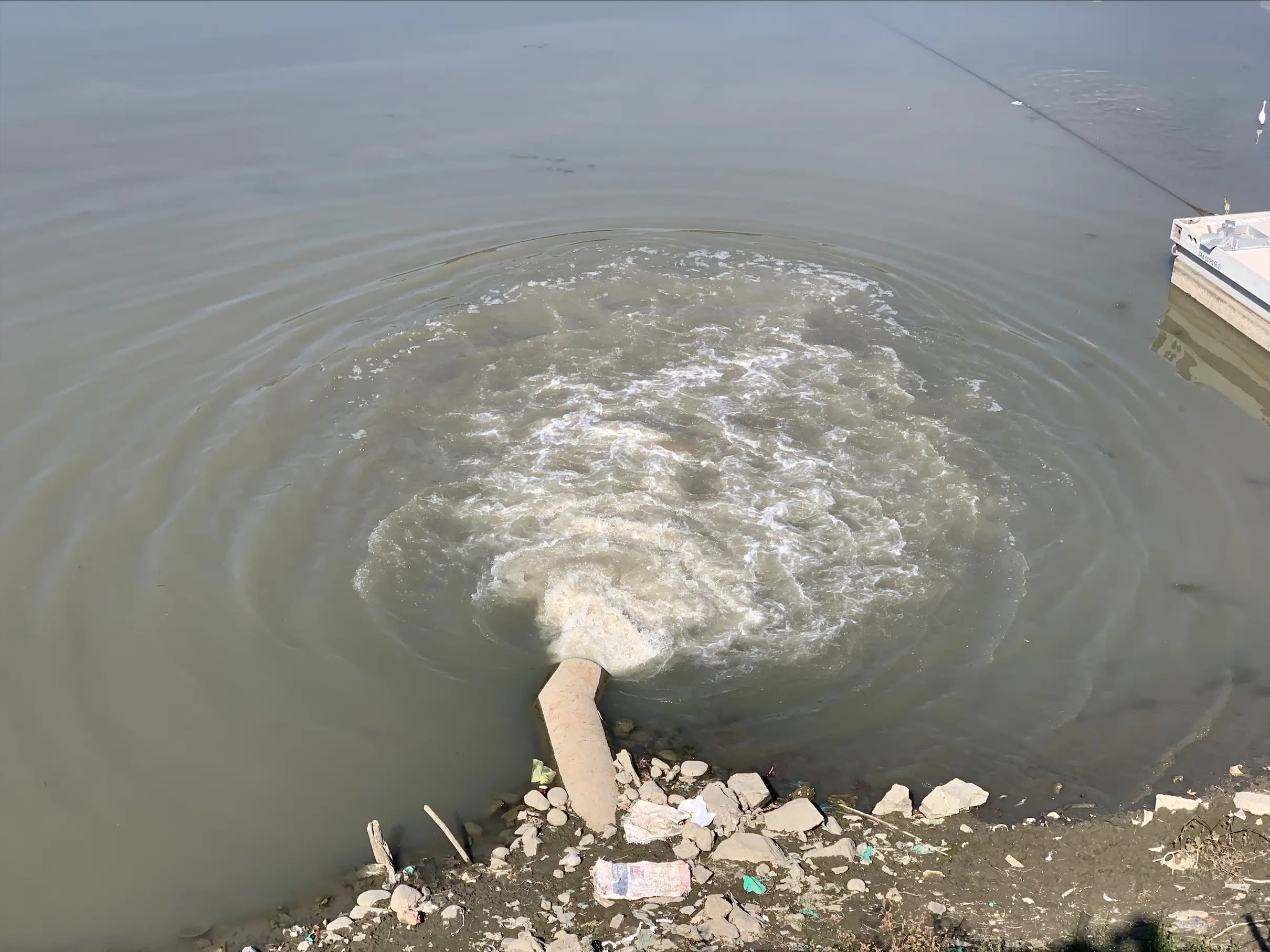
They are among Kashmir’s most recognisable symbols—one winding through the heart of Srinagar, the other spreading across the city’s landscape, reflecting mountains, houseboats and a tourism economy built around their waters. But the Jhelum and Dal Lake, two of the Kashmir Valley’s most important water bodies, are facing a mounting wastewater crisis, with untreated sewage, urban drainage and nutrient pollution placing increasing pressure on their ecological health.
A scientific study estimates that Srinagar generates around 201 million litres of sewage every day, of which nearly 73 per cent, approximately 147 million litres, remains untreated and is discharged into Dal Lake or the Jhelum collectively.
The figure comes from the study “Assessment of Spatio-Temporal Dynamics of Dal Lake’s Trophic State,” published in the journal Water. For generations, Dal Lake and the Jhelum have been central to life in Srinagar. They support aquatic ecosystems, provide water resources and form the backdrop to one of the Valley’s most important tourism industries.

But environmentalists say the same urban growth that has increased pressure on Srinagar’s infrastructure is now threatening the water bodies themselves.
Environmental activist Tariq, who says he has obtained information on Srinagar’s pumping stations through the Right to Information Act, alleges that untreated wastewater from several parts of the city is being collected at pumping stations and subsequently discharged into drainage systems connected to the water bodies.
“The problem is that we are still relying on sewage-treatment infrastructure that was built nearly 20 years ago, despite the huge growth in population. The result is visible in the deteriorating water quality, disrupted aquatic life and excessive algae caused by high nutrient loads. Open drains are still flowing directly into our water bodies. We have to treat this as an emergency and bring in experts to restore them. The deterioration I have witnessed over the last 20 years has gone from bad to worse, and if we delay further, tomorrow may be too late.” said Dr Touseef Bhat, Environmentalist.
Trending Stories
The Water study found that the lake’s trophic condition deteriorated between 2019 and 2023, with the lake classified as eutrophic by the end of the assessment period. Eutrophication occurs when excessive nutrients enter a water body, encouraging excessive growth of algae and other aquatic vegetation. Such changes can reduce water quality and disrupt aquatic ecosystems.
The Jhelum, Srinagar’s principal river, is also receiving wastewater through multiple outfalls. An action-taken report submitted before the National Green Tribunal records 10 outfalls discharging into the Jhelum, with domestic and household wastewater among the recorded discharges.
A Comptroller and Auditor General audit has also highlighted a fundamental weakness in Srinagar’s urban drainage infrastructure: the city does not have separate sewage and storm-water networks.
If water quality continues to deteriorate, the consequences could eventually affect tourism, livelihoods, fisheries, public health and the wider ecological balance of the Valley.
Tariq has been cleaning Dal Lake for the past 25 years, often accompanied by his young daughter Jannat, whose contribution to keeping the lake clean has also drawn appreciation from Prime Minister Narendra Modi. From that vantage point, Tariq says he has watched the lake deteriorate year after year.
“Over the last 20 years, I have seen the water body go from bad to worse. Waste is entering the lake from everywhere. "Untreated sewage is entering Dal Lake from every corner. There is still no proper drainage system across urban Srinagar, and wastewater from peripheral areas, open drains and residential areas is finding its way into the lake. Dal Lake has effectively become a drain. Despite the machines and sewage-treatment projects, the contamination continues, and the lake’s aquatic life is disappearing.” said Tariq Ahmad Patloo, Environmentalist and Dal Dweller.
Chief Minister Omar Abdullah has acknowledged that the crisis facing Kashmir’s water bodies is a major and longstanding concern—one that has intensified over the past two years. He said the problem cannot be resolved overnight but stressed that efforts are underway to protect and restore the region’s lakes and other water bodies.
“This is not a problem that has arisen in just the last two years; it is a legacy issue. We cannot resolve it overnight, but we are working on it. Projects are being formulated under various schemes—whether it is the SA scheme or others—and the effort is to not only save our water bodies but also expand them,” Omar Abdullah said.
Environmentalists have described cosmetic interventions as inadequate, calling instead for specialists with proven experience in restoring severely degraded lakes. For water bodies that are ecological assets, cultural symbols and tourism lifelines, the focus, they say, must shift from merely removing pollution to preventing sewage and waste from entering them in the first place.