

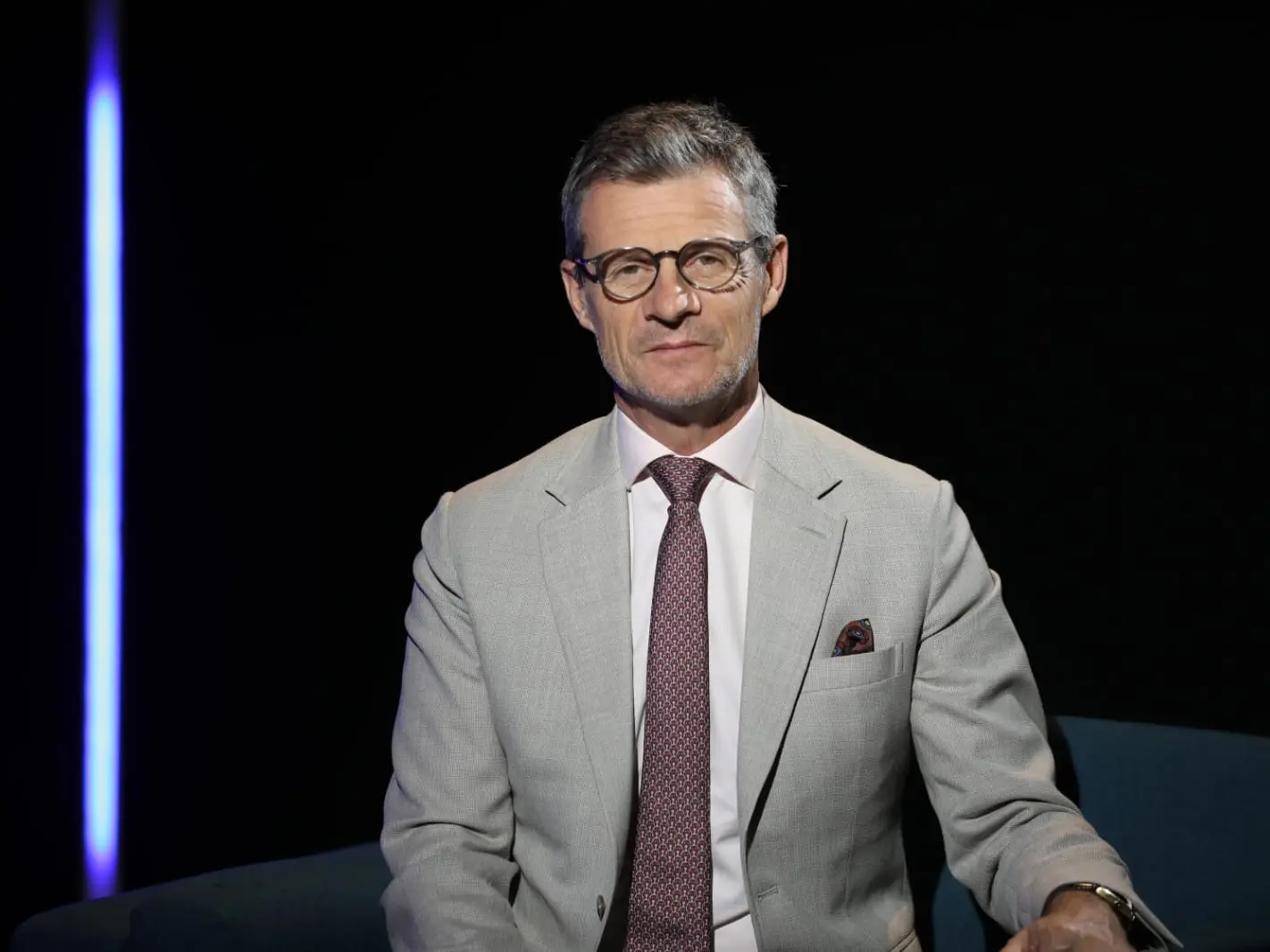
&imwidth=800&imheight=600&format=webp&quality=medium "India-EU FTA will double trade in 5 years, EU Ambassador Hervé Delphin tells WION")
The European Union and India have concluded negotiations on a major free trade agreement, marking a significant boost to bilateral relations, the EU's ambassador to India has said. Hervé Delphin described the deal as one of the most important achievements of his tenure, placing the partnership "at a very high point".
Speaking to WION's Sidhant Sibal, he highlighted how global shocks had prompted a strategic recalibration in Europe, making closer ties with India a compelling necessity. "India made a similar journey, so a journey of convergence," Delphin said. The two sides share values, large markets and economic complementarities, he added.
At the January summit, negotiators "froze the text" of the Free Trade Agreement (FTA), agreeing on its content. Teams are now conducting legal vetting in Brussels to ensure consistency. An Indian delegation is in the EU capital this week for intensified talks. The ambassador expressed confidence that a clean text could be ready for signing by the end of the year, following European Parliament consent.
The pact is described as the biggest trade deal for both sides, promising substantial tariff reductions. It would cover roughly a quarter of global GDP and world population. Delphin predicted trade volumes could double within five years, creating opportunities for companies on both sides and encouraging investment and production localisation.
Full interview:
Sidhant Sibal: How do you see your tenure here in Delhi?
Hervé Delphin: It's been quite a journey. I think probably the most important achievement is that we placed the India relationship where it should be, at the top, and it has been arguably long in the making. It has not happened overnight; that has been patient work over the past years, but for you to see the significant achievements, when I'm saying there's been long in the making, it simply reflects the fact that we are in a high strategic game here. Our positioning, as Europe has been determined by the decade of transformation, where we've been subjected to major shocks – BREXIT, COVID, Russian invasion, aggression against Ukraine; there was also what we call the China shock, indeed a more transactional America-first US. So all this has led to sort of a strategic recalibration in Europe: how we can increase our economic resilience, strengthen our security and defence, maintain our destiny in our hands. So again, that background somehow– the relationship with India was a kind of a compelling strategic case because of our complementarities. Because of what we can offer to each other, we share values, we share big markets, and all came in somehow into that strategic equation as far as the EU is concerned. India made a similar journey, so a journey of convergence. So after this, my tenure, I think we are probably not at the highest point because the sky is the limit. But that's certainly at a very high point in our relationship. But now, you know, there is no room for complacency. We need to deliver, deliver and deliver.
Sidhant Sibal: How important is this India-EU trade deal?
Hervé Delphin: What we did at the summit, we concluded the negotiation. So basically, the 2 negotiating teams froze the text, and they agreed that we have a deal on the text. Now, when we go into what we call a legal vetting, the legal scrubbing, just to make sure that there is no inconsistency in the text and go really into the details, because, you know, God or the devil is in the details. So this is what legal vetting is all about, and you have this very week, an India team in Brussels. Intensified exchanges between the team. With this, we would hopefully have a text which is clean, cleaned up, so to say, legally speaking, ready. We have an additional step on the EU side. When the document is ready for signing, it goes for the consent from the European Parliament. Then it enters into force, but with this, we are confident that we could have these documents signed by the end of the year. By timeline, it is quite remarkable. If you consider that we concluded a negotiation earlier in the same year to be able to sign, that is really, I would say, express train. By any standards, whether European or Indian, that is reflective of the importance of the FTA, which I think, both for the EU & India, is probably the biggest ever trade deal. Not because of the size of our respective markets but also the substantial and meaningful FTA in terms of tariff reduction.
Sidhant Sibal: How it changes the global trading order.
Hervé Delphin: If you consider that you have one quarter of the world GDP and one quarter of the world demography covered by this FTA, inevitably, it will have an impact. India is only 2% or 3% of global trade, but is bound to grow even more. The EU is the largest trading block in the world; you know what, 17%. So when you combine the forces of these 2 markets, you will see way more trade between the 2 geographies. The track record of FTA which is signed over the years that follow you see tremendous increase in imports and exports, so we are confident that within 5 years time, you could have a doubling of the EU-India trade. That is significant, because that represents opportunities for Indian companies as much as European companies to export, to sell, but more than that, it's a vehicle that would also allow for investment and localisation of production. So in a way, you can describe the FTA as a catalyst and an enabler for trade that would not only increase the trade volumes, the trade value, but also bring the 2 ecosystems closer.
Sidhant Sibal: How do you do security cooperation?
Hervé Delphin: Today we have the EU maritime operations in the Northwest Indian Ocean, and there is cooperation with the Indian Navy in the fight against piracy, in exchanging information in terms of situation awareness, so it's not just talking points. It's really happening. There are other areas like cyber, hybrid threats, counter terrorism, which are other areas, like space. I think this is a reflection of the new, unfortunately, the new normal on security and defence, right. I think it has probably now been noticed in Delhi that the EU was not the EU it chose to be. Something that people do not really realise is how much the EU has developed into a security and defence actor and provider. Just to give the figure, the security and defence budget of U member states collectively has increased by 63% since 2020, so last year it reached a total of €385 billion, and it would be over €400 billion this year. On the Indian side, we also see India exposed to threats; it includes neighbourhood and challenges, whether on land, at sea or in cyberspace, and they are also capabilities. If you want security and defence to come at this crossroads, where basically the EU and India see how they could complement each other in many ways. So, what we did at the summit, we signed a security and defence partnership, which is, if you want, a political signal of comfort in our relationship to address and deepen the relationship. What we are negotiating now is a security of information agreement, which will allow for the exchange of confidential information related to security and defence, so that will be the legal enabler, and the third level that you describe is indeed defence Industry cooperation.
