India among top five world economies racing to achieve net zero emissions: Report

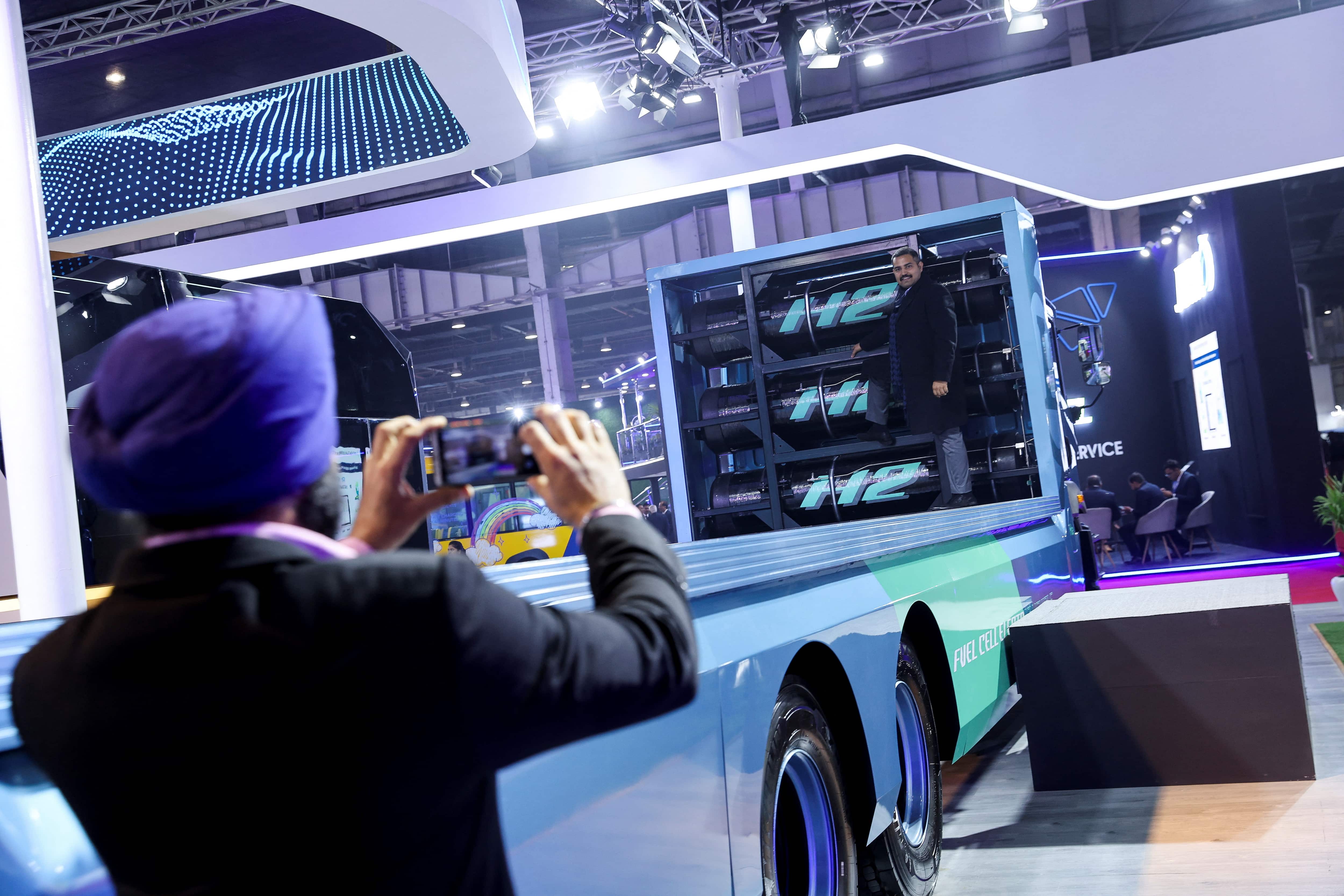
India competing in zero-carbon tech
India is among the top five world economies racing to achieve net zero emissions, a report by Brussels-based think tank Strategic Perspectives has said.
Net zero is an ideal state where the amount of greenhouse gas (GHG) released into the atmosphere is balanced out by the amount of GHG removed. It can be achieved through a combination of emission reduction and emission removal.
The report titled 'Competing in the new zero-carbon industrial era' compares the performance of five major economies — US, China, EU, India, and Japan— on zero-carbon technologies.
“The manufacturing and deployment of zero-carbon technologies can create jobs, and result in competitive advantages and the reduction of emissions in key sectors. These net-zero transition plans can lead to a new industrial era that will be known for its zero-carbon technologies,” it said.
The authors of the report, however, pointed out that it would be unwise to compare India’s efforts to other economies because it has taken a different entry position on economic development.
“If additional investments can be secured, India can fulfil its ambitions of becoming a significant part of the global net-zero supply chain, and benefit from the transition in the near future,” it said.
India's RBI to expand digital rupee use
Here are some of the key points mentioned in the report that highlight India’s efforts in the race to achieve zero-carbon emissions.
- India is making progress in incorporating solar and wind into its electricity generation, almost doubling its share from 2017 figures (5 per cent to 9 per cent).
- The electric vehicle industry is expected to grow at a compound annual growth rate of 49 per cent between 2022 and 2030 creating 50 million jobs by 2030.
- Electric two-wheelers will play a big part in the global EV market: India already has a fleet of 4 million EV two-wheelers in 2022, which is projected to rise to 6 million by 2024
The report notes that India has a significant potential to grow its importance in the global new industrial transition, but added that it must scale up investments in R&D, and “not solely rely on tech transfer and Chinese imports”.
"While China and the EU continue to lead in the wind sector, the US and India are following each other closely in terms of manufacturing capacities and could continue gaining market shares as their respective domestic policies are implemented," the report stated.
“India still faces a different set of challenges, however with committed financial support from the developed economies, India can meet its net zero commitments faster,” it states.
This G20, India is likely to push for the global green development agreement which will include climate finance, Mission LiFE is 'Lifestyle for Environment', circular economy, accelerating progress on SDGs, energy transitions and energy security.
WATCH WION LIVE HERE